Regina MPs challenge scope of federal bail overhaul
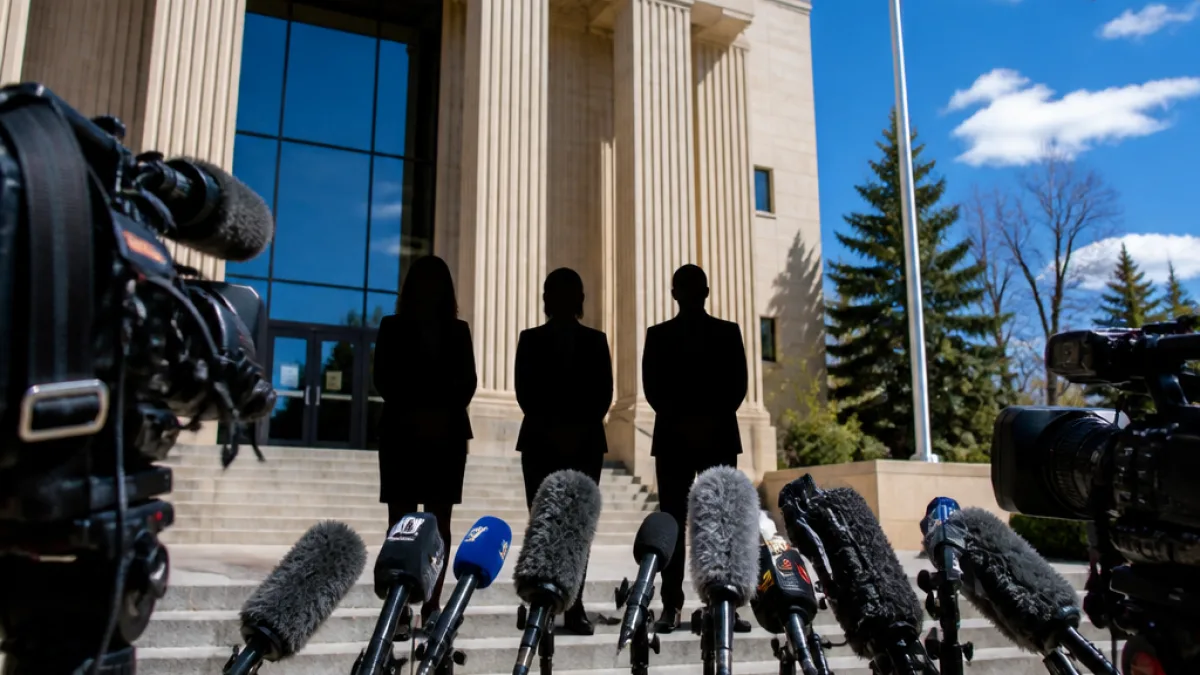
Standing outside the Provincial Court of Saskatchewan in Regina, three Conservative Members of Parliament argued Ottawa’s newly implemented bail and sentencing reforms still leave crucial gaps in Canada’s pre-trial detention rules. Their comments came as most measures in Bill C-14, the federal Bail and Sentencing Reform Act, took effect on July 15 following royal assent on June 15.
Regina–Qu’Appelle MP Andrew Scheer, joined by Regina MPs Warren Steinley and Michael Kram, said the government’s approach emphasizes messaging over meaningful change. Ottawa, for its part, has framed the package as the toughest set of bail and sentencing updates in a generation and says it will bolster public safety.
“The biggest takeaway … is that while the rhetoric has changed … they have kept on the books the very Liberal laws that caused the problem in the first place,” Scheer said.
Federal officials have described the law as a sweeping update, with more than 80 targeted amendments to the Criminal Code, the Youth Criminal Justice Act and the National Defence Act. The changes include tighter bail provisions for repeat and violent offenders, alongside enhanced penalties for several serious crimes. Conservatives contend those adjustments do not go far enough to prevent high-risk individuals with lengthy records from being released pending trial.
Public safety focus at centre of dispute
Scheer said courts should place stronger weight on community protection when assessing detention for individuals with a history of serious offences. He stressed that presumption of innocence remains intact but argued the balance has tilted away from safeguarding the public.
“We have had the presumption of innocence, but also courts that take into account … dangerous, violent, repeat offenders … that public safety has to be taken into account,” he said.
He also rejected claims that stiffer provisions would lead to a surge in incarceration, pointing to past Conservative policy changes as evidence that tougher penalties can be paired with improved safety. Ottawa has countered that the current package strengthens bail for high-risk cases while maintaining Charter protections and judicial discretion.
What took effect this week
While text of the federal measures is extensive, officials have highlighted several focal areas. The government says the reforms aim to limit releases for repeat and violent offenders, tighten conditions around serious violent crime, and increase penalties for select offences. Conservatives maintain the core framework still permits releases in circumstances they believe warrant detention.
- Implementation timeline: Royal assent on June 15; most bail and sentencing provisions effective July 15.
- Scope: Over 80 targeted amendments across three federal statutes.
- Emphasis: Tougher bail rules for repeat and violent offenders; stronger penalties in defined areas.
Local implications in Saskatchewan
The discussion lands amid persistent concerns about violent crime across the Prairies and ongoing debates over how best to balance release conditions, court backlogs and prevention. With the majority of reforms now in force, the practical test will unfold in Saskatchewan’s courthouses as prosecutors seek detention under the revised framework and defence counsel challenge applications before provincial judges.
Lawyers and justice stakeholders in Regina and other centres will be assessing how the changes affect day-to-day bail hearings — including evidence thresholds, reverse-onus triggers where applicable, and the weight given to prior convictions. The MPs’ remarks signal continued political pressure on Ottawa to recalibrate pre-trial detention rules further if, in the coming months, communities do not see the outcomes they expect.
At a glance: Bill C-14 milestones
| Milestone | Date/Detail |
|---|---|
| Royal assent | June 15 |
| Provisions in force | July 15 (most bail and sentencing measures) |
| Statutes amended | Criminal Code, Youth Criminal Justice Act, National Defence Act |
The political divide over bail policy is unlikely to narrow quickly. Conservatives say Ottawa’s approach remains too permissive for high-risk, repeat offenders; the federal government says its reforms are both robust and constitutionally sound. How Saskatchewan courts apply the new rules — and whether the changes alter outcomes in serious cases — will be closely watched in the weeks ahead.