
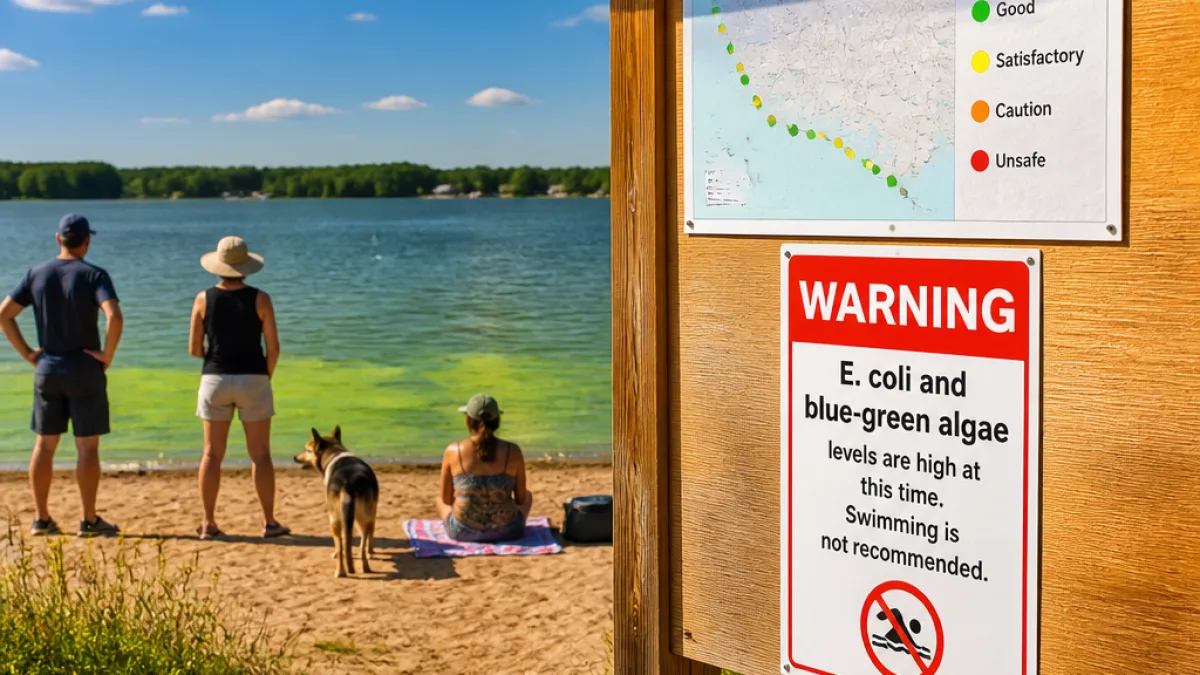
As warm weather draws people to lakes across Saskatchewan, provincial testing aims to give swimmers, parents and event organisers timely information about water safety.
How the province monitors busy lakes
The provincial Healthy Beaches Program samples the province’s most popular bathing sites during the summer months to assess water clarity and to screen for microbial and algal hazards. Chief Medical Health Officer Saqib Shahab said testing targets the 47 busiest beaches and occurs either weekly or every two weeks, with more frequent follow-up sampling when adverse results appear.
"The program looks at the 47 busiest beaches and what it does is that over the summer, it samples them for clarity, you know, and also for specific indicators, to inform people who may be going into the water about the quality of the water at that beach," Shahab said.
The work addresses two common summertime hazards: excessive levels of E. coli, which indicate faecal contamination, and blooms of blue‑green algae (cyanobacteria) that can produce microcystins — chemically stable toxins harmful to humans, livestock and pets.
Recent results and what they mean for visitors
As of Friday, the program’s online map showed that three monitored sites had recent positive tests for E. coli and two had elevated blue‑green algae readings. Shahab emphasised that lake conditions can worsen or improve rapidly and urged people to check the map before planning swims or events.
Triathlon coach Carly Priebe, who runs open‑water clinics, said water quality factors into event planning and the timing of activities: colder, deeper lakes and earlier starts can reduce the risk of encountering nuisance or hazardous algal blooms. She also said organisers often schedule children’s events differently at northern lakes to reduce exposure.
- What is tested: water clarity and specific indicators such as E. coli and blue‑green algae toxins.
- Who is covered: the 47 busiest provincial beaches are included in regular sampling.
- Testing cadence: weekly or biweekly, with additional checks after adverse results.
Practical guidance for beach users
Health officials and recreational leaders offer several precautions based on the testing programme’s findings:
- Consult the Healthy Beaches online map before visiting a monitored site.
- Avoid swallowing lake water and keep pets and livestock away from discoloured water or visible algal scums.
- If a site posts an adverse result, wait for follow‑up testing indicating conditions have returned to normal before resuming recreational uses.
Shahab noted the province aims to balance public safety with allowing people to enjoy short Saskatchewan summers. Rapid testing and follow‑up sampling are intended to reduce unnecessary restrictions while keeping the public informed.
| Measure | Recent provincial count |
|---|---|
| Beaches monitored | 47 |
| Sites with recent E. coli detections | 3 |
| Sites with high blue‑green algae results | 2 |
For residents and visitors planning lake activities, the provincial mapping tool is the primary source of up‑to‑date information on monitored beaches. Event organisers and pet owners should factor testing results into planning to reduce risks associated with microbial contamination and algal toxins.