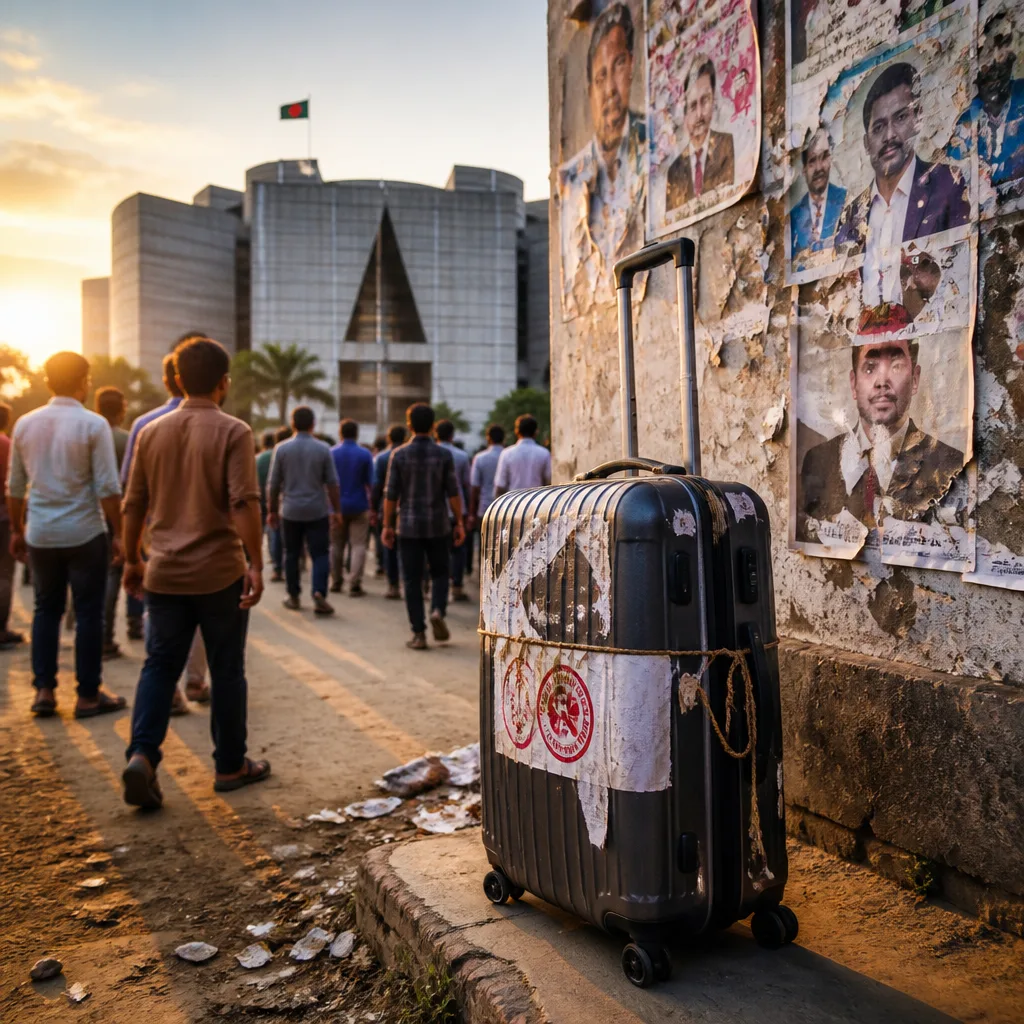
Ousted former prime minister Sheikh Hasina has declared she will return to Bangladesh in December, even as a tribunal sentenced her to death in November for alleged incitement and related charges. The pledge, made while she has been living in India since her government was toppled by a student-led protest movement nearly two years ago, sets up a potentially explosive confrontation with the current authorities and could redraw the country’s political map.
High stakes for party rivalry and political stability
Analysts say Hasina’s planned return could revive the competition between the banned Awami League and the ruling Bangladesh Nationalist Party (BNP), currently led by Tarique Rahman, who assumed power after the BNP’s landslide victory in February’s general election. The outcome may also blunt the electoral progress of Islamist political forces that made gains in that vote, notably Jamaat-e-Islami, which finished second in seat count.
The political context is volatile: the tribunal’s ruling in November found Hasina guilty of incitement, accused her of issuing orders to kill and held her responsible for failing to prevent atrocities linked to the protests. Authorities say up to 1,400 people died in clashes between demonstrators and security forces. In interviews since leaving the country, Hasina has expressed regret about the "needless" bloodshed while denying she ordered security forces to fire on protesters.
"She plans to return home in December even if she is arrested or killed," the report said.
What a return could mean
If Hasina follows through with her plan, several immediate consequences are plausible:
- Renewed mass mobilisation by Awami League supporters and countermeasures by the ruling BNP.
- Heightened risk of violent confrontations given the history of deadly clashes during the protests that toppled her government.
- Pressure on neighbouring countries and international actors to respond diplomatically, especially given Hasina’s residence in India.
Observers caution that a return under threat of arrest or execution could either galvanize Awami League bases, consolidating its position as the leading opposition force, or lead to further polarisation that benefits parties with Islamist agendas by fracturing secular vote bases.
Timeline of recent developments
| Event | Date/Timing |
|---|---|
| Student-led protest movement topples Hasina’s government | Nearly two years ago |
| Tribunal convicts Hasina, sentences her to death | November |
| BNP wins general election; Tarique Rahman assumes power | February |
| Hasina announces intent to return | Plans to return in December |
Hasina, now aged 78, has characterised her trial as a political tactic aimed at sidelining the Awami League. In an interview with This Week in Asia prior to the verdict, she rejected accusations that she ordered security forces to shoot at protesters and said she regretted the loss of life. The authorities, meanwhile, have presented the tribunal’s findings as a legal reckoning for events that left hundreds—official and independent counts differ—dead during the unrest.
For international observers and regional governments, the coming months will test Bangladesh’s institutions and the ability of political actors to contain conflict. A return by Hasina could trigger a rapid escalation or, conversely, mark the opening of a new phase of contestation that reconfigures alliances and electoral prospects ahead.