Terrebonne-to-Terrebonne: what a Louisiana library is teaching about emergencies
A public library in Terrebonne Parish, based in Houma, Louisiana, is piloting a practical approach to disaster media literacy that may hold lessons for communities far beyond the Gulf Coast — including readers in Terrebonne, Que. The Terrebonne Parish Public Library Main Branch has scheduled a one-hour session on how to use mobile tools and official channels to navigate the aftermath of severe events.
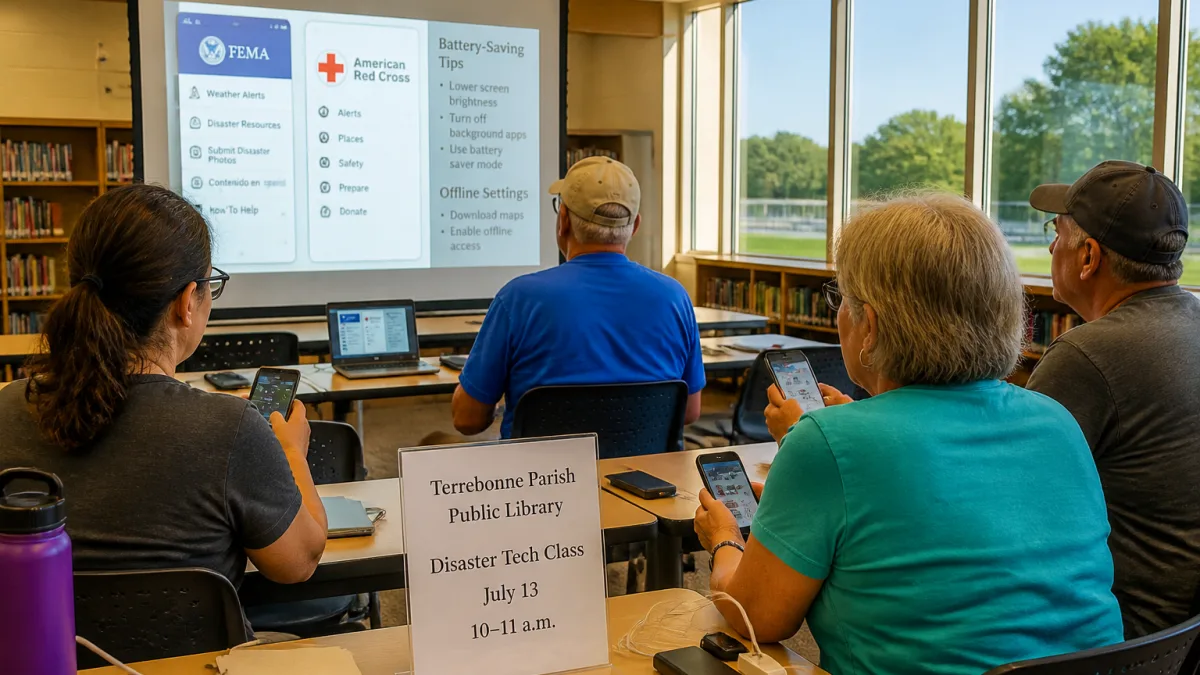
According to the library, the class runs from 10 a.m. to 11 a.m. on July 13 at its main branch, 151 Library Dr., Houma. Staff plan to demonstrate features in two widely used emergency applications — the FEMA and Red Cross apps — alongside smartphone settings that can aid residents when conventional communication is strained.
| What | When | Where | Duration |
|---|---|---|---|
| Disaster media literacy and technology session | July 13, 10–11 a.m. | Terrebonne Parish Public Library Main Branch, 151 Library Dr., Houma | 1 hour |
Inside the training: alerts, charging, and verified updates
Librarian Rachel LeCompte said the hour-long program is designed to make emergency technology accessible to everyday users, with an emphasis on verified information sources.
“Participants will learn how technology can play an important role during emergencies and natural disasters,” Librarian Rachel LeCompte said. “The session will include demonstrations of the FEMA and Red Cross apps, including how to set alerts, as well as smartphone features that can be useful during emergencies. Attendees will also learn strategies for keeping phones and devices charged during prolonged power outages and how social media can help provide timely updates from local and national authorities.”
The agenda, as described by organizers, focuses on the fundamentals residents need when phone batteries are low, networks are congested, and rumours can outpace facts. The library notes that the class will also walk through settings for alerts inside the two apps and highlight how to follow authoritative feeds on social platforms.
- Emergency apps: setting and managing alerts in FEMA and Red Cross tools
- Device resilience: keeping phones powered during extended outages
- Information hygiene: using official social media channels for timely updates
Emergency officials endorse the approach
Support is coming from local emergency management. Earl Eues, the parish’s Homeland Security and Emergency Preparedness director, called the offering a sound way to reach residents who may be less familiar with digital tools and promised to join the session to highlight parish resources.
“I think it's important that seniors learn what is available out there, electronically, to assist them during a storm,” Eues said. “And this is a good way for them to learn what is available and who they can reach out to for help during a disaster.”
Why it matters for readers in Terrebonne, Que.
While the event is taking place in Houma, the model is relevant to any community seeking to strengthen public readiness through its library network. The focus on verified alerts, device preparedness and clear pathways to official help reflects a practical role libraries can play before and after severe weather or other emergencies. The Louisiana program underscores how public institutions can bring emergency managers, technologists and residents together to build confidence with tools many people already have in their pockets.
For residents here, the takeaways are straightforward: ensuring familiarity with trusted alert apps, identifying official social channels for reliable information, and thinking ahead about keeping devices operational during outages. The Houma session demonstrates how a short, structured class can lower barriers to critical information when it’s needed most.
As communities compare approaches, the Houma example offers a template of what a one-hour primer can cover and how to involve emergency officials in public education — an approach that could be adapted by libraries and civic partners wherever residents rely on smartphones for urgent updates.