Premier's visit underscores city's role during wildfire emergency
Ontario Premier Doug Ford travelled to Thunder Bay as wildfires intensified across the province, a visit aimed at supporting firefighting efforts and acknowledging the work of first responders. The trip came as nearly 200 wildfires were burning in Ontario, with people fleeing northern communities and seeking refuge in Thunder Bay.
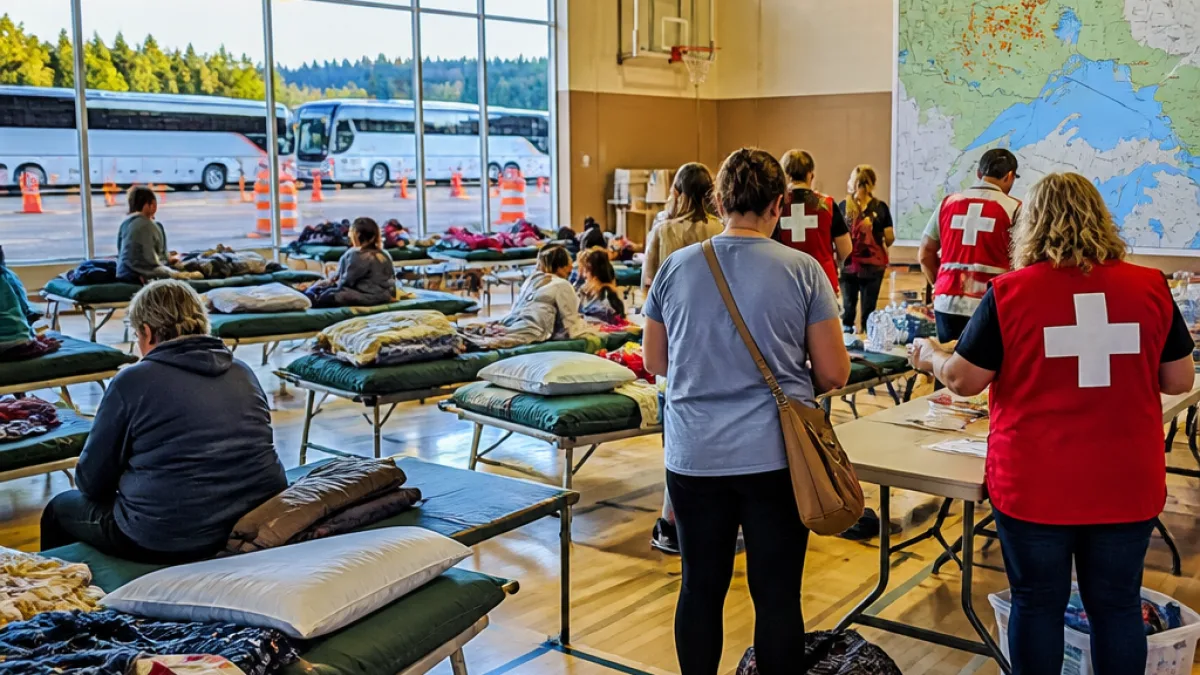
The Canadian Press reported that many evacuees have arrived in the city as northern fires continue to escalate. Global coverage also noted the Premier’s focus on expressing thanks to crews on the ground and lending support to the ongoing response. Local agencies and volunteers typically play a central role in reception, lodging and day-to-day assistance for those displaced, and Thunder Bay is currently serving as a place of shelter as evacuations unfold.
Evacuees arrive as northern fires grow
As the number of active fires rises, residents from affected northern areas have been moved south to safer locations. Thunder Bay has become a key refuge, providing a temporary base while authorities monitor fire behaviour and plan for returns when conditions allow. The presence of evacuees places added pressure on community supports and logistics, from transportation and reception to basic amenities, and the Premier’s stop in the city highlighted the importance of sustaining those supports as the response continues.
Provincial officials have emphasized the need to backstop frontline firefighting, evacuation operations and host-community services. While firefighting is highly specialized work carried out across vast distances in the north, a coordinated system depends on both provincial resources and the capacity of municipalities like Thunder Bay to receive people at short notice.
Focus on coordinated response
During the visit, the Premier’s stated purpose was to meet personnel involved in suppression and emergency operations, and to extend thanks to firefighters and first responders. This aligns with the current phase of the wildfire season, in which resources are moved to priority areas while host communities manage an influx of evacuees.
Thunder Bay’s role in this arrangement is practical and immediate: offer a safe environment for evacuees and maintain the services that support them until conditions improve. The city’s standing transportation links and accommodations help make it a logical staging point for evacuation flights and ground transfers from smaller communities that are more vulnerable to fire activity.
What it means for Thunder Bay residents
Hosting evacuees typically requires sustained coordination between provincial and local officials, community organizations and service providers. Residents may notice short-term pressures on lodging and amenities, and the need for volunteers and donations can follow as stays extend. The Premier’s appearance signals an intent to keep provincial attention on these pressures as the wildfire situation evolves.
Information from provincial and municipal authorities will continue to guide evacuation timelines and any changes to reception arrangements in Thunder Bay. For now, the city remains a focal point in Ontario’s wildfire response: a place where evacuees can find safety while firefighting efforts continue in the north.
At a glance
| Key fact | Details |
|---|---|
| Active wildfires | Nearly 200 across Ontario |
| Premier’s stop | Visit to Thunder Bay to support efforts and thank responders |
| Evacuations | Many evacuees from northern Ontario have sought shelter in the city |
- Thunder Bay is acting as a host community for evacuees from northern Ontario.
- The Premier’s visit focused on supporting firefighting operations and first responders.
- Provincial and local coordination remains central as wildfires continue to burn.