Provincial response centres on Thunder Bay as evacuations continue
Thunder Bay is serving as a hub for people displaced by northern Ontario wildfires, as Premier Doug Ford visited the city Saturday to meet evacuees and frontline personnel. The province has directed resources to reception and suppression efforts while residents from several communities remain away from home.
Speaking with reporters in the city, Ford said he had been briefed that roughly 300 people — including campers — were extracted from fire-affected areas through about 40 rescue missions. He emphasized that those rescues involved scattered individuals rather than full-community lifts, and publicly thanked provincial and local responders.
“I want to thank the OPP… the local Thunder Bay police as well [as] firefighters and… paramedics,” Ford said, adding later, “Do not, I repeat, do not go to your campsites. Do not go back to your homes if they’re saying not to go back.”
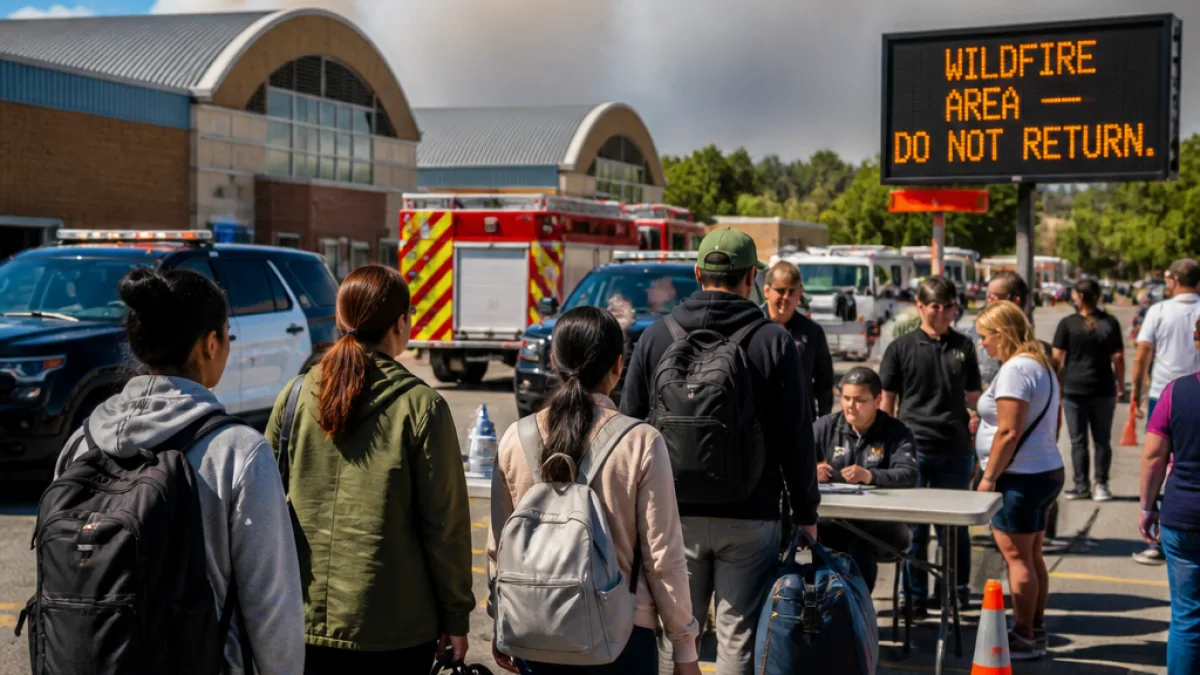
Several communities are under evacuation order as fires advance, including Armstrong, Whitesand First Nation, Collins First Nation and Gakijiwanong Anishinaabe Nation (Lac La Croix First Nation). Others continue to prepare for possible departures. In Thunder Bay, a provincially led reception centre is operating at Fort William Gardens to offer accommodation, meals, hygiene supplies and medical services, according to updates shared by the premier.
Active fires and suppression priorities
Ford said he was advised that Ontario had 191 active wildfires as of Saturday, an increase of seven from the day before. Of those, 73 were classified as out of control and 91 were being observed. He framed the provincial strategy as deploying crews and aircraft to areas where suppression can most effectively protect communities.
| Fire status | Count |
|---|---|
| Active wildfires (total) | 191 |
| Out of control | 73 |
| Being observed | 91 |
Current operations, he said, include 155 crew members and about 80 water bombers and helicopters engaged. In separate social media posts from his Thunder Bay stops, Ford said crews were working in “more than 80” aircraft with an additional 40 on standby to assist. The Ministry of Natural Resources and Forestry’s coordination in Thunder Bay was highlighted during his visit to the regional office and the Aviation, Forest Fire and Emergency Services base.
Evacuees urged to remain away from restricted areas
The premier stressed that people who have left fire zones should not return until officials allow it, citing risks to both the public and suppression efforts. He said accommodations would be arranged for those displaced and basic needs met through the reception system in Thunder Bay and other centres.
Ontario’s natural resources minister, Mike Harris, characterized the fire season to date as “unprecedented.” He said the province anticipated a challenging season, but activity had exceeded expectations, and he credited ground and air teams for sustained efforts across multiple regions.
Thunder Bay’s role and what residents should know
Thunder Bay’s capacity to receive evacuees has placed frontline services, community agencies and volunteers in a central role. The Fort William Gardens site is geared to short-term needs as incident commanders and provincial officials assess fire behaviour and weather windows for suppression. Local police, firefighters and paramedics are supporting arriving groups and coordinating with provincial partners for transport, medical screening and lodging.
- Reception services: Fort William Gardens is providing accommodation, meals, hygiene kits and medical supports for evacuees brought to Thunder Bay.
- Stay out of restricted areas: Authorities advise against returning to evacuated zones or remote camps until clearance is given.
- Continuing operations: Aircraft and crews are focused on areas where suppression is likely to safeguard communities and infrastructure.
Funding and next steps
During his visit, Ford repeatedly signalled that cost would not be a barrier to emergency operations. In one posted remark from Thunder Bay, he said:
“If it’s 500,000 million dollars this year, so be it… I don’t care what this costs. Number 1, our priority is to protect the people.”
As weather and fire behaviour shift, officials will determine when and how evacuees can return. For now, Thunder Bay remains a focal point for staging, reception and support as resources are directed to locations where crews can make the greatest impact in holding fire lines and protecting northern communities.