Supportive housing marks a year of operations in downtown Toronto
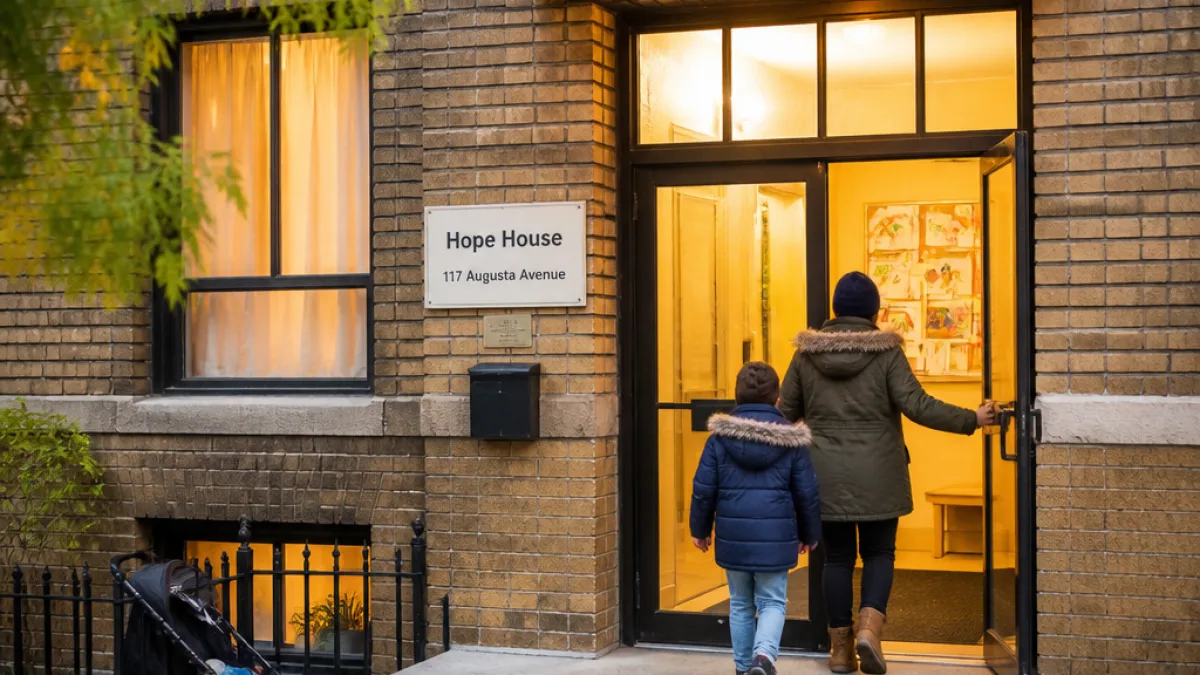
One year after St. Felix Centre launched Hope House on Augusta Avenue, the rent‑geared‑to‑income residence dedicated to women and children is being held up as a practical example of how supportive housing can stabilize lives in Toronto. The downtown site was established to serve people facing housing instability and domestic violence, pairing affordable rents with on‑site supports. Its first year coincides with a period in which the city acknowledges it remains far from meeting its longer‑term supportive housing targets, even as shelters continue to turn people away each month.
Hope House operates on a model designed to be more than a bed for the night. St. Felix Centre describes the residence as a place offering a home and continuous, tailored assistance. That approach aims to reduce the churn between shelters and temporary placements, a cycle that can make it difficult for residents to pursue education, work or health care.
Residents describe stability after years of uncertainty
After two years in Toronto’s shelter system, resident Magret Gumoshabe says her experience at Hope House has altered her outlook. She characterizes past placements as marked by frequent moves and uncertainty.
“Living here, the experience is that this is finally a home,” she said.
Gumoshabe added that moving between shelters felt “chaotic,” and that it was overwhelming to consider returning to school under those conditions. The stabilization she reports aligns with the site’s design: to provide affordable, long‑term housing paired with wrap‑around services, which St. Felix Centre says help residents rebuild with dignity.
City still short of supportive housing goals
Hope House forms part of Toronto’s broader plan to increase affordable and long‑term housing options across the city. Municipal officials say they are working with the province and federal government to add supply. Despite that, the city acknowledges it has a considerable distance to go to reach its supportive housing targets. Demand continues to outpace available spaces, reflected in the ongoing practice of turning people away from shelters each month due to capacity pressures.
The experience at Hope House underscores the policy debate: investing in permanent, supportive homes can relieve pressure on emergency systems by offering a direct exit from shelter use. While emergency beds are essential, the city’s long‑term objective focuses on stable placements that reduce repeated reliance on short‑term services.
What Hope House offers
- Rent‑geared‑to‑income units intended to remain affordable for residents.
- Wrap‑around supports aimed at safety, stability and rebuilding after housing instability and domestic violence.
- A focus on women and children, including those leaving unsafe situations.
- Location in downtown Toronto, improving access to transit and community services.
At a glance: the model in brief
| Site | Hope House |
|---|---|
| Operator | St. Felix Centre |
| Location | Augusta Avenue, downtown Toronto |
| Opened | One year ago |
| Population served | Women and children |
| Housing model | Rent‑geared‑to‑income with supportive services |
Next steps and gaps
City officials say they will continue to collaborate with senior levels of government to expand supportive housing stock. The gaps identified over the past year are clear: shelters remain under strain, people continue to seek placements, and new units are not yet keeping pace with need. The results reported by Hope House point to how targeted investments can help residents secure stability and plan for the future.
As Toronto weighs budgets and partnerships for new projects, the first year of operations at Hope House offers a concrete example of what the city’s supportive housing strategy is attempting to scale — a permanent home, tailored supports and a path out of the emergency system for those who need it most.