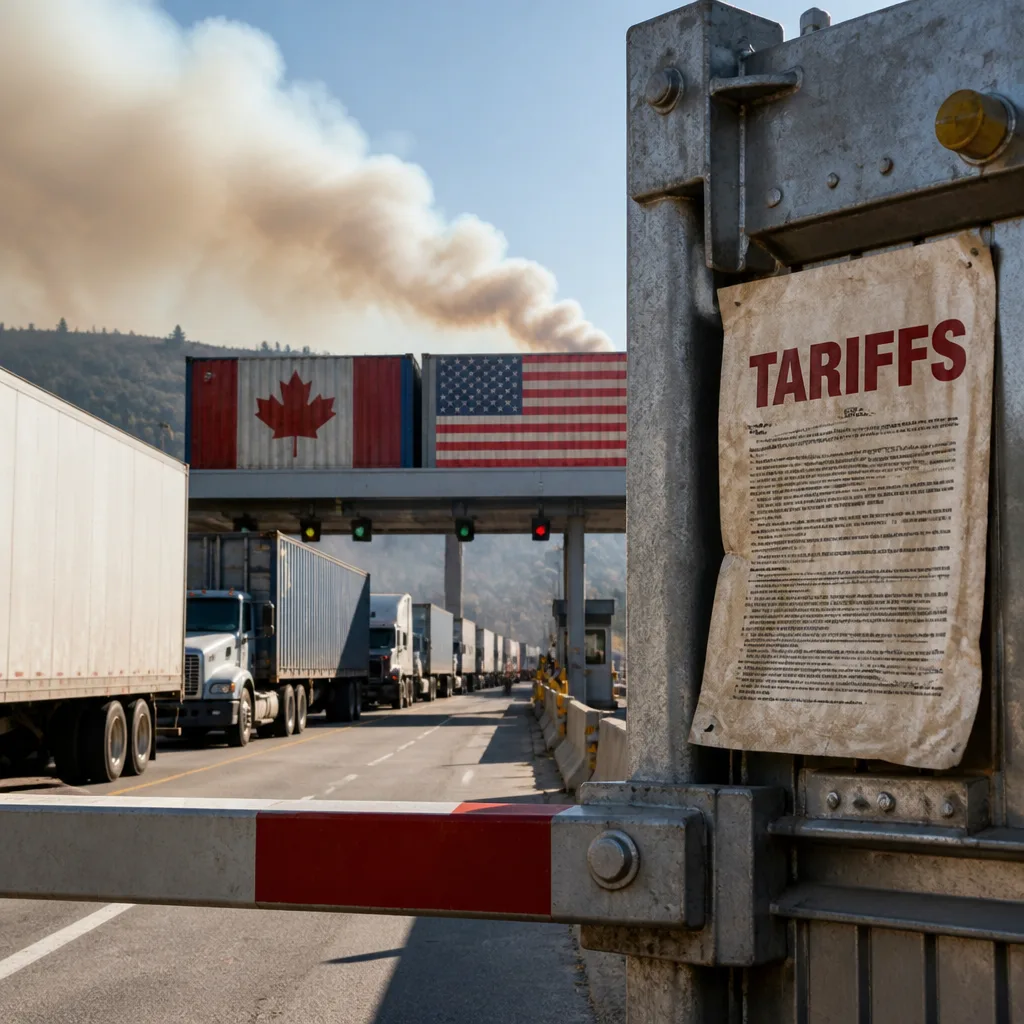
U.S. President Donald Trump said he may impose fresh tariffs on Canada, blaming Canadian authorities for smoke from wildfires that has drifted into American cities and created an "incalculable" expense for the United States.
In a post to his social media platform, the president described the situation as what he called "Willful Negligence" and asserted that the financial impact of the pollution should be reflected in the tariffs Canada already pays. He also said he would phone Prime Minister Mark Carney to discuss the matter. The post did not specify the scale or timing of any new duties.
"the cost of this pollution must of necessity be added to the TARIFFS Canada is currently paying."
Legal and political constraints
Any attempt by the White House to quickly impose new tariffs faces legal limits. The U.S. Supreme Court in a ruling earlier this year narrowed the administration's ability to unilaterally apply emergency tariffs without following prescribed procedures, according to reporting accompanying the president's remarks.
The threat arrives as provincial and territorial leaders prepare to gather in Charlottetown, P.E.I., for the Council of the Federation meeting on July 21 and 22, followed by a First Ministers' meeting on July 23. The federation's agenda is set to include Canada–U.S. relations, trade, affordability, sovereignty and public safety — all areas that could be affected by heightened tensions with Washington.
Immediate context and potential consequences
The president's comments highlight how environmental events that cross borders can quickly take on trade and diplomatic dimensions. While the post framed the smoke as an economic burden on the United States, it did not outline concrete tariff measures. Still, the rhetoric could complicate bilateral cooperation on wildfire management, air-quality monitoring and cross-border emergency assistance.
- Diplomatic impact: A tariff threat may raise pressure on federal officials to engage with U.S. counterparts in advance of the Charlottetown meetings.
- Legal limits: Court constraints in the United States reduce the likelihood of an immediate, unilateral tariff imposition without further procedural steps.
- Policy agenda: The issue could be added to the First Ministers' agenda, where premiers and the prime minister will already be discussing Canada–U.S. relations and public safety.
Logistics for the upcoming meetings
| Date | Event |
|---|---|
| July 21–22 | Council of the Federation meeting (provincial/territorial leaders) |
| July 23 | First Ministers' meeting with the prime minister |
Officials in Ottawa and at the provincial level now face the task of balancing immediate public‑health and firefighting coordination with the diplomatic work required to head off potential trade actions. How the federal government chooses to engage with Washington in the days ahead will shape whether the dispute over smoke evolves into a broader trade confrontation or is contained through technical and bilateral cooperation.