Mixed gains: fan districts buzzed while neighbourhood staples saw thin crowds
VANCOUVER — As the last FIFA match wrapped up in Vancouver, an uneven economic picture has emerged for local businesses. While fan zones and venues near Granville Street experienced heavy traffic, several long-running neighbourhood establishments reported weaker-than-usual trade during what is normally the city’s busiest season.
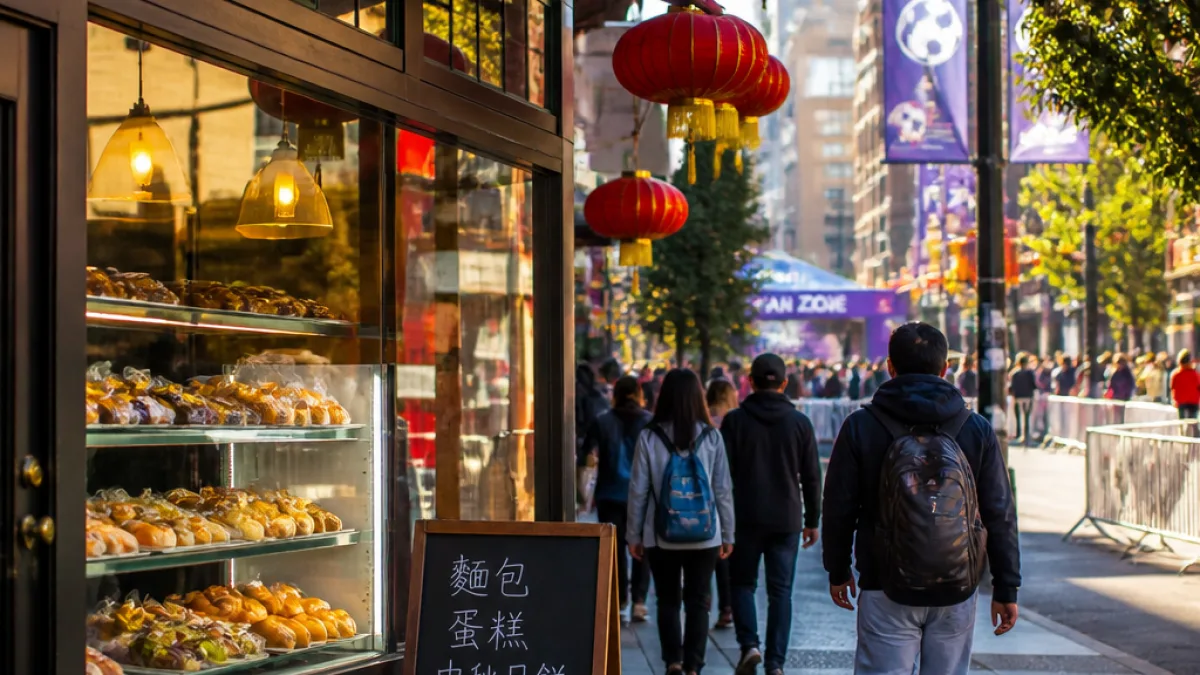
Owners and managers say the city’s promotion of the games as a major economic opportunity did not translate into broad-based benefits across neighbourhoods. Among those affected was New Town Bakery and Restaurant in Chinatown, which has served customers for nearly five decades. The owner, Susanna Ng, said June sales fell and staff were sent home early on a match-day weekend that would typically be busy.
“Can you believe it? It was a Saturday,”
Ng said she could not recall a similar summertime slowdown in her 46 years running the restaurant, including the years of Expo 86 and the 2010 Winter Olympics when Chinatown saw increased visitor flow.
Promises and reality
In May, Mayor Ken Sim framed hosting duties as “a once-in-a-generation opportunity” to deliver immediate economic gains for Vancouver and lasting legacies. That optimism was shared by city promoters and some hospitality operators, but anecdotal accounts and early assessments indicate an uneven outcome.
Sports bars and businesses tailored to the soccer crowd did report sharp upticks in sales, particularly around official match locations and concentrated fan areas. At the same time, some traditional neighbourhood-serving businesses reported fewer customers, a dynamic economists call crowding out — when event visitors displace regular patrons who avoid congestion, higher prices or perceived inconvenience.
What experts say
Andrew Zimbalist, an economist who has studied major sporting events, cautioned that hosting mega-events rarely benefits all local businesses equally. He pointed to the fundamental question cities must answer after such events: how many regular visitors were deterred compared with how many additional visitors came?
- Winners: Fan zones, sports bars, venues near official areas experienced strong traffic.
- Losers: Some long-standing neighbourhood restaurants and shops reported declines in typical summer trade.
- Unclear: Citywide economic impact figures and detailed tourism data have yet to be fully assessed.
Local consequences and next steps
City officials and business groups will need to assess the distribution of benefits from the World Cup and consider targeted supports for neighbourhood businesses that experienced losses. Detailed data — including hotel occupancy and broader tourism metrics — are expected to emerge in coming weeks and will be important to determine whether observed patterns are temporary or indicative of longer-term shifts in visitor behaviour.
| Observed outcome | Examples from reporting |
|---|---|
| Concentrated gains | Fan zones, Granville Street sports bars |
| Localized declines | Chinatown bakery and similar neighbourhood institutions |
| Pending data | Comprehensive economic impact and tourism figures |
As Vancouver moves past the event, business owners and city leaders face the task of translating broad promotional claims into measurable benefits for the entire urban economy — not only those establishments in the immediate orbit of stadiums and fan zones.