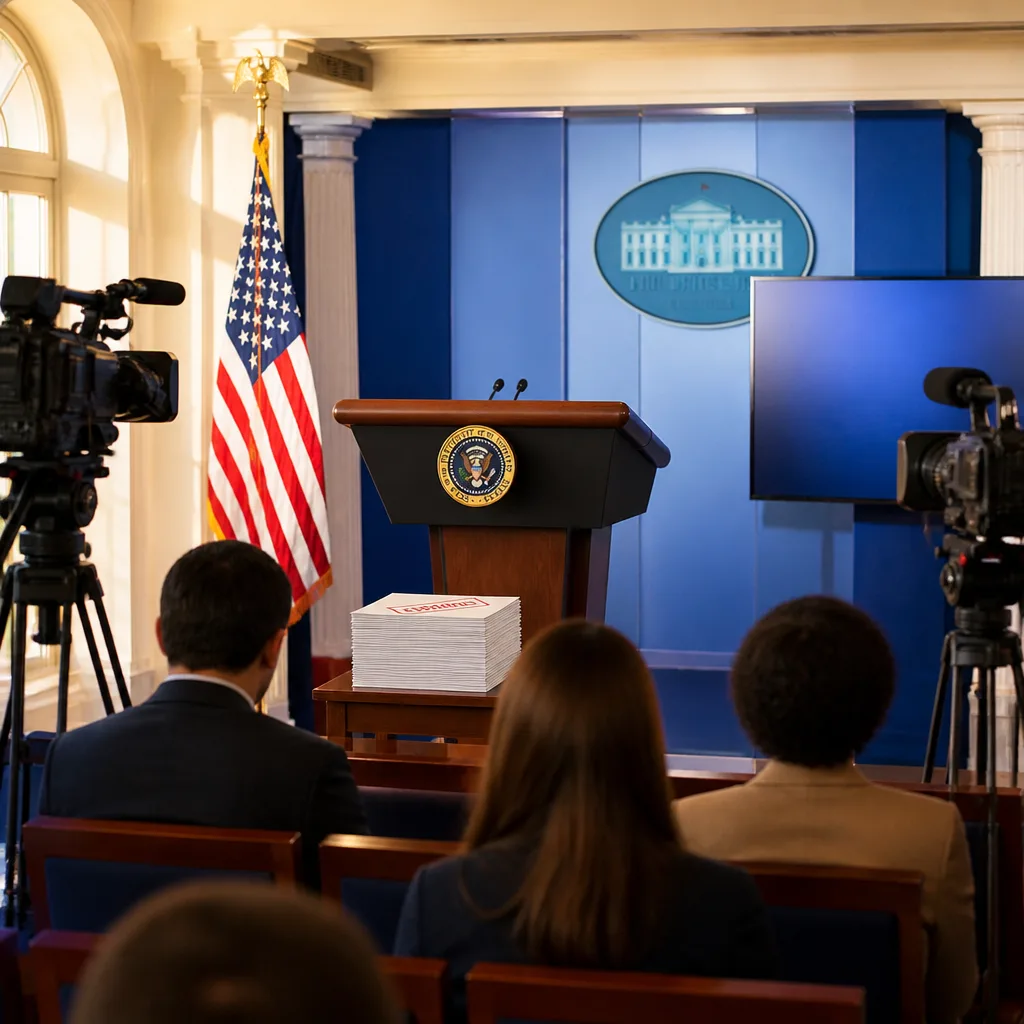
The White House on Thursday sought to frame President Donald Trump’s renewed focus on the 2020 presidential result as a response to public concern ahead of a scheduled primetime television address on election security.
Press secretary frames focus as public concern
During a briefing, White House press secretary Sarah Huckabee Leavitt said the president remains fixed on the 2020 contest because the media has not acknowledged what she described as a broad public worry over the integrity of elections. The briefing came as administration officials prepared for a televised speech the president is expected to deliver that advisers say will set out new findings.
“the media has refused to acknowledge that tens of millions of Americans share his concerns about the sanctity of our elections...Everything he is saying will be backed by facts and by evidence that will be provided this evening,”
Leavitt urged viewers to tune in, telling reporters that the president’s forthcoming "findings will shock you." Those remarks follow press reports indicating the address may include fresh allegations of interference in the 2020 vote. The reports also note that those allegations have not been supported by evidence of widespread fraud.
Political context and public opinion
The announcement arrives against the backdrop of a Washington Post–Ipsos poll showing President Trump’s overall approval rating at 37%, a level that commentators have observed is similar to both his April rating and his approval when he left office in 2021. The poll also found that 81% of Republicans surveyed approve of the president’s performance.
- The White House is positioning the address as an evidentiary briefing on election matters.
- Media and some observers note the absence of evidence for broad fraud allegations tied to 2020.
- Public opinion polls show solid partisan approval but modest overall ratings for the president.
How the speech is received will bear on several institutional dynamics: congressional scrutiny of election-related claims, media reporting standards for contested allegations, and the public’s evaluation of the president’s priorities heading into the broader political calendar. Administration assertions that new evidence will be presented set up an immediate test of those institutions’ capacity to evaluate and verify contested claims in real time.
| Measure | Figure |
|---|---|
| President's overall approval (Washington Post–Ipsos) | 37% |
| Republicans approving | 81% |
Reporters and analysts will be watching whether the president’s televised remarks introduce verifiable documentation or rely primarily on assertions. The White House’s claim that evidence will be provided makes verification an immediate journalistic and political imperative.