Zappa’s no to the 1969 Woodstock stage
Frank Zappa’s decision to forego the 1969 Woodstock music festival has resurfaced with a reminder of his blunt assessment of the conditions artists faced. Speaking in a 1992 documentary, the American bandleader summed up his reasoning in a few words:
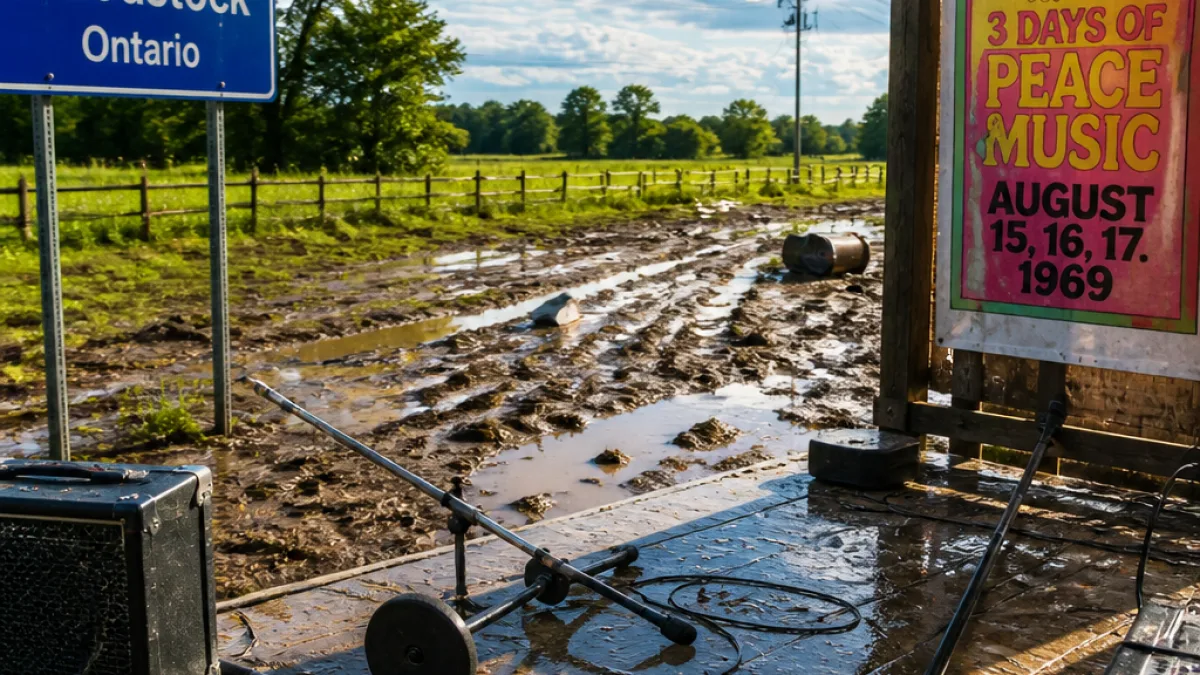
“A lot of mud at Woodstock. We were invited to play there; we turned it down.”
The comments, revisited in a recent Far Out Magazine piece, cut against the rose‑tinted memory of the three‑day gathering on Max Yasgur’s farm in upstate New York. Widely celebrated as a touchstone of the era, the event also struggled with bad weather, technical hiccups and severe traffic, creating an experience that some performers considered too unstable to justify taking the stage.
Not the only high‑profile absence
Zappa and The Mothers of Invention were far from alone in sitting out the festival. Several major acts ultimately did not appear. As recapped in the same coverage:
- Led Zeppelin, John Lennon’s Plastic Ono Band and The Rolling Stones did not take part, with accounts pointing to scheduling and logistical conflicts.
- The Byrds and The Doors elected not to join, reportedly unconvinced by the event’s premise.
- Jethro Tull steered clear, with frontman Ian Anderson long associated with a vivid rationale that included avoiding the atmosphere of partying and mud.
These no‑shows underscore that even era‑defining gatherings did not appeal to every artist. For some, the risks—weather, sound reliability and crowd management—outweighed the promise of visibility at a landmark concert.
What “Woodstock” means here at home
For readers in Woodstock, Ontario, it is worth noting that the 1969 festival, though famous worldwide, took place in Bethel, New York, about 150 kilometres northwest of New York City—and is unrelated to our city beyond the shared name. That overlap has created decades of confusion for tourists and new residents who associate “Woodstock” exclusively with the U.S. concert. The original stage site is a historic venue in Sullivan County, New York, whereas the City of Woodstock is the largest community in Oxford County, in southwestern Ontario.
Understanding the distinction helps set realistic expectations when cultural references surface: when artists discuss “playing Woodstock,” they are referring to the New York festival or its later commemorations, not a performance in our local community.
How artist decisions shape festivals
Zappa’s stance highlights the practical calculus artists apply before committing to large outdoor events. Weather exposure, set timing, and on‑site infrastructure can affect whether a show enhances or harms a reputation. In 1969, the festival’s rapid growth and strained logistics made conditions unpredictable. Performers weighing such factors sometimes choose to opt out—even when an event later becomes iconic. That post‑hoc fame can obscure the very real constraints artists confronted at the time.
| Act | Status at 1969 festival | Reported context |
|---|---|---|
| Frank Zappa & The Mothers of Invention | Declined | Concerns about conditions; “a lot of mud” |
| Led Zeppelin | Did not appear | Scheduling/logistical conflicts (reported) |
| Plastic Ono Band | Did not appear | Scheduling/logistical conflicts (reported) |
| The Rolling Stones | Did not appear | Scheduling/logistical conflicts (reported) |
| The Byrds | Did not appear | Opted out; not persuaded by event |
| The Doors | Did not appear | Opted out; not persuaded by event |
| Jethro Tull | Did not appear | Public comments dismissing the scene |
Why it still resonates
More than half a century on, Woodstock remains shorthand for a generation’s aspirations and contradictions. Zappa’s matter‑of‑fact refusal adds nuance: the same event that symbolized unity also exposed the limits of impromptu mega‑gatherings. For audiences and organizers today, the lesson is familiar—ambition must match infrastructure. When those fundamentals falter, even major names will pass.
For those in Oxford County curious about the legacy, many performances from 1969 live on in recordings and film. Separately, our community continues to host its own concerts and festivals on a scale matched to local capacity and amenities. The 1969 Woodstock story, revived through periodic retrospectives, offers a reminder that behind every celebrated moment lies a chain of practical decisions—some affirmative, some declining—that shape what becomes history.