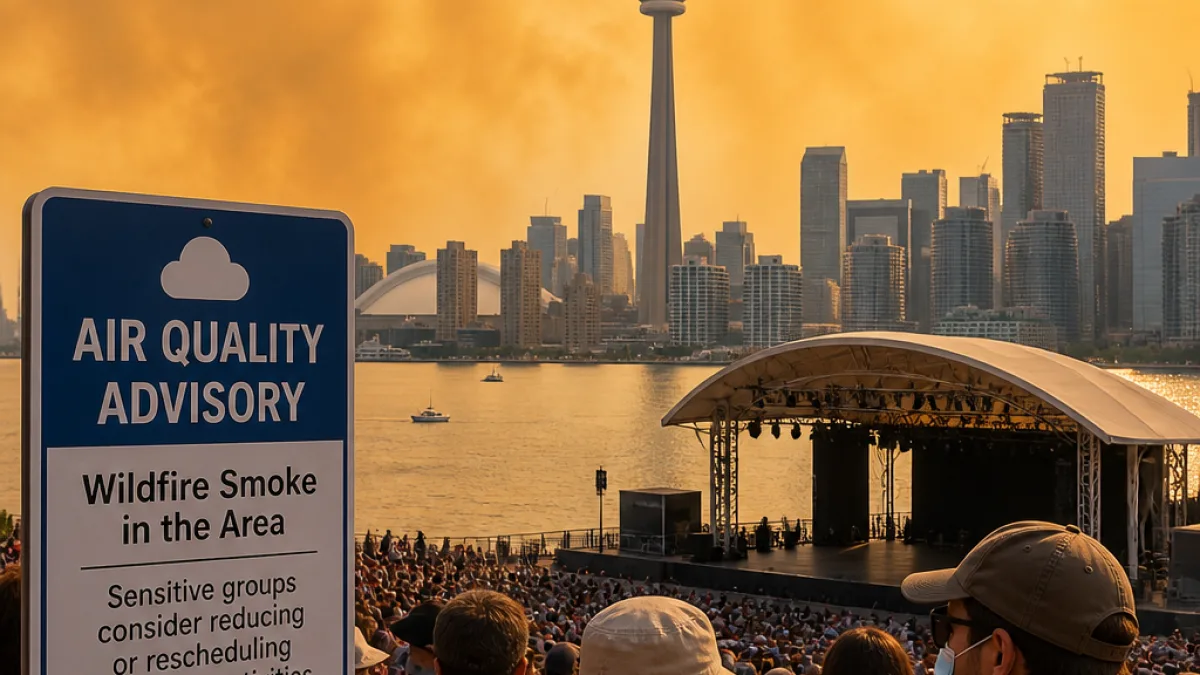
An orange haze settled over Toronto on Wednesday as smoke from wildfires in northwestern Ontario drifted south, prompting an Environment Canada air quality warning (orange) for the city and leaving Toronto among the worst-ranked global cities for air quality by IQAir.
What officials are saying and doing
City authorities moved to curb exposure by cancelling some outdoor events and advising residents to limit time spent outdoors. Despite the advisory, a major concert at the RBC Amphitheatre on the waterfront proceeded on Wednesday evening; some attendees were seen wearing N95 masks and said they had brought masks in case conditions worsened.
“I was a little disappointed that it wasn’t (cancelled) but also really glad that it wasn’t because when do you get a chance to listen to this great band?”
Provincial leaders also addressed the broader wildfire situation. Ontario Premier Doug Ford posted a video on social media describing the provincial firefighting response — reporting that the government has deployed 156 fire crews and nearly 150 water bombers and helicopters — and said the province was receiving assistance from Alberta and Yukon.
Health and weather outlook
Environment Canada forecast a mix of sun and cloud on Thursday, noting the smoke was likely to shift from widespread to more local in the morning. The daytime high was forecast near 29 C with a humidex around 33. Officials said the hazy conditions could linger through Friday.
- Air-quality advisory: Orange alert in effect — sensitive groups should reduce outdoor exertion.
- Event impacts: Some outdoor programming cancelled; other events continued with precautions observed.
- Duration: Hazy conditions expected to persist until Friday.
Practical advice for residents
Public-health guidance for smoky conditions remains consistent: people with respiratory or cardiac conditions, older adults and children should avoid prolonged exposure outdoors and consider remaining indoors with windows closed where possible. When outdoor activity is unavoidable, high-efficiency masks such as N95s can reduce inhalation of particulates.
| Item | Detail |
|---|---|
| Source of smoke | Wildfires in northwestern Ontario |
| Air-quality ranking | Toronto listed among worst globally by IQAir (Wednesday) |
| Expected persistence | Through Friday |
Toronto residents should monitor local public-health and Environment Canada updates for changes to advisories and event cancellations. Those with concerns about symptoms such as increased coughing, shortness of breath or chest discomfort should seek medical advice.
The smoke plumes are part of a larger provincial wildfire season, with active fires in Northern Ontario sending smoke hundreds of kilometres south. Authorities continue firefighting operations in affected regions while tracking air-quality impacts for communities downwind.