
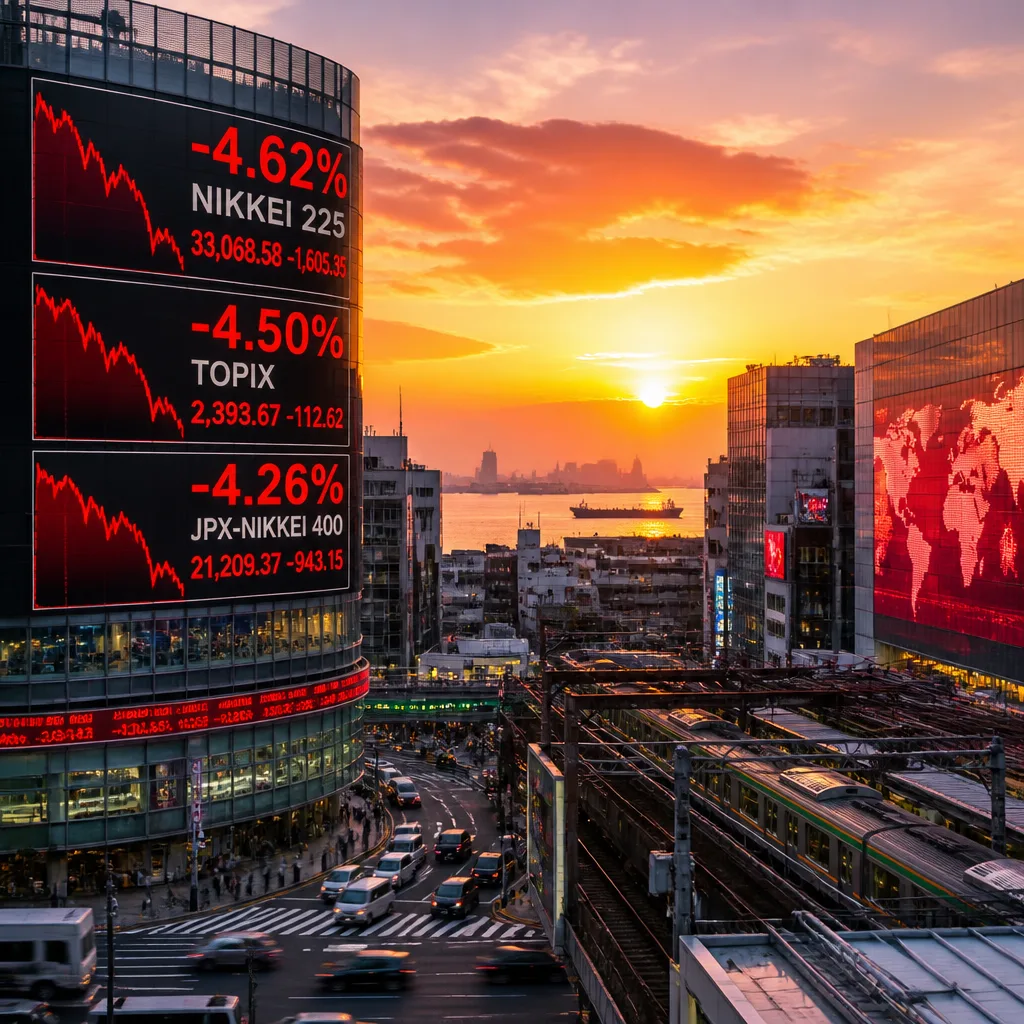
Global equity markets retreated on Friday after a fresh wave of selling in semiconductor and other companies linked to artificial intelligence, with Tokyo’s benchmark tumbling about 4 per cent. The slide came as news of intensified fighting in the Middle East and rising oil prices heightened risk sentiment.
AI optimism collides with profit-taking
Investors pared back positions in several high-profile technology names after a period of strong gains earlier in the year. Shares of firms tied to the AI supply chain — including chipmakers and equipment suppliers — were among the hardest hit. In Tokyo, notable declines included an 8.2 per cent drop in a major chip equipment maker and steep falls for other testing and component suppliers.
"Now investors are taking profits from the first-half winners and moving toward areas that were left behind," Stephen Innes, of SPI Asset Management, said in a commentary.
Regional performance and notable moves
Markets across Asia were broadly weaker. Taiwan’s market slid after the region’s dominant contract chipmaker announced a large planned expansion of fabrication capacity in the United States; that company’s shares fell, contributing to pressure on the broader index. Hong Kong and mainland China benchmarks also retreated, with notable declines in technology and industrial names.
- Tokyo Nikkei 225: down about 4 per cent
- Taiwan: index fell roughly 6.5 per cent the day after a major chipmaker announced large US investment
- Hong Kong Hang Seng: declined around 2 per cent
- Shanghai Composite: slipped about 3.1 per cent to its lowest level in nearly 11 months
Geopolitical risk and commodities
Separately, renewed combat in the Middle East lifted oil prices, adding another layer of concern for investors already reassessing the pace of gains in tech-related sectors. The United States expanded its airstrike campaign against Iran, including strikes on bridges and a port tower, part of a stated effort to target infrastructure — a development that traders cited as a factor in the uptick in oil and the broader risk-off mood.
European markets opened mixed, with major indices showing modest moves: Germany’s benchmark edged lower, France’s broad market declined slightly, while Britain’s leading index saw a modest gain. Futures for major U.S. indexes pointed to a weaker open, reflecting global caution ahead of the North American trading day.
| Index | Approx. move |
|---|---|
| Nikkei 225 (Tokyo) | -4% |
| Taiwan index | -6.5% |
| Hang Seng (Hong Kong) | -2% |
| Shanghai Composite | -3.1% |
For Canadian investors, the episode underscores two broader dynamics: the vulnerability of premium valuations in sectors tied to emergent technologies when investor expectations shift, and the way geopolitical flare-ups can rapidly feed through to commodity markets and global asset prices. Portfolio managers and savers watching volatility will weigh whether the move represents a tactical correction or the start of a deeper reassessment of AI-related earnings prospects.
As markets adjust, traders will be closely monitoring corporate earnings, capital expenditure announcements in the semiconductor sector, and further geopolitical developments that could influence oil and shipping routes. Those variables will shape whether the current weakness is transitory or the beginning of a more extended risk-off phase.