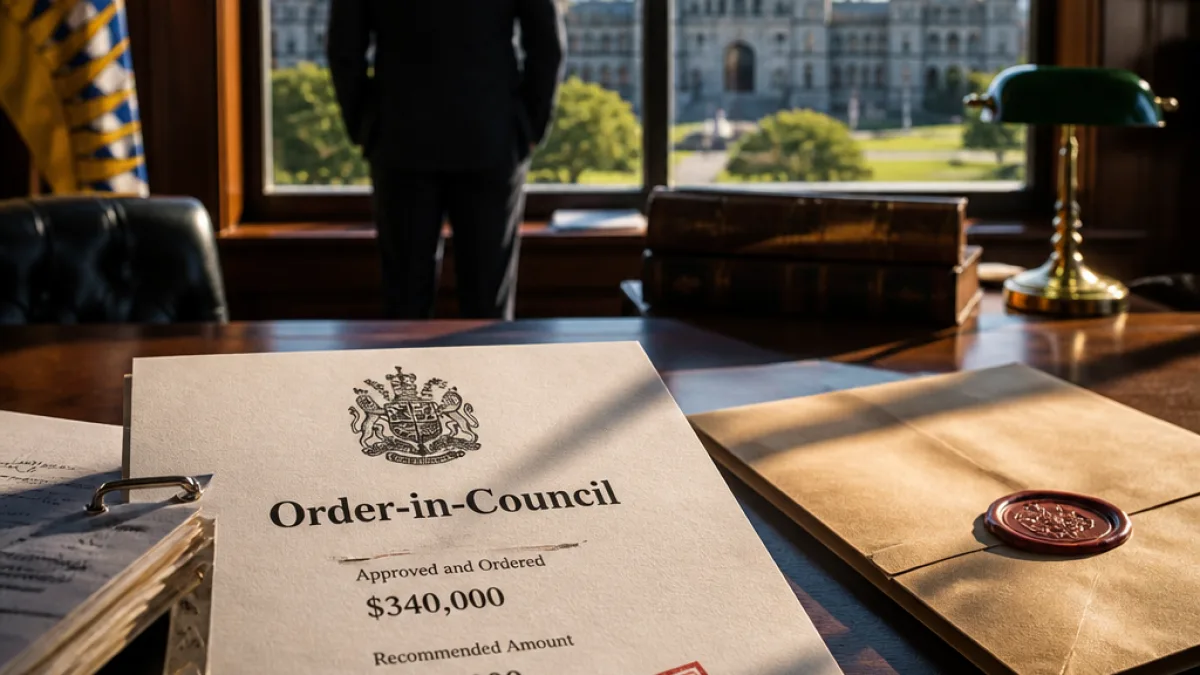
The British Columbia government has forgiven the bulk of a former staffer’s legal bill tied to the 2013 “quick wins” partisan communications scheme, approving an order-in-council that relieves the former employee of roughly $340,000 in costs.
Key numbers and decision
An order-in-council dated July 10 authorizes cabinet to waive repayment under the government’s employee indemnity regulation. That regulation generally covers the cost of legal defence for employees who are accused in prosecutions while performing their duties; convicted employees are ordinarily required to reimburse the province for those expenses.
According to B.C. NDP house leader Mike Farnworth, the overall legal bill with interest came to about $460,000. The government has agreed to a settlement that requires the former employee to repay around $120,000, leaving approximately $340,000 of the legal costs forgiven.
“I think it brings closure to what happened,”
Farnworth said he could not disclose further details of the settlement or explain why the full amount covered by the province was not repaid.
Background: the quick wins case
The matter stems from the so-called “quick wins” scandal tied to the 2013 provincial election. The individual at the centre of this settlement, a former communications director assigned to the multiculturalism communications office, was hired in 2011 and later pleaded guilty in 2017 to breach of trust after using his role for partisan purposes. He received a nine-month conditional sentence at the time. A trial judge described the conduct as causing “insidious damage” and said it encouraged cynicism about government serving the public interest.
- Order-in-council date: July 10
- Approximate legal costs originally covered: $460,000 (including interest)
- Amount to be repaid by former employee: $120,000
- Amount forgiven by government: $340,000
Accountability and transparency concerns
The decision revives questions about how the province applies its indemnity regulation and under what circumstances governments will waive reimbursement after a conviction. The regulation exists to ensure employees can obtain legal representation when acting in their official capacity, but it also contains a repayment requirement intended to protect the public purse if an employee is convicted.
Opposition and public-interest observers typically argue that clemency in repaying legal costs should be rare when misconduct results in criminal conviction. Government officials have not released detailed reasons for the settlement or the rationale behind the specific repayment figure, beyond the order-in-council itself.
| Item | Amount (approx.) |
|---|---|
| Total legal costs (with interest) | $460,000 |
| Repayment required by former employee | $120,000 |
| Forgiven by government | $340,000 |
For citizens and watchdog groups the central questions now are procedural: what factors led cabinet to approve partial forgiveness, whether similar settlements will follow in other cases, and how the government intends to balance legal-cover protections for employees with accountability for misuse of public office.
The government has not provided further explanation beyond the order-in-council; the defence counsel named in earlier reports was not immediately available for comment on the settlement.