Canadian chip suppliers ride U.S. AI spend
Canadian small and mid-sized companies in the semiconductor arena are capturing more U.S. business as the artificial intelligence buildout accelerates, even as they navigate persistent trade-policy uncertainty and broader geopolitical tensions. With Big Tech pouring capital into compute infrastructure, several Canadian executives say orders and project pipelines are swelling.
Financial disclosures from Meta Platforms, Amazon, Alphabet and Microsoft point to more than US$700 billion in combined 2026 AI-related investment. Looking further out, Goldman Sachs estimates total tech AI spending will top US$5 trillion by 2030. That scale is reshaping demand for chip design, power-saving components and specialised engineering talent — areas where Canadian firms say they can compete.
Licensing, design and power efficiency in focus
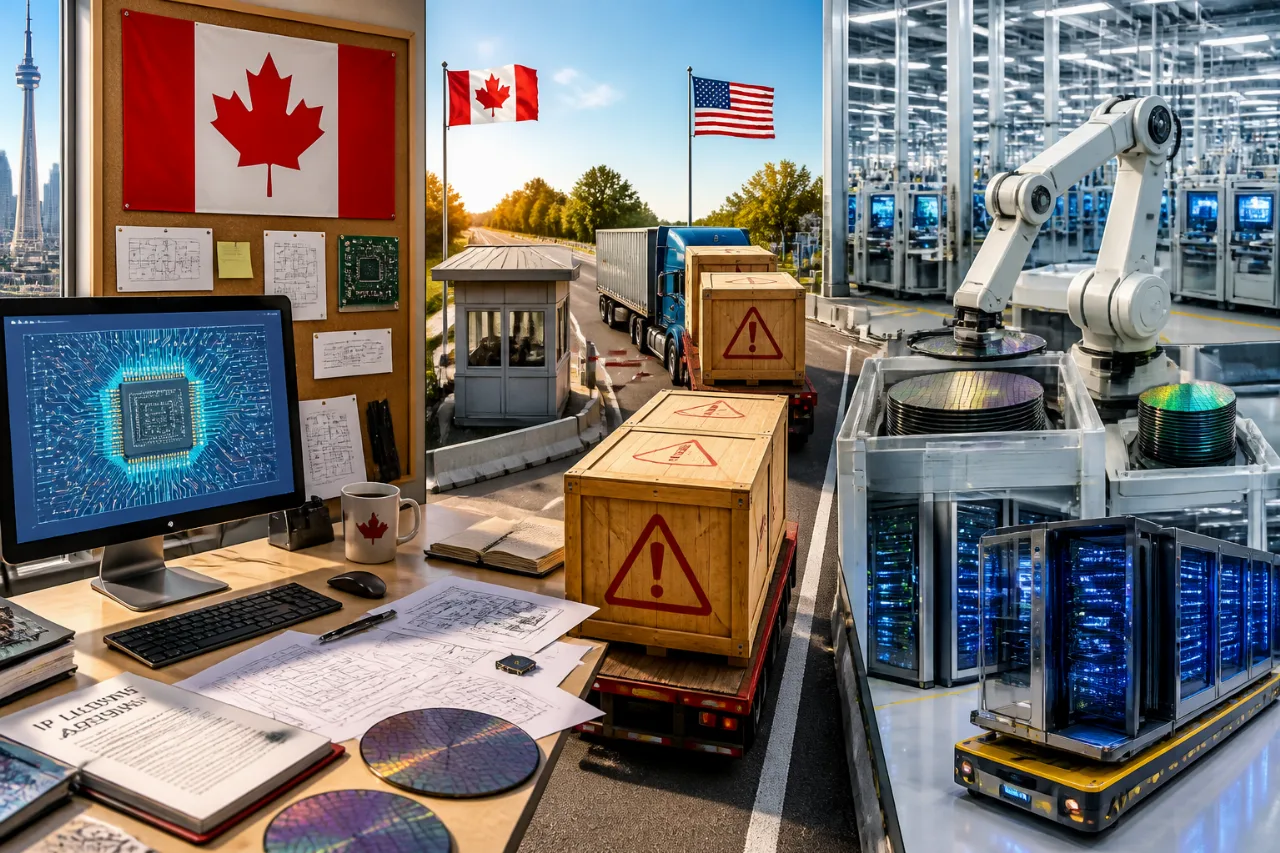
Toronto-based MaxEpic Inc. is seeing a sharply larger pipeline for its energy-efficient chiplets designed to cut power draw in AI systems. Founder and chief executive Jerry Zhai said potential business and revenue for the company’s devices have “expanded significantly” over recent years. Because MaxEpic licenses its technology to chipmakers and major platforms rather than exporting physical goods, he said direct exposure to potential U.S. tariffs on Canadian products is limited. Even so, the firm has reworked its supply chain over the past 18 months, shifting manufacturing from Asia to the United States to reduce tariff risk and keep customers close.
In Brampton, Advanced Micro Consulting Inc. provides chip design and engineering services to semiconductor and technology companies. Chief executive Mani Sethi said clients pulled back in early 2025 to assess the implications of U.S. trade actions under President Donald Trump, but activity has since rebounded strongly as AI demand asserts itself.
“It doesn’t matter now what Trump is doing,” he said. “Demand is through the roof because of AI.”
Big Tech’s in-house chips and the Nvidia effect
As hyperscalers scale up AI capacity, U.S. chipmakers are pushing for more advanced designs, while many large platforms are developing chips in-house to curb costs and lessen dependence on Nvidia Corp. That shift is opening niches for Canadian specialists:
- Design services: Outsourced architecture and verification work for custom and application-specific chips.
- Licensed IP: Power-saving chiplets and building blocks that can be integrated into third-party designs.
- Supply-chain localisation: Onshoring portions of production to the U.S. to align with customer preferences and mitigate tariff exposure.
While no single vendor can deliver a fully integrated AI silicon stack, executives say that fragmentation is a feature, not a bug, for smaller players. The breadth of needs — from interconnects and memory to energy efficiency and packaging — creates room for focused firms to win slices of large programmes.
Why this matters for Canadians
For Canadian businesses, the opportunity is twofold: service-led revenue from cross-border design and consulting, and licensing fees from intellectual property embedded in high-volume chips. If sustained, that can support high-skilled employment, attract investment into R&D and encourage more firms to build out U.S.-adjacent manufacturing partnerships. For households and enterprise customers, the longer-term impact could flow through to the cost and availability of AI-enabled services as data centres seek to reduce energy use and improve performance-per-watt — areas directly targeted by energy-efficient chiplets.
However, risks remain. Trade frictions can alter cost structures with little notice, prompting operational pivots such as the shift of manufacturing from Asia to U.S. sites noted by MaxEpic. Policy-driven changes in procurement rules or tariffs could also influence where design and packaging work lands. Firms that licence IP rather than ship goods may be buffered from direct tariff hits, but supply chains still face adjustment costs when customers reconfigure production geography.
Spending scale highlights runway
With companies signalling historic levels of AI capex today and multi-trillion-dollar outlays projected through the decade, Canadian suppliers are positioning to capture recurring work as platforms iterate chips annually. The current boom is lifting demand broadly, but the winners are likely to be those that can demonstrate measurable power savings, faster time-to-market and the ability to co-develop alongside U.S. partners under evolving trade regimes.
| AI investment indicator | Figure (USD) | Timeframe |
|---|---|---|
| Big Tech AI spend (Meta, Amazon, Alphabet, Microsoft) | >$700 billion | 2026 |
| Projected total tech AI spend (Goldman Sachs) | >$5 trillion | By 2030 |
For now, the message from the front lines is that AI demand is eclipsing policy jitters. As Sethi put it, customers are moving ahead with projects despite the noise, keeping Canadian engineering benches and IP portfolios in demand alongside America’s rapidly expanding AI infrastructure.