According to the Canadian Cancer Society, two in five Canadians will receive a cancer diagnosis in their lifetime. For people in the Châteauguay Valley facing treatment, practical supports and knowledge of nearby oncology capacity can make a decisive difference in access to care and quality of life.
Volunteer transport: limited free rides and practical rules
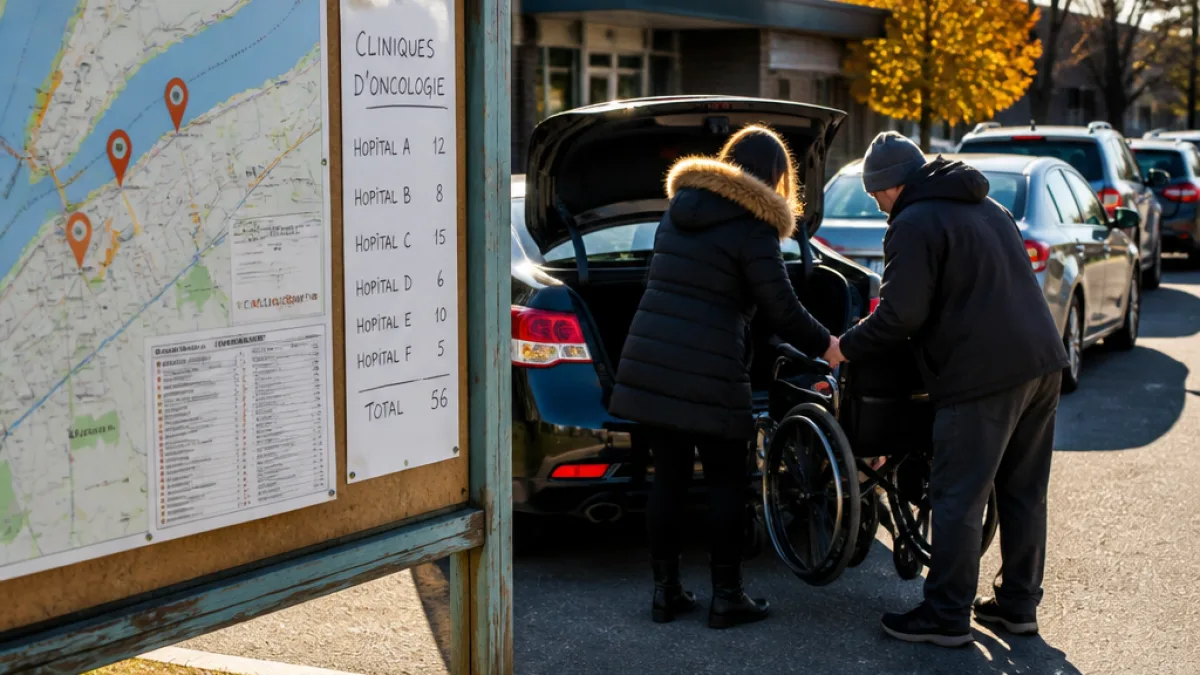
Residents requiring transport for cancer treatments can turn to SABEC, a volunteer driving organisation serving the MRC Haut-Saint-Laurent. The service offers 15 free rides per year to people receiving chemotherapy, radiation, immunotherapy or cancer surgery.
- Free rides do not cover doctors' appointments or biopsy visits.
- SABEC currently counts about 50 volunteer drivers.
- Drivers will wait during the appointment and can accompany patients into the hospital, but not into the physician's office.
- Requests require two business days' notice and details of the trip; fees apply after the initial 15 rides.
“We are always looking for new drivers,” said Isabelle Woods of SABEC, who also noted concern that current gas prices may force an increase in transportation fees.
Where patients in the region receive oncology care
Patients from the Châteauguay Valley have several nearby hospital options for oncology treatment. Available chemotherapy chair counts reported for the region include:
| Hospital | Chemotherapy chairs |
|---|---|
| Suroît Hospital, Valleyfield | 12 |
| Anna-Laberge Hospital, Châteauguay | 15 |
| McGill University Health Centre (MUHC) | 52 |
| Jewish General Hospital | 12 |
| Centre hospitalier de l’Université de Montréal (CHUM) | 30–50 |
Some hospitals in the region provide radiation therapy; patients should confirm the type of treatment offered at each site when planning care and transportation.
Implications for patients and caregivers in Châteauguay
The combination of limited free transportation trips, the scope of volunteer resources and the geographic spread of oncology services highlights the need for advance planning. Patients who require repeated treatments or have mobility challenges will need to account for the 15-ride limit and possible fees thereafter, as well as the two-business-day booking requirement.
Local caregivers and community organisations can help by coordinating schedules, identifying alternative transport options and supporting recruitment of volunteer drivers for SABEC. More information on SABEC, including how to request rides or volunteer, is available at sabeduhsl.com.
For residents of Châteauguay and the surrounding valley, awareness of these supports — and their limits — is essential in navigating the practical side of cancer care alongside clinical treatment.