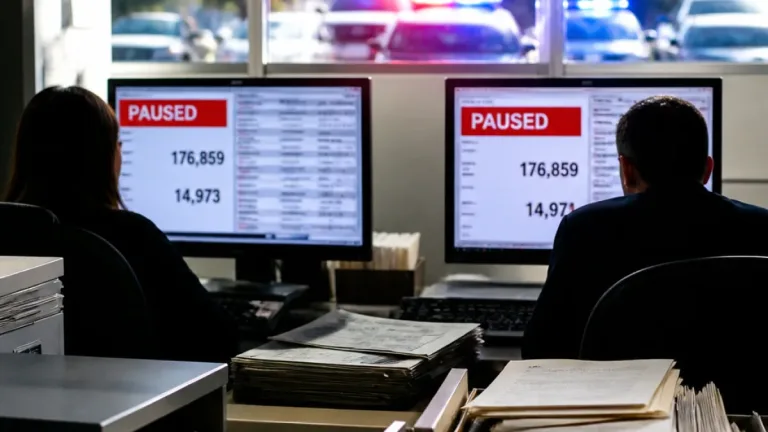
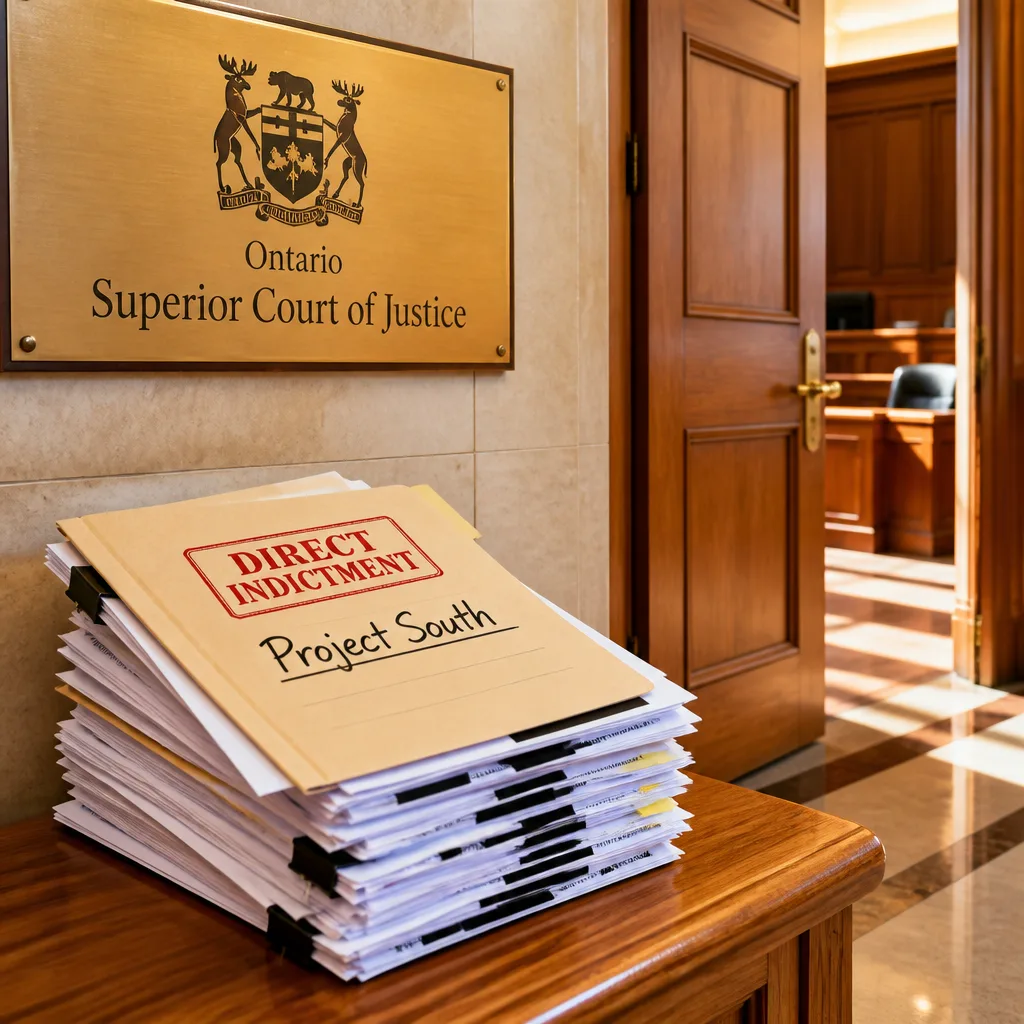
Prosecutors have narrowed the scope of the police corruption and organized crime investigation known as Project South, filing Superior Court indictments for eight accused that list 33 fewer charges than those originally laid by police earlier this year. The Crown is also proceeding by direct indictment in the cases of 13 individuals, sending those matters straight to trial in the Ontario Superior Court of Justice and bypassing a preliminary inquiry.
Current and former prosecutors, speaking generally, told CBC News that screening and streamlining charges is a normal part of building the strongest possible case. Such review can remove overlapping or less provable counts before trial, without preventing police from having laid them in the first place. In this instance, the formal indictments on file for eight of the accused reflect that cull, with the Crown proceeding on a reduced set of allegations.
Direct indictments accelerate trial timelines
Proceeding by direct indictment allows the Crown to forgo a preliminary inquiry, a stage that typically tests whether there is sufficient evidence to move to trial. According to CBC’s reporting earlier this month, prosecutors elected this route for 13 accused in the Project South docket, moving those cases directly into the Superior Court stream. CBC also reported that all but one of the Toronto police officers charged in the investigation are heading straight to trial.
The change in posture signals the Crown’s intent to consolidate the prosecution around what it views as the most supportable evidence and legal theories. It does not, on its own, speak to the strength or weakness of any single count, and all accused retain the presumption of innocence unless and until proven guilty in court.
Charges pared back before trial
The shift from initial police charges to formal indictments is common in complex criminal files, including corruption and organized crime cases. Prosecutors regularly reassess material after disclosure, legal analysis and consultations, then tailor the indictment accordingly. In the Project South matters now on the Superior Court docket, that reassessment has translated into 33 fewer charges across eight accused than those first announced.
- Eight accused now face streamlined indictments filed in Superior Court.
- Those indictments contain 33 fewer charges than initially laid by police.
- Thirteen accused are proceeding by direct indictment, skipping preliminary inquiries.
| Item | Figure |
|---|---|
| Accused with filed Superior Court indictments | 8 |
| Reduction in charges vs. original police counts | 33 fewer |
| Accused proceeding by direct indictment | 13 |
Background on the investigation
York Regional Police Deputy Chief Ryan Hogan outlined elements of Project South at a news conference in early February. The investigation centres on alleged links between organized crime and police corruption. While the allegations are serious, none have been proven in court. The latest court filings reflect the ordinary litigation arc that follows high-profile arrests, where charging decisions evolve as prosecutors refine their theory of the case and prepare for trial.
By proceeding in Superior Court, the Crown places these files on a path to be adjudicated before a judge and, where applicable, a jury. The absence of a preliminary inquiry means the first fulsome testing of the evidence will occur at trial, compressing timelines but also placing a premium on pre-trial motions, disclosure management and case sequencing. Defence counsel will have opportunities to challenge admissibility, contest the remaining counts and advance Charter arguments in the usual course.
What the streamlining means for the accused and the public
Charge reduction prior to trial does not amount to a stay or withdrawal of the entire case; rather, it concentrates the prosecution on selected counts. For the accused, this can clarify the scope of what will be contested at trial. For the public, the shift underscores that initial charging announcements are provisional and subject to prosecutorial review. As the Project South matters advance, the court record — including any further amendments or applications — will guide the eventual contours of the trials.
The court has not yet tested the remaining allegations in evidence. Until verdicts are rendered, those charged are entitled to the presumption of innocence. Further updates will follow as scheduling decisions, motion outcomes and trial dates are set in the Superior Court.