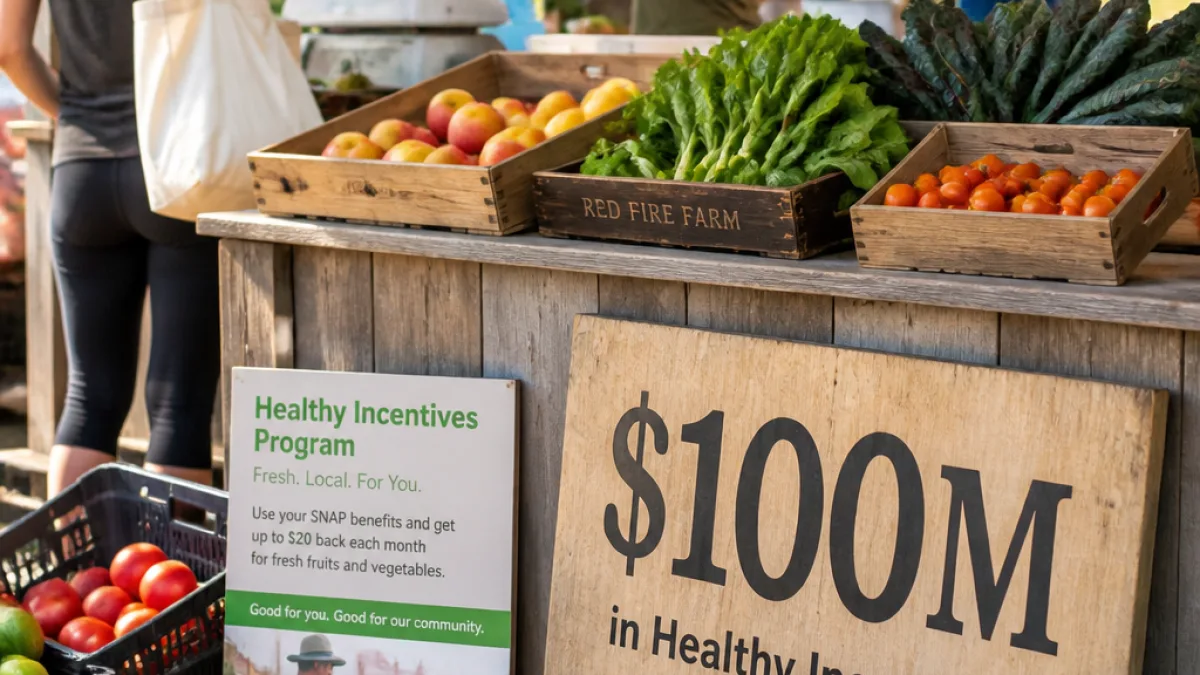
GRANBY — State officials and farmers gathered at Red Fire Farm this week to mark a milestone for the Massachusetts Healthy Incentives Program (HIP): the program has supported $100 million in purchases of locally grown fruits and vegetables since it launched.
Program supports farmers and food access
Launched in 2017, HIP is the nation’s first produce-based food assistance initiative that pairs Supplemental Nutrition Assistance Program (SNAP) benefits with extra purchasing power for fresh, local produce. According to program officials, every person enrolled in SNAP is automatically enrolled in HIP, and participants receive a monthly credit for produce purchases at participating locations.
- $100 million — total HIP sales in fruits and vegetables since 2017.
- 500 — pickup locations statewide accepting HIP credits.
- $40, $60 or $80 — typical monthly credit amounts provided to participants, depending on household size.
HIP director Mia Kortebein described the program as broadly popular with both consumers and producers. Farmers benefit from a steady customer base and improved revenue streams, while SNAP participants gain greater access to fresh, local produce.
“It’s a program everyone can believe in,” said Mia Kortebein.
Local impact at Red Fire Farm
Red Fire Farm, which has a location in Granby, was among the early farms to sign on to HIP. Co-owner Sarah Voiland told event attendees that before joining HIP, the family saw declining attendance at farmers markets; the program has helped reverse that trend. Organizers said the farm now sells roughly $2,000 in HIP funds at each market in Springfield.
| Program element | Detail |
|---|---|
| Launch year | 2017 |
| Total sales supported | $100 million (fruits and vegetables) |
| Monthly credit levels | $40, $60, $80 |
Broader implications
Officials framed HIP as a twofold policy success: increasing access to fresh produce for low-income households while keeping revenue in the regional farm economy. The program’s structure — automatic enrolment for SNAP recipients and preset monthly credits that can be used at hundreds of pickup points — aims to simplify participation and ensure steady demand for small and mid-sized farms.
For Granby residents involved in agriculture, food programming or community health, the event underlined a practical model of public support that ties nutrition assistance directly to local food systems. The figures cited at the Red Fire Farm gathering provide a measurable account of the program’s scale through its first nine years.
Readers seeking more details on HIP enrollment and participating locations are encouraged to consult Massachusetts program resources or their local food-access agencies.