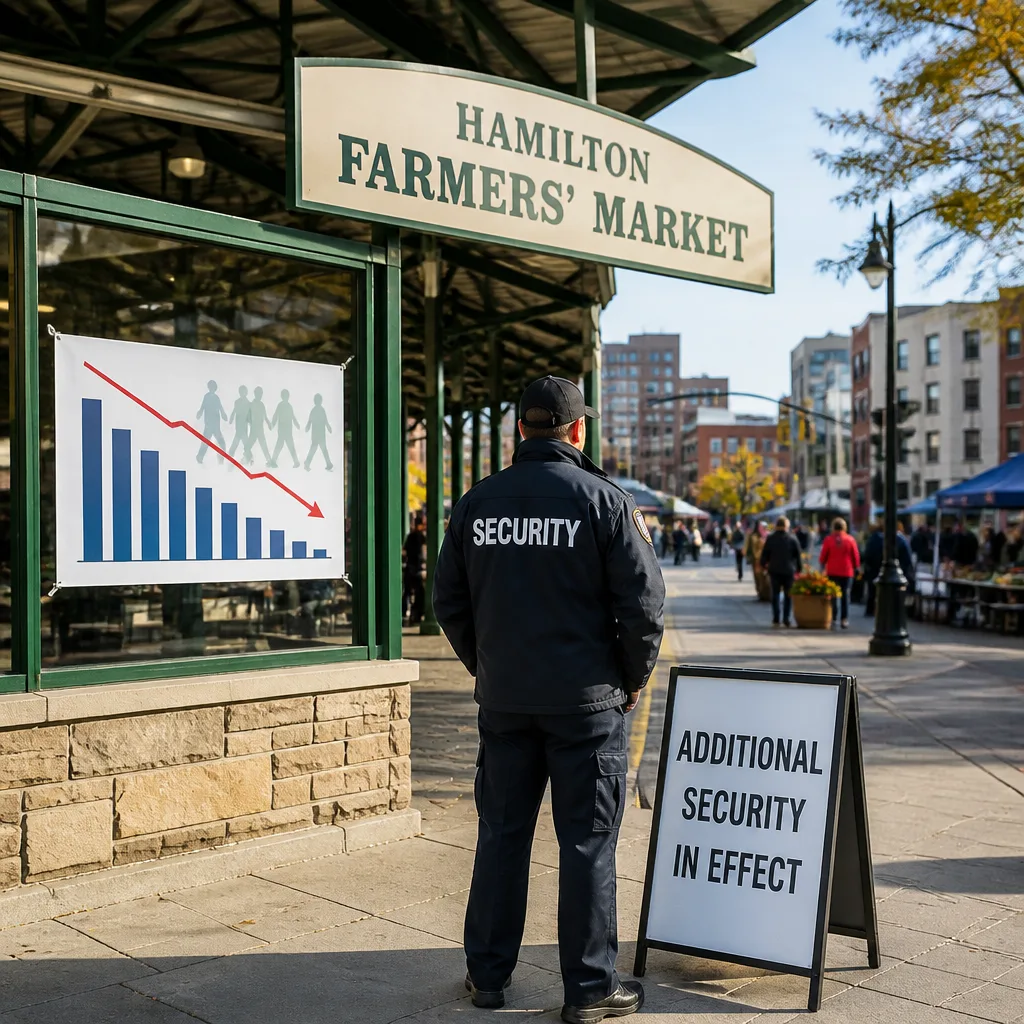
Foot traffic at the Hamilton Farmers’ Market decreased sharply in the second quarter of 2026, with a 14.1 per cent year-over-year decline recorded in June alone, according to a statistics update delivered to the market’s governing board. Management attributes the slide in part to recent high-profile violent incidents in the downtown core and ongoing safety concerns in the surrounding area.
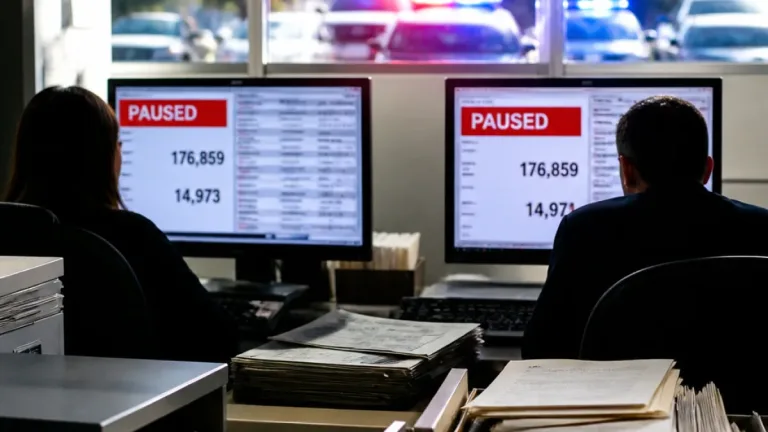
The report, submitted by Market Manager Bill Slowka, shows total visits in April through June fell to 155,099 from 170,990 a year earlier — a 9.3 per cent decline representing 15,891 fewer visits. The downturn accelerated each month of the quarter, alongside a 10.1 per cent drop in Saturday attendance compared with the same period in 2025.
Quarterly traffic trends
| Month (2026) | Year-over-year change |
|---|---|
| April | -3.5% |
| May | -8.7% |
| June | -14.1% |
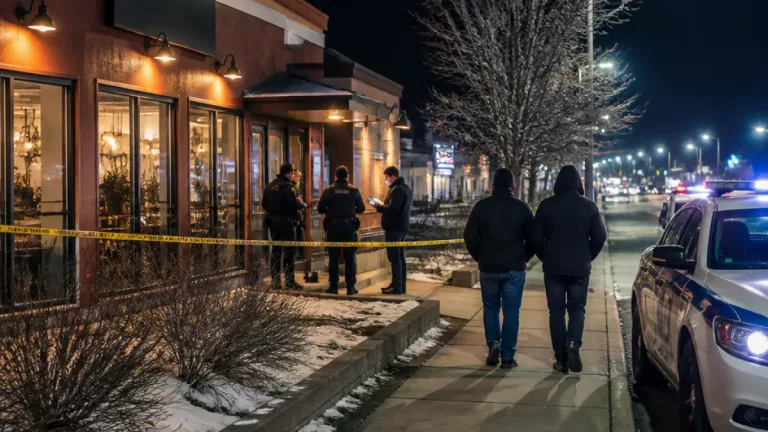
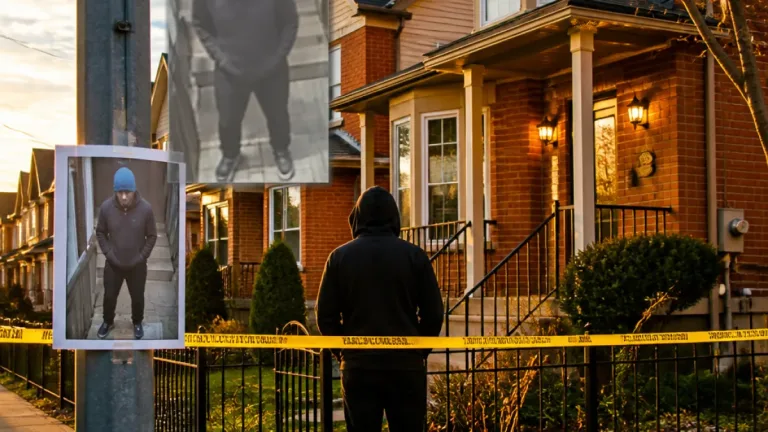
In the submission to the board, market management links the decreased patronage to a series of violent events and visible street disorder in the immediate vicinity. The document specifically references a shooting inside Jackson Square earlier this year, and notes a series of random stabbings involving four victims in the past week, as well as the presence of homelessness and panhandling near the market.
“Several external factors have added to the challenge of building Market traffic,” Slowka’s report states. “Examples include a shooting incident in Jackson Square, and visible homelessness and panhandling in the immediate area, which have added to safety concerns expressed about coming downtown.”
Visible reminders of past violence remain, the report notes. A bullet hole from the fatal April 2026 shooting at Jackson Square is still apparent inside the mall. Separately, damage from a July 2025 shooting that wounded an innocent bystander is still etched into the former Birks Clock pillar at King Street and James Street.
Security measures and operational outlook
In response to safety concerns, the market now maintains a dedicated security guard on duty during all operating hours, with a second guard added during peak times. The report does not provide additional details on the duration of these measures or any future adjustments, but characterizes them as part of efforts to reassure patrons and vendors.
The traffic decline comes as the market prepares to embark on a five-year plan aimed at achieving self-sufficiency on its operating budget. The report does not outline financial projections or contingency measures tied to lower footfall, but the timing underscores the operational pressure created by a prolonged reduction in visits.
What the report highlights
- Total Q2 visits fell to 155,099, down 9.3% from 2025.
- Monthly declines deepened from April (-3.5%) to May (-8.7%) and June (-14.1%).
- Saturday attendance dropped 10.1% year over year in Q2.
- Management cites recent violent incidents, street disorder and safety perceptions as deterrents.
- Enhanced security staffing is now in place during all hours, with additional coverage at peaks.
The market’s analysis places heavy emphasis on perceptions of safety as a driver of customer behaviour. The report links reduced foot traffic to the cumulative effect of recent violent incidents and their lingering physical markers in the downtown landscape, along with visible homelessness and panhandling near the market. It does not assign responsibility for the incidents, nor does it include enforcement statistics; rather, it reflects feedback attributed to members of the public who have expressed reluctance to visit.
The update indicates the Hamilton Public Library will next report on usage statistics at the Central branch, which is also located in the downtown core. No timeline is provided for that release in the market document.
The market’s board has not yet publicly detailed further steps it may take beyond the current security posture. Any sustained contraction in traffic could complicate its path to operating self-sufficiency if the trend persists into subsequent quarters. The report, however, confines itself to the latest visitation data and immediate mitigations, and does not project future attendance.
While the latest figures capture only the second quarter, the progressive month-over-month deterioration suggests that June’s environment — marked by the cited violent incidents and concerns around disorder — had the strongest effect on visitor behaviour. Whether the added security presence and broader downtown conditions shift sentiment in the coming months remains to be seen.