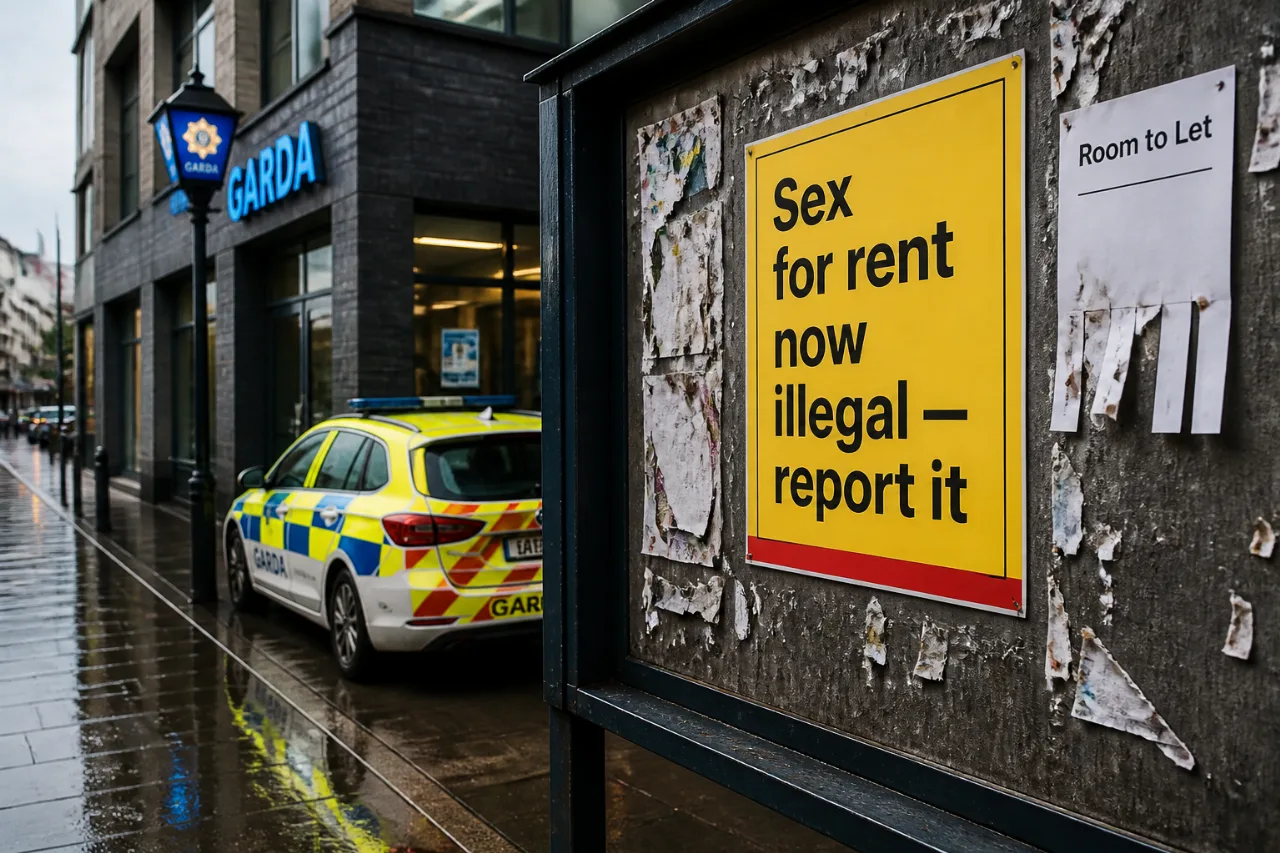
Ireland has enacted legislation that makes the offer of “sex for rent” exploitation a crime, a move the country’s National Women’s Council (NWC) is calling a major step toward protecting women seeking accommodation and employment in private homes.
Law enacted after multi-year advocacy
The NWC said the measure, taking effect on Tuesday, July 14, 2026, follows sustained work by advocates, journalists, cross-party politicians, philanthropists and non-governmental groups. The organization’s 2024 research, supported by Community Foundation Ireland, detailed how housing-market conditions created opportunities for sexual exploitation. That research was followed by a commitment in the Programme for Government 2025 to outlaw the practice, and the introduction of Labour Party and Government Bills that culminated in this week’s enactment.
“With this legislation, women are safer in the rooms they rent, safer in the families they work in, and safer as they seek accommodation. What will be key now is that the law is implemented and enforced effectively,” NWC Executive Director Corrinne Hasson said. “Online platforms must be held accountable if they host illegal ads for sex for rent. Legal protections for renters, particularly in rent-a-room schemes, must be strengthened. And there will have to be a public information campaign so that women know what they can do if they receive an exploitative offer of sex for rent.”
What the measure targets
The legislation specifically addresses the offer of “sex for rent” exploitation, aiming to curtail situations in which individuals seeking accommodation are pressured into sexual activity as a condition for tenancy or reduced rent. The NWC framed the change as part of a broader response to domestic, sexual and gender-based violence, urging that implementation align with recommendations from the Joint Committee on Justice, Home Affairs and Migration.
Implementation and enforcement priorities
While describing the passage as a “major win,” the NWC emphasized that enforcement will determine its impact. The council is pressing for immediate, concrete steps to embed the law in frontline practice and online oversight:
- Training for gardaí and frontline services to identify and respond to sex-for-rent offences.
- Accountability for online platforms that host illegal advertisements facilitating exploitation.
- Stronger legal protections for renters, including safeguards within rent-a-room arrangements.
- Public information campaigns so potential victims know how to report and access help.
NWC leaders underlined that survivors, frontline workers and reporters kept the issue in the public eye, helping to move it from research findings to legislative action on a comparatively swift timeline.
Timeline of key steps
| Year | Development |
|---|---|
| 2024 | NWC publishes research on sex-for-rent exploitation, supported by Community Foundation Ireland. |
| 2025 | Programme for Government commits to outlaw the practice; Labour Party and Government Bills follow. |
| 2026 | Legislation enacted, making the offer of sex for rent exploitation a crime. |
Next steps as law takes effect
The NWC said full implementation of its recommendations, consistent with guidance from the Joint Committee on Justice, Home Affairs and Migration, will be essential to both respond to and prevent offences. The organization’s Senior Policy Officer on Violence Against Women, Ivanna Youtchak, credited a “societal effort” that included survivors and frontline services for sustaining momentum toward the ban.
As the legislation comes into force, advocates will watch for operational measures across policing, rental protections and digital-platform compliance. The council signalled it expects the law to be backed by resources for enforcement and by public information to ensure those targeted by exploitative offers can recognize offences and seek assistance.