
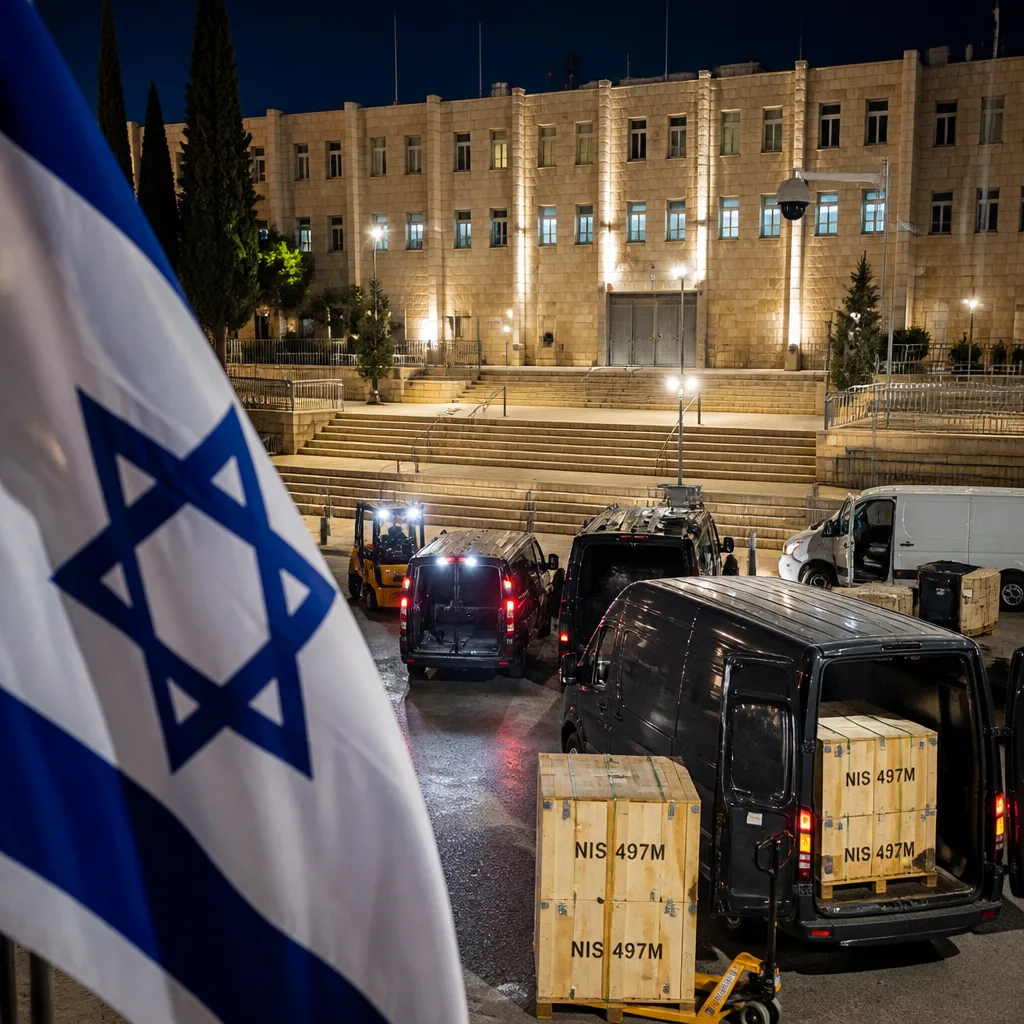
The Israeli cabinet on Wednesday night approved a plan that will place the Shin Bet (Israel Security Agency) alongside the police in operations aimed at combating organised crime in Arab communities, reallocating about NIS 497 million from the government’s five-year development package known as Resolution 550 to finance the initiative.
Funding, staffing and responsibilities
Under the plan, roughly NIS 364.5 million will be earmarked to establish a Shin Bet unit devoted to disrupting the smuggling and trafficking of weapons and to bolster its intelligence and operational capabilities. The remainder — about NIS 132.4 million — will go to the Israel Police to create a national unit focused on crime in Arab locales and to develop technological infrastructure and acquire advanced equipment.
| Allocation | Amount (NIS) |
|---|---|
| Shin Bet unit and capabilities | 364.5 million |
| Israel Police national unit and tech | 132.4 million |
| Total reallocated | 497 million |
The plan also provides for an additional 130 personnel positions for the Shin Bet beginning in 2026 and establishes a permanent annual budget line of NIS 35 million starting that year.
Political framing and public safety rationale
Prime Minister Benjamin Netanyahu described the measure as a major escalation in the campaign against organised crime in Arab communities, which he characterised as a “national plague.”
"The inclusion of the Shin Bet in the fight against crime in the Arab sector, which has become a national plague, is dramatic news and a significant step in our all-out war against criminal organizations... We will not accept a reality of violence, extortion, and murder in the streets."
Minister for Social Equality May Golan framed the move as exposing and reversing previous policy decisions, noting she had resisted pressures to alter the five-year plan under the former government.
Operational and legal implications
Deploying an internal intelligence service to address criminality within a specific population raises questions about the Shin Bet’s mandate, oversight and the coordination required between intelligence and law-enforcement bodies. The plan as approved assigns explicit tasks relating to weapons trafficking and intelligence gathering, but the details of operational control, legal authorities and safeguards were not provided in the government announcement.
- Financial shift: NIS 497 million transferred from Resolution 550 to fund the initiative.
- Shin Bet expansion: NIS 364.5 million plus 130 new positions and a NIS 35-million annual budget from 2026.
- Police resourcing: NIS 132.4 million to create a national unit and buy new technology.
Supporters of the move argue it will strengthen capacity to target organised networks and stem the flow of illegal arms. Critics — including civil society groups and legal experts not quoted in the government summary — are likely to press for clarity on legal limits, oversight mechanisms and the potential impact on communities that will be subject to increased intelligence activity.
The government did not at the time of the announcement publish operational guidelines or oversight arrangements for the Shin Bet’s new domestic role. How the expansion will be implemented in practice, and how it will interface with police investigations and community policing efforts, remains to be detailed.
Authorities say the initiative stems from rising violence, extortion and killings within Arab-Israeli localities. The reallocation of funds from a socio-economic development programme to security interventions marks a significant policy choice with both fiscal and civil liberties consequences.
Further announcements on implementation, legal frameworks and oversight are expected as the measures move toward execution in 2026.