Montreal Public Health has issued an alert for residents and visitors after a sustained increase in overdoses across the city and the confirmation of carfentanil in several suspected deaths.
Unusually high number of non-fatal overdoses
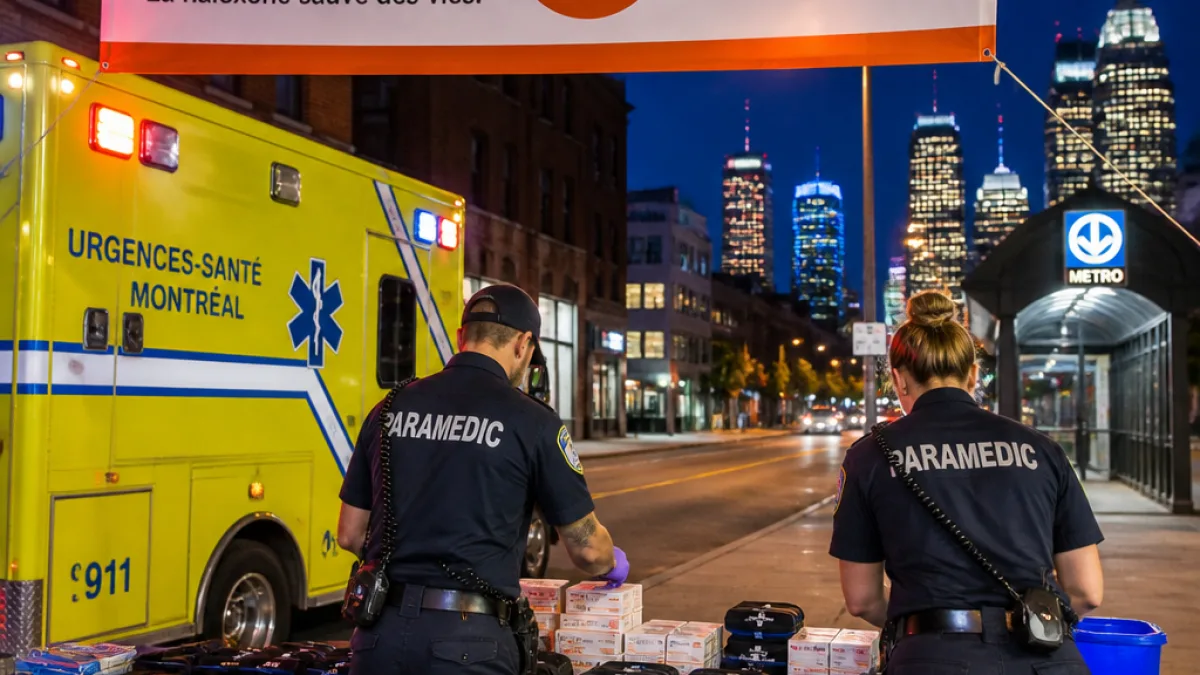
Officials say Urgences-santé responded to 925 overdoses requiring naloxone since January — a total described by public-health authorities as higher than the number for all of 2025. Non-fatal overdoses have remained at unusually elevated levels since March, and deaths rose in June and early July.
Carfentanil — a synthetic opioid estimated to be roughly 100 times more potent than fentanyl — has been confirmed in eight suspected overdose deaths since an alert was first issued in April, though health officials note the actual count may be higher because toxicology results can take time to be completed.
“We’ve had a sustained increase in the number of non-fatal overdoses,”
The warning, officials said, is aimed not only at people who use drugs but at the wider public. During the summer months, overdoses are increasingly occurring in public spaces such as parks and sidewalks, creating more opportunities for bystanders to encounter someone in crisis and intervene.
What authorities say about the drug supply
Montreal Public Health says carfentanil is being detected in mixtures sold as fentanyl and may appear alongside other fentanyl analogues, the veterinary sedative medetomidine and sometimes benzodiazepines. The presence of these combinations can increase the unpredictability and lethality of the unregulated drug supply.
- 925 naloxone responses by Urgences-santé since January
- 8 suspected overdose deaths confirmed for carfentanil since April (to date)
- Contaminants found in street drugs include fentanyl analogues, medetomidine and benzodiazepines
Public guidance and implications
Health officials emphasise that, despite the extreme potency of substances like carfentanil, overdoses can still respond to naloxone. The alert signals increased risk across Montreal and underscores the importance of readily available overdose response supplies, training for bystanders, and timely access to supervised consumption and other harm-reduction services.
| Metric | Reported figure |
|---|---|
| Urgences-santé naloxone responses (since January) | 925 |
| Suspected deaths with confirmed carfentanil | 8 |
| Relative potency | Carfentanil ~100× fentanyl (per public-health description) |
Officials did not offer a definitive explanation for the recent rise. They cited an increasingly toxic and variable drug supply and suggested that prolonged hot weather could be contributing factors. The situation is evolving as toxicology results continue to be processed.
For Montrealers, the immediate consequences include heightened risk in public areas, greater demand on emergency services and the need for broader awareness among communities, businesses and municipal services that may encounter people experiencing overdoses.
Montreal Public Health urged people who use drugs, their friends and family, and the general public to carry or make available naloxone kits where appropriate, learn how to recognise and respond to overdoses, and seek out local harm-reduction and treatment services.