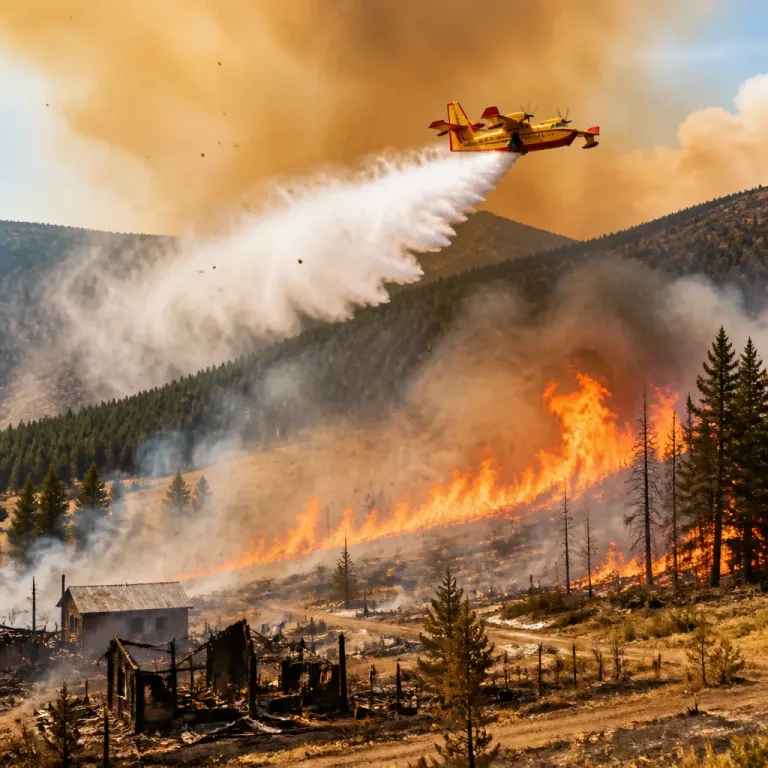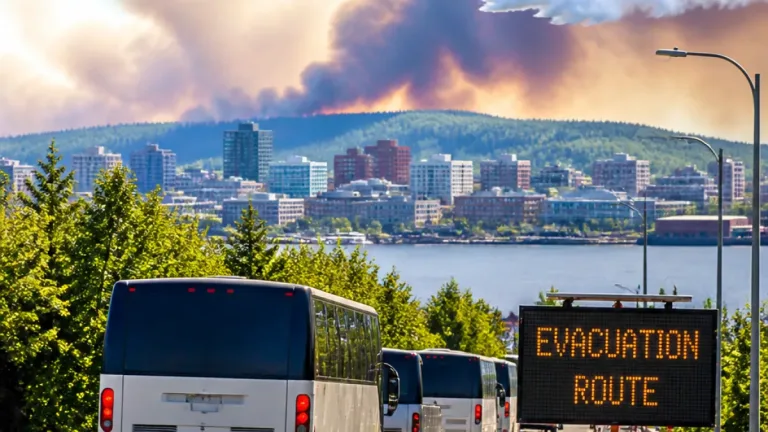
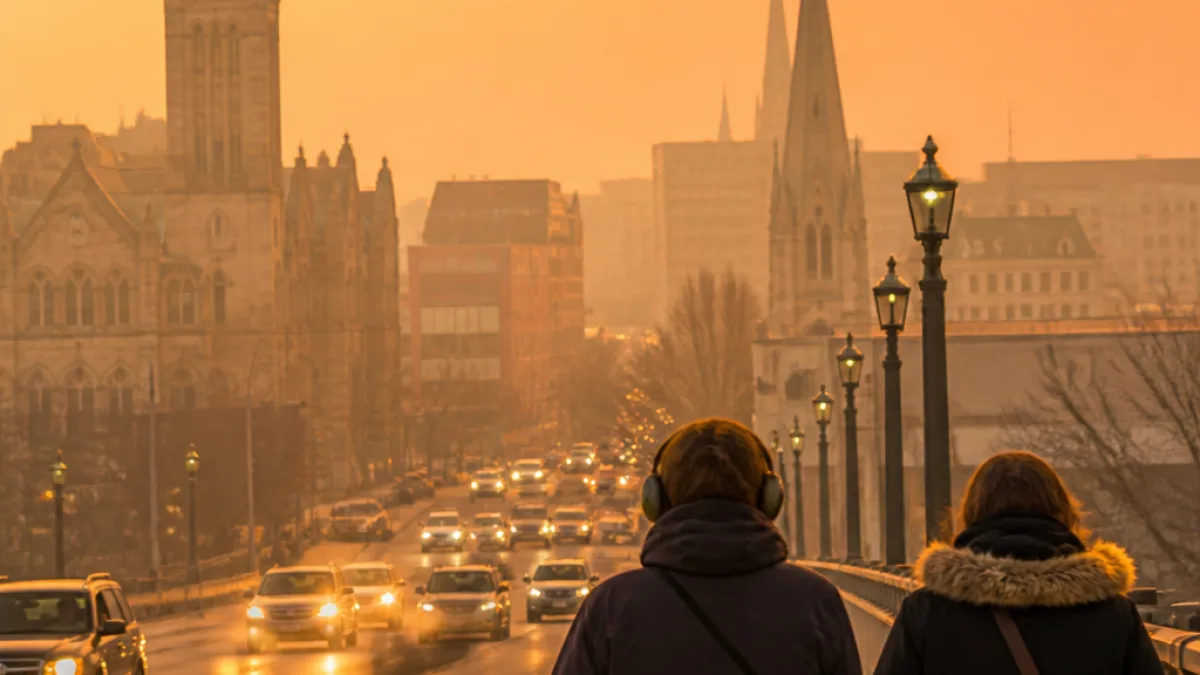
Environment and Climate Change Canada has issued an orange-level air-quality warning for Guelph and surrounding areas after smoke from wildfires in northwestern Ontario reduced visibility and produced very poor air quality across southern Ontario.
What the warning says
The weather agency said hazy conditions and degraded air quality are likely to persist through Friday. The advisory warns people may experience common, mild symptoms including eye, nose and throat irritation, headaches or a mild cough. It also notes more serious, though less common, effects such as wheezing, chest pains or severe cough and advises anyone who believes they are having a medical emergency to seek immediate care.
"Keep windows, doors closed as much as possible and if you must spend time outdoors, wear a respirator type mask," said Henry Fung, an operational meteorologist with Environment and Climate Change Canada.
Advice for residents
- Limit time spent outdoors while the orange warning is in effect.
- Keep windows and doors closed to reduce smoke entering indoor spaces.
- If you need to go outside, consider wearing a respirator-type mask, especially in smoky conditions.
- Check on neighbours and people in your care who may be more vulnerable to smoke exposure.
Environment Canada specifically highlighted groups more likely to be affected, including people aged 65 and older, pregnant people, infants and children. Those with breathing difficulties or heart conditions are generally considered at higher risk during smoke events and should take extra precautions.
Local impacts and context
Residents across the Waterloo region and Guelph reported hazy skies and reduced visibility Wednesday as the agency upgraded a local air-quality alert from yellow to orange. The smoke originates from active wildfires in northwestern parts of the province and has been transported southeast by regional winds.
| Parameter | Detail |
|---|---|
| Alert level | Orange (very poor air quality) |
| Affected area | Guelph and much of southern Ontario, including Waterloo region |
| Expected duration | Through Friday |
Public-health and emergency agencies typically advise people to limit strenuous outdoor activities when smoke is present and to follow local updates. Residents with concerns about symptoms should contact health services or seek medical attention. For ongoing forecasts and air-quality updates, consult Environment and Climate Change Canada and local public-health channels.
InfoRadar will continue to monitor air-quality bulletins and local conditions and will report changes as they are issued.