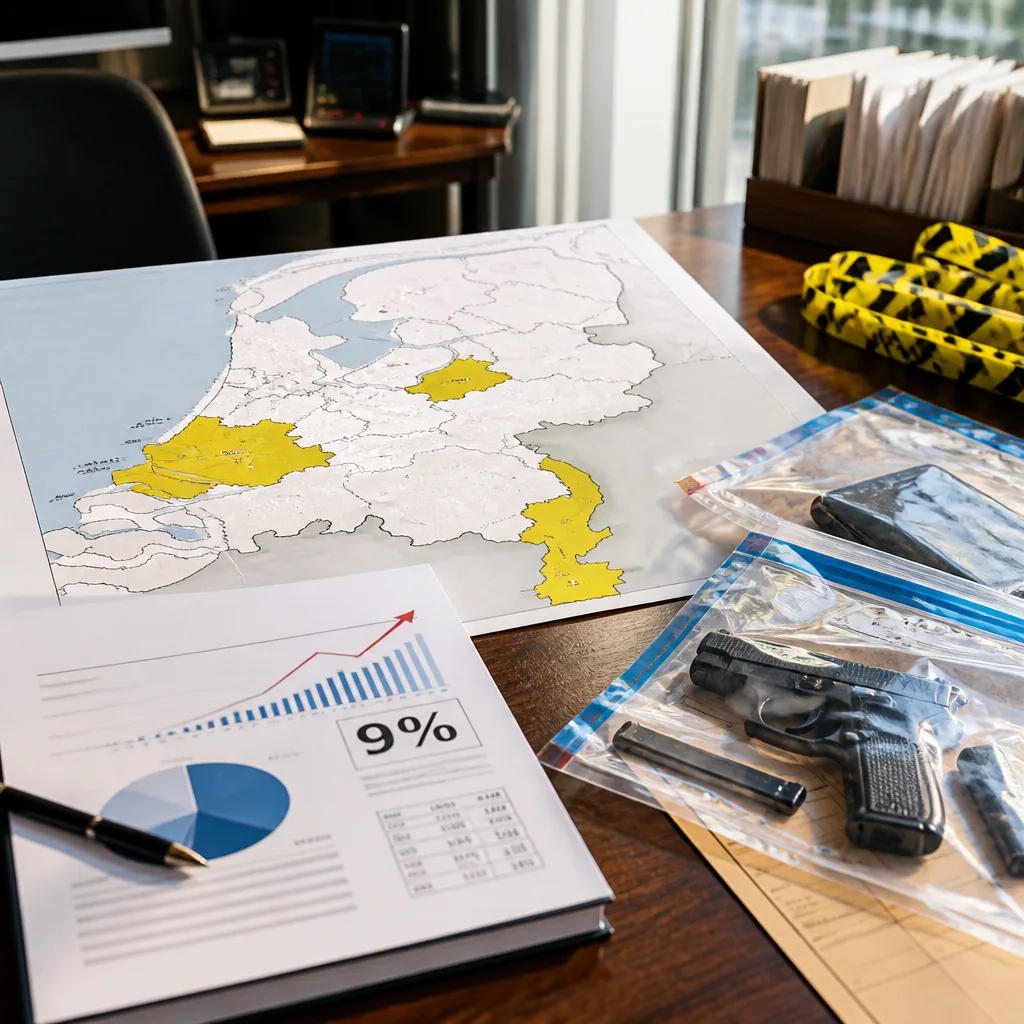
Police in the Netherlands recorded a more than 9 per cent year-over-year increase in drug-related offences in the first six months of 2026, with nearly 7,900 registered cases compared to over 7,200 during the same period in 2025, according to figures reported Monday.
The figures cover registered cases of possession, trafficking and production of prohibited substances. While overall volumes climbed, the distribution of offences varied by region, with some provinces posting steep increases and others recording declines.
Regional shifts in reported offences
Police logged the highest number of drug crimes in Zuid-Holland, at roughly 1,750 cases in the first half of the year. Noord-Brabant followed with nearly 1,550. Several areas reported faster growth than the national average, including Flevoland, where registrations rose by more than half, the biggest percentage increase reported nationwide. Noord-Brabant and Friesland also saw marked gains.
In contrast, Limburg experienced the sharpest fall, with a decline of nearly 12 per cent to 861 registered offences. Despite that decrease, Limburg still recorded the highest number of drug crimes per 100,000 residents, at nearly 76. Among the country’s 20 largest municipalities, Almere posted the most pronounced increase, with the number of drug crimes more than doubling from a year earlier. Zoetermeer saw the steepest drop, down nearly 44 per cent.
| Region / Municipality | H1 2026 registered drug crimes | Change vs. H1 2025 | Notes |
|---|---|---|---|
| Zuid-Holland | ~1,750 | Increase (unspecified) | Highest absolute total |
| Noord-Brabant | ~1,550 | Big increase | One of the largest provincial rises |
| Flevoland | Not specified | +50%+ | Strongest percentage increase |
| Friesland | Not specified | Big increase | Notable year-over-year rise |
| Limburg | 861 | −12% (approx.) | Highest rate: ~76 per 100,000 residents |
| Almere (Top 20 city) | Not specified | More than doubled | Largest jump among major municipalities |
| Zoetermeer (Top 20 city) | Not specified | ~−44% | Sharpest municipal decline |
National picture and definitions
The reported increase represents a nationwide trend in the first half of the year, though it does not move uniformly across the country. The tally reflects cases formally registered by police as involving banned drugs, whether due to suspected possession, sale or manufacturing. The figures, as presented, do not separate the types of substances or break down the data by specific offence categories beyond those definitions.
Regional disparities are evident in both absolute numbers and relative measures. Provinces with larger populations, including Zuid-Holland and Noord-Brabant, led by overall volume, while Limburg stood out for its rate per capita despite fewer total cases and a year-over-year decline.
Enforcement and data caveats
It is not clear from the available information to what extent the reported increases reflect changes in criminal activity, enforcement intensity, reporting practices or a combination of those factors. The national police were asked to comment on the figures but had not provided a response at the time of publication. Without additional detail, the data offer a snapshot of recorded cases but do not attribute causation.
- Total registered offences rose to nearly 7,900 in January–June 2026.
- Zuid-Holland and Noord-Brabant posted the largest totals; Flevoland had the steepest percentage rise.
- Limburg recorded fewer cases but the highest rate per 100,000 residents.
What comes next
Further analysis from Dutch authorities would be required to determine the drivers behind the increases and decreases across provinces and cities, and whether the trends persist into the second half of the year. Additional police comment or breakdowns—such as by substance type, enforcement operation or case outcome—could add clarity to how and where the increases are occurring.