Federal measure targets recent travel from Congo
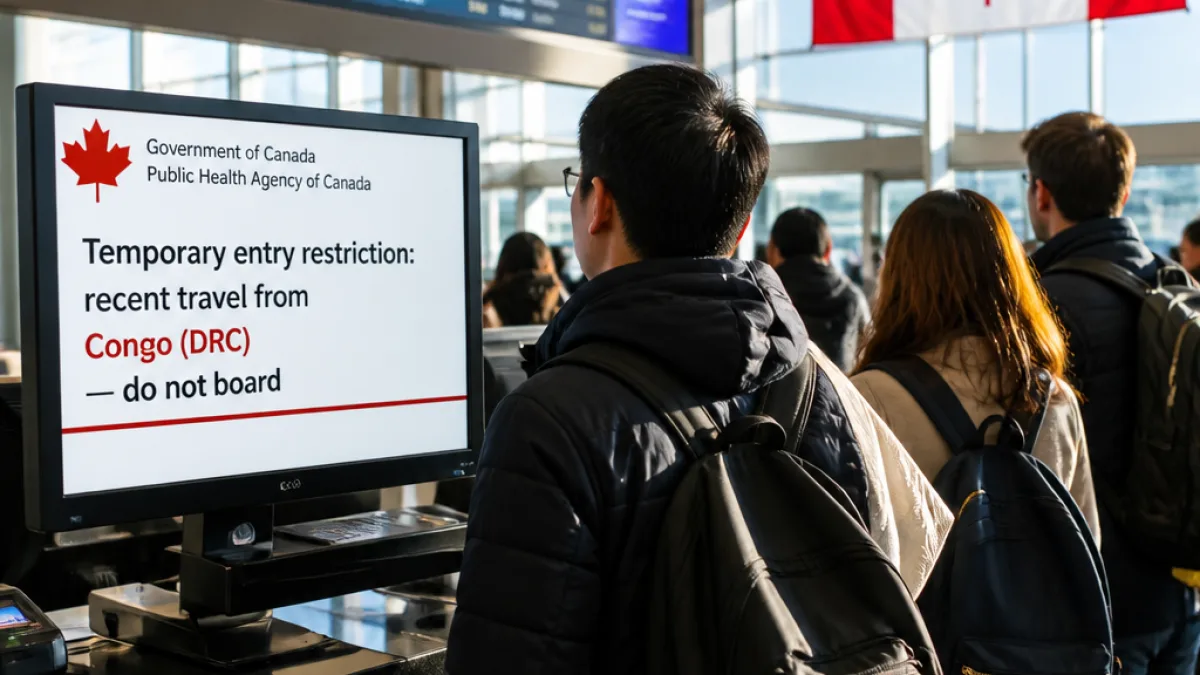
The federal government, through the Public Health Agency of Canada (PHAC), will temporarily prohibit foreign nationals who have been in Congo within the last 21 days from entering Canada. The restriction takes effect on Monday at 11:59 p.m. and extends to both commercial and private air carriers, which are directed not to board travellers who meet those criteria for flights bound for Canada.
Officials describe the step as a precaution to reduce the chance of importing Ebola. The agency emphasizes that the overall risk to people in Canada remains low, and says there have been no domestic cases identified among travellers returning from countries experiencing Ebola outbreaks.
“The government says it’s taking a cautious approach,”
PHAC’s announcement places a clear obligation on carriers to prevent boarding for affected passengers before they reach Canadian ports of entry. For Ottawa travellers and airlines serving Ottawa International Airport, implementation will occur upstream — at overseas departure or connection points — with carriers expected to verify recent travel history for those who are not Canadian citizens or otherwise exempt from the prohibition.
What is changing for travellers and carriers
- Who is covered: Foreign nationals who have been in Congo in the prior 21 days.
- Entry status: Not permitted to enter Canada while the measure is in force.
- Airlines’ role: Commercial and private carriers must not board affected passengers on flights to Canada.
- Risk level: PHAC says the overall health risk in Canada remains low, with no domestic Ebola cases linked to returning travellers from outbreak countries.
PHAC did not provide a timeline for lifting the restriction, characterizing the measure as temporary and tied to evolving public health conditions abroad. The government’s statement underscores a risk-management approach that aims to minimize the chance of importation while maintaining normal operations for the vast majority of international arrivals.
Local implications for Ottawa
While the restriction is national in scope, its operational impact will be felt across Canadian airports, including Ottawa. Air carriers serving the capital typically apply such federal directives at the point of origin or during international connections, meaning most affected passengers would not arrive in Canada. Residents should expect routine travel to continue uninterrupted, aside from the specific screening and boarding rules carriers must follow for travellers who recently spent time in Congo.
Ottawa’s health system is not reporting Ebola cases, and PHAC’s assessment maintains that the likelihood of community exposure is low. The announcement signals a continued federal emphasis on early, preventive action when serious communicable diseases are reported in other countries. Local hospitals, public health units and airport partners generally rely on federal guidance for communicable disease controls at borders and for any downstream clinical protocols should screening identify a potential case.
Details at a glance
| Policy element | Summary |
|---|---|
| Effective time | Monday, 11:59 p.m. (temporary measure begins) |
| Geographic trigger | Presence in Congo within the last 21 days |
| Who is restricted | Foreign nationals meeting the travel-history criterion |
| Carrier obligations | Do not board affected travellers on flights to Canada |
| Risk to Canadians | Assessed by PHAC as low; no domestic Ebola cases reported from returning travellers from outbreak countries |
For Ottawa residents planning international travel, the federal advice remains to monitor official advisories and consult airlines regarding any pre-boarding requirements linked to recent travel history. PHAC indicates it will continue to track conditions abroad and update guidance as needed.