Federal action announced in Ottawa amid overseas Ebola surge
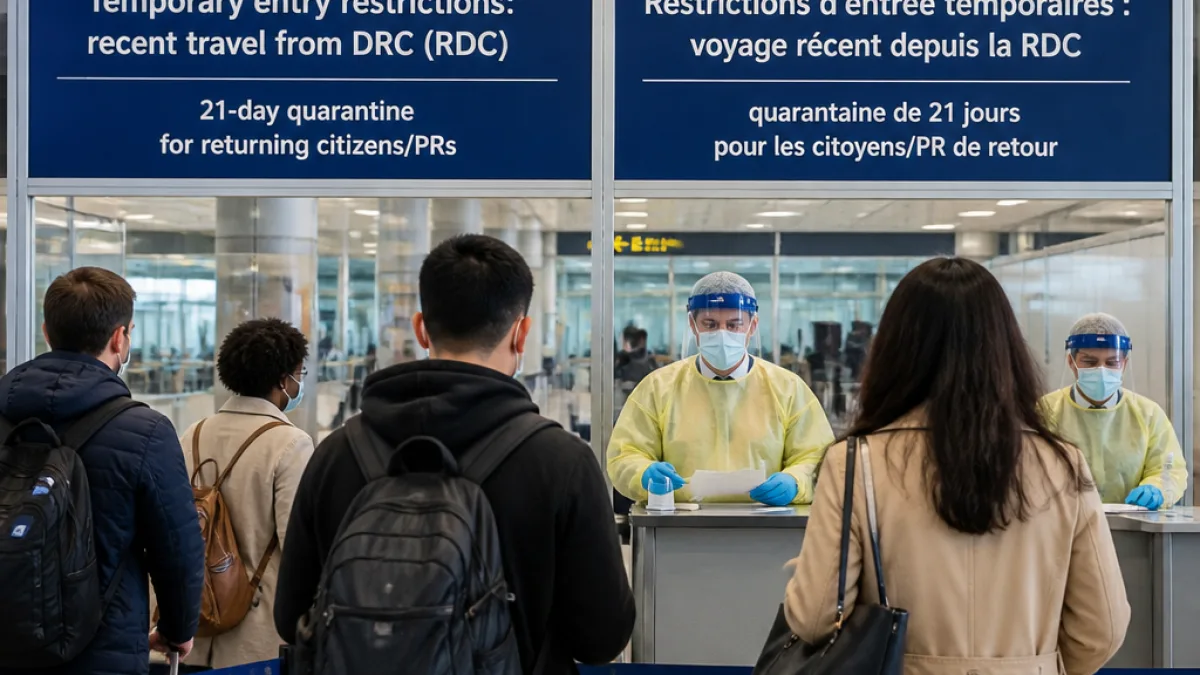
The federal government is introducing a temporary restriction on entry to Canada for certain travellers in response to an escalating Ebola situation in the Democratic Republic of Congo. The Public Health Agency of Canada said Sunday the measure will take effect at 11:59 p.m. EST on Monday and will apply to foreign nationals who have been in the Democratic Republic of Congo within the previous 21 days. The agency framed the step as a cautious response to a growing international outbreak while maintaining that the overall risk to people in Canada remains low.
Commercial and private air operators are being directed not to board affected foreign nationals on flights bound for Canada. The agency said the objective is to enhance the sustainability of border screening while ensuring returning travellers, including humanitarian personnel, can be processed safely.
“Limiting entry of foreign nationals who have been in (Congo) in the previous 21 days may reduce public health risks for Canadians,” the Public Health Agency of Canada said. It added the measure is designed to “increase the effectiveness and sustainability of border measures that can safely process travellers arriving in Canada, including our returning humanitarian workers.”
Who is covered and what changes on arrival
The new rule does not apply to Canadian citizens or permanent residents. Those travellers may enter Canada but must comply with an existing 21‑day quarantine requirement if they have been in the Democratic Republic of Congo, Uganda or South Sudan. That quarantine rule, in place since May 30, is currently scheduled to end on Aug. 29, according to the agency.
In its statement, the public health agency said there have been no reported domestic Ebola cases among travellers returning from countries experiencing the outbreak. Officials previously noted that even if an infected person arrived in Canada, transmission would likely be limited.
International situation informing Canada’s approach
The World Health Organization has assessed the Ebola epidemic in the Democratic Republic of Congo as the third‑largest on record. The virus has spread rapidly, with more than 2,100 reported cases and 864 deaths. Canadian authorities say their strategy reflects a precautionary posture as they adjust border protocols in line with evolving international data.
While emphasizing that the public‑health risk to people in Canada is considered low, Ottawa is calibrating its response to reduce the chance of importation and to maintain capacity at points of entry. The government says controlling who boards flights to Canada is a critical part of that plan.
What Ottawa residents should know now
- The restriction applies to foreign nationals who were in the Democratic Republic of Congo in the last 21 days; carriers are directed not to board them for flights to Canada.
- Canadian citizens and permanent residents are exempt from the entry restriction but must follow the existing 21‑day quarantine if returning from specified countries.
- Officials continue to describe the risk to people in Canada as low, with no domestic cases reported from returning travellers.
Key dates and measures
| Measure | Effective/Status |
|---|---|
| Boarding/entry restriction for foreign nationals recently in DRC | Begins 11:59 p.m. EST Monday |
| Quarantine for citizens/PRs returning from DRC, Uganda, South Sudan | In effect since May 30; scheduled to expire Aug. 29 |
| WHO assessment of DRC outbreak | Third‑largest on record; over 2,100 cases and 864 deaths |
The measures announced in Ottawa are positioned as temporary and targeted. Authorities say they are intended to prevent importation of illness while allowing humanitarian and other essential travel by Canadians and permanent residents to continue under controlled conditions.
As the situation abroad evolves, federal officials indicate they will revisit border controls and related requirements. For residents planning international travel, the agency recommends monitoring government advisories and being prepared for additional screening or isolation protocols on return, depending on recent travel history.