
Officials in Kingston, U.K., move quickly after encampment, add barriers at park access
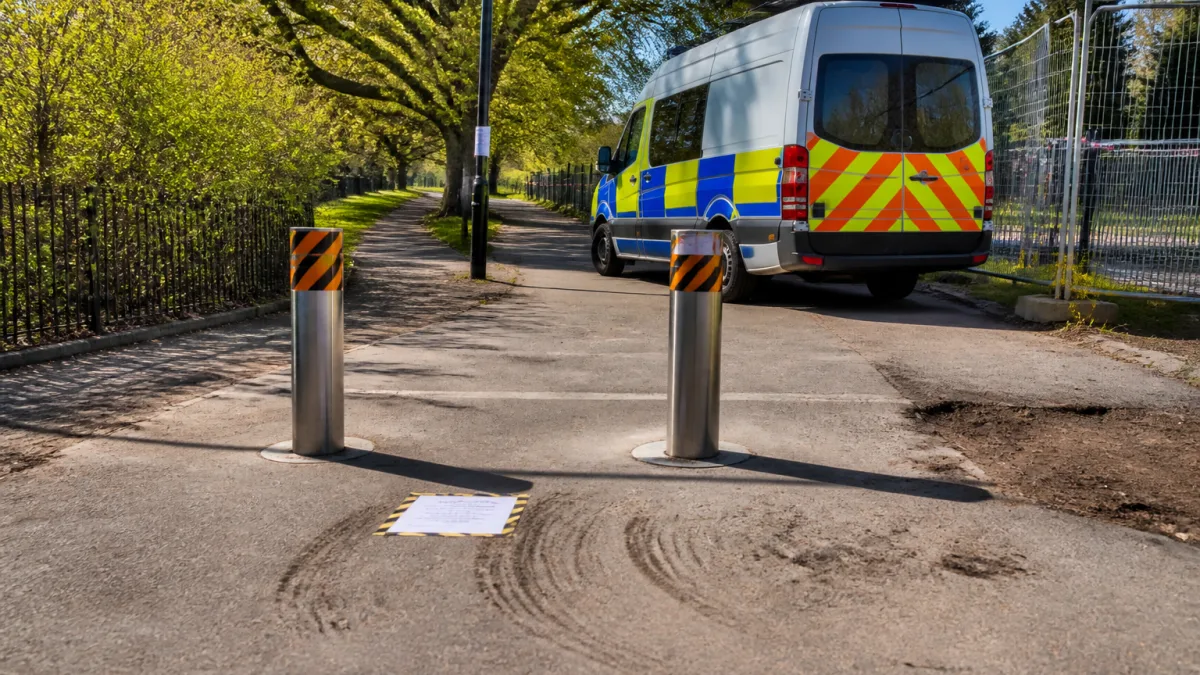
Municipal officials in Kingston (U.K.) have installed retractable bollards at a park entrance following an illegal encampment that began in the early hours of Wednesday, 8 July. Local councillors say the barriers were added at an identified weak point used by vehicles to enter Manor Park via pedestrian pathways off Malden Road.
According to a public update shared on Monday, 13 July, the council and the Metropolitan Police were alerted immediately after vehicles entered the site. Officials reported on-site checks the same day, a dedicated police welfare visit the following day, increased patrols and discreet monitoring while legal steps proceeded.
“We were made aware last week that a number of vehicles had entered the park, forcing access via Malden Road using pedestrian pathways,” Cllr Mike Massimi said, adding that a notice to leave and a subsequent court order were issued and communicated “extremely quickly before the weekend.”
The council says the park was vacated on Sunday, followed by clearing and cleaning carried out by the Glendale team earlier Monday. In addition to the new bollards, the main car park entrance fencing is under review, with inspections and any required work scheduled this week.
Legal route, policing and site restoration
Officials outlined a step-by-step response that paired legal orders with targeted site security. The approach combined immediate reporting, welfare checks and a court-authorized order to depart, before shifting to cleanup and infrastructure changes intended to prevent a repeat.
- Immediate notification to council and police when vehicles entered the park.
- Welfare visit by the Metropolitan Police the following day, along with increased patrols.
- Notice to leave followed by a court order issued ahead of the weekend.
- Vacating of the park on Sunday and cleanup by Glendale on Monday.
- Security upgrades: retractable bollards at a weak access point; fencing review underway.
Councillors publicly thanked residents for patience during the legal process and discouraged engagement with any ad hoc work offers that could lead to fly-tipping or additional waste issues. Thanks were also extended to council staff, the police service, Glendale and the local Friends of Manor community group for their roles in the response.
What changed at Manor Park
The municipality’s physical-security upgrade centres on stopping vehicles from using pedestrian routes. Retractable bollards allow maintenance and emergency access while blocking general vehicle entry — a frequent consideration when parks are bordered by roads or paths that can be forced. The fencing review at the main car park entrance signals further attention to perimeter vulnerabilities identified during the incident.
| Action | Status/Timing |
|---|---|
| Notice to leave | Issued before the weekend |
| Court order | Secured and communicated quickly |
| Park vacated | Sunday |
| Cleanup | Glendale on site Monday |
| Bollards installed | At identified weak access point |
| Fencing review | Inspections and any works this week |
Why this matters for readers watching public-space decisions
While this development occurred in the United Kingdom, the measures described — swift legal steps, coordinated policing, site cleanup and targeted hardening of park access — mirror the types of operational decisions municipalities elsewhere often weigh in similar circumstances. The timeline set out by Kingston, U.K., officials provides a clear view of how a council can combine legal remedies with infrastructure changes to reduce vehicle access at known vulnerabilities.
For residents following parks management and public safety, the takeaways centre on documented process and visible changes on the ground: legal authority to clear a site, public updates once actions conclude, and the installation of retractable bollards to prevent repeat entry at the same location.