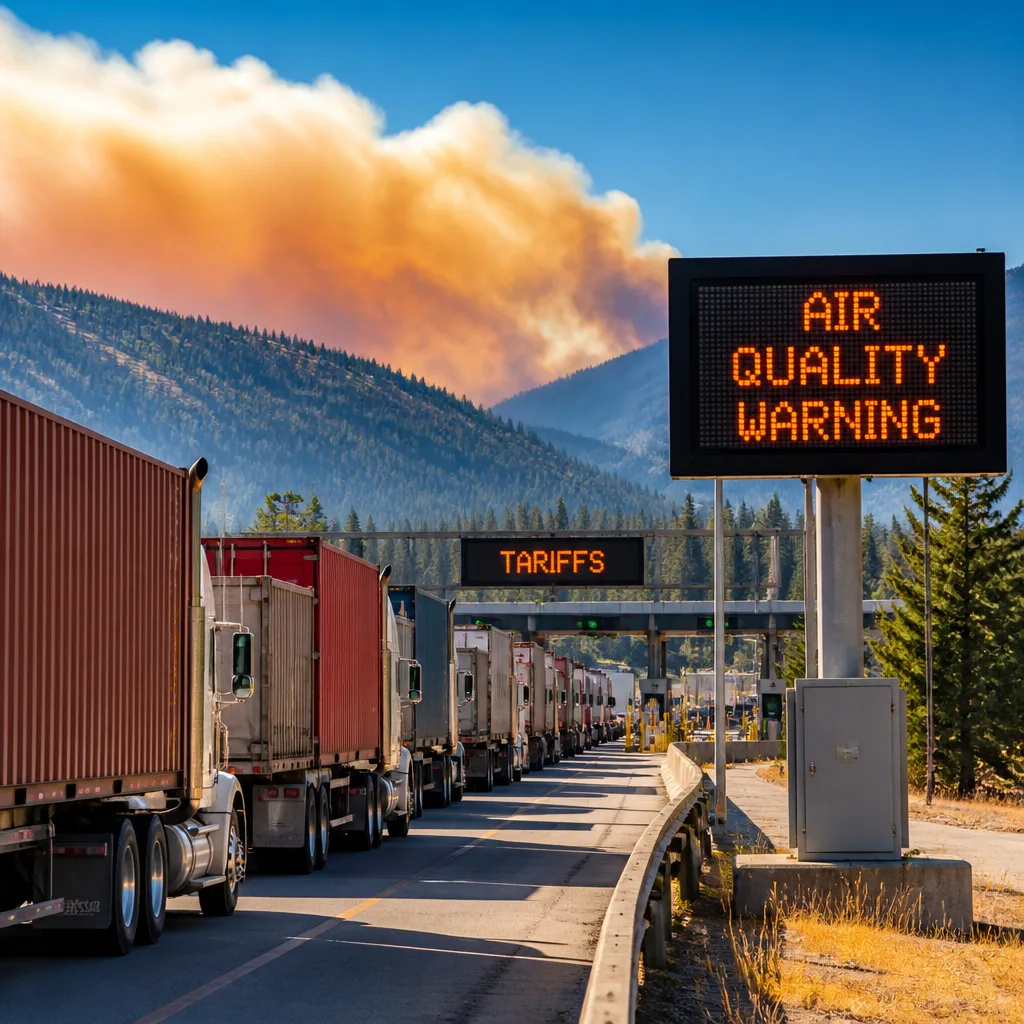
U.S. President Donald Trump publicly blamed Canadian wildfires for unhealthy air drifting into the United States and threatened to increase tariffs on Canadian imports, escalating a cross‑border dispute that ties environmental conditions to trade policy.
Tariff threat linked to smoke from Ontario fires
Hundreds of active wildfires — most of them in northwestern Ontario — have produced smoke plumes that prompted air quality warnings across a broad swath of the eastern United States, from Minnesota to Maryland. In a social media post, Mr. Trump said the United States was being "unnecessarily invaded by filthy, polluted, and unhealthy air" and framed the situation as "Willful Negligence," saying the cost of the pollution should be added to the tariffs Canada already pays.
"We are holding Canada responsible for the fact that they are not properly maintaining their Forests, and Brush therein, and the United States is being unnecessarily invaded by filthy, polluted, and unhealthy air,"
Canadian response and context
Ontario Premier Doug Ford pushed back at U.S. criticism, urging American politicians to cease complaining and to provide aid — noting that Canada has historically sent assistance when U.S. jurisdictions have faced disasters. The exchange highlights how transboundary environmental events can rapidly enter the realm of diplomatic and trade tensions.
- Scope of impact: Smoke produced air quality alerts in states along the Great Lakes corridor.
- Source of fires: Officials say most active blazes are in northwestern Ontario.
- Political angle: The president linked environmental damage to trade measures, threatening to raise tariffs in response.
Implications for Canada–U.S. relations and policy
Linking environmental incidents to tariffs represents an unusual framing of trade enforcement. If pursued, such an approach could broaden the circumstances under which tariffs are considered a policy tool and complicate bilateral cooperation on wildfire suppression and air‑quality management. It also risks injecting short‑term political pressure into operational emergency responses and mutual aid arrangements.
| Element | Details |
|---|---|
| Primary fire region | Northwestern Ontario |
| U.S. area affected | States from Minnesota to Maryland (air quality warnings) |
| Policy action threatened | Additional tariffs on Canadian goods |
Officials in both countries will face pressure to balance immediate public‑health responses with longer‑term political and trade considerations. Cross‑border smoke episodes are expected to recur as climate‑driven wildfire seasons intensify, meaning the incident could set precedents for how environmental harm is treated in trade and diplomatic forums.