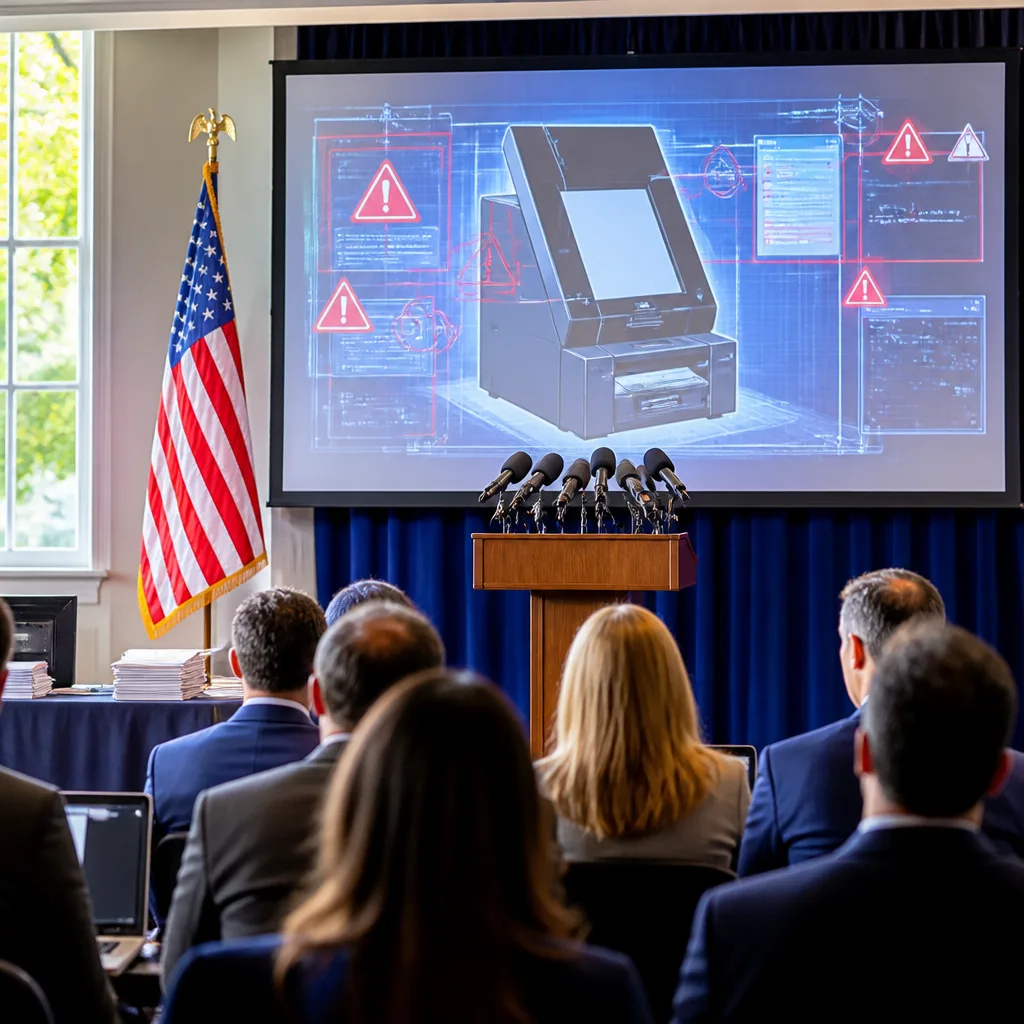
Homeland Security Secretary Markwayne Mullin is scheduled to hold a public briefing Friday at 11 a.m. EDT to outline his department's cybersecurity findings concerning electronic voting systems, the White House said Thursday.
What officials will address
The announcement followed remarks by President Donald Trump, who said the administration had flagged potential problems with voting technology in several states and would be informing local political leaders of the concerns.
"The systems are in 'bad shape in so many states,'" the president told reporters.
The Biden administration is not mentioned in the original notice; the briefing centres on the Department of Homeland Security's analysis of vulnerabilities tied to electronic voting platforms and the resilience measures jurisdictions use to protect ballots and results. Election specialists have long noted that most jurisdictions couple electronic tools with physical paper records to mitigate cyberrisk.
Why it matters
Federal attention to voting-system security can have immediate operational and political consequences. States and local election authorities maintain primary responsibility for administering elections, including decisions about equipment, procedures and audits. Federal findings can prompt:
- targeted advisories to state and local election officials;
- requests for remedial steps or upgrades to hardware and software;
- heightened scrutiny from political campaigns and the public that could affect trust in results.
Authorities stress that many jurisdictions retain paper trails for ballots, which are a key defence against cyberintrusion or counting errors and support post-election audits. The department's briefing is likely to address how widespread any problems are and offer guidance for mitigating risks.
Details of the briefing
| Item | Detail |
|---|---|
| Speaker | Markwayne Mullin, Homeland Security Secretary |
| Topic | Cybersecurity findings on electronic voting systems |
| When | Friday, 11 a.m. EDT |
How state officials and election administrators respond to the department's findings will shape the short-term policy debate. If the briefing details specific vulnerabilities, jurisdictions may face pressure to adopt immediate fixes or to expand manual reconciliation and auditing procedures ahead of future votes.
The disclosure also arrives in a politically charged environment: public statements about the security of voting infrastructure can influence voter confidence and partisan narratives about election legitimacy. Observers say clear, evidence-based communication and coordination with local officials are essential to avoid unnecessary alarm while ensuring deficiencies are addressed.
The department's briefing will be webcast for public viewing, allowing journalists and election officials to assess the evidence and recommendations directly.