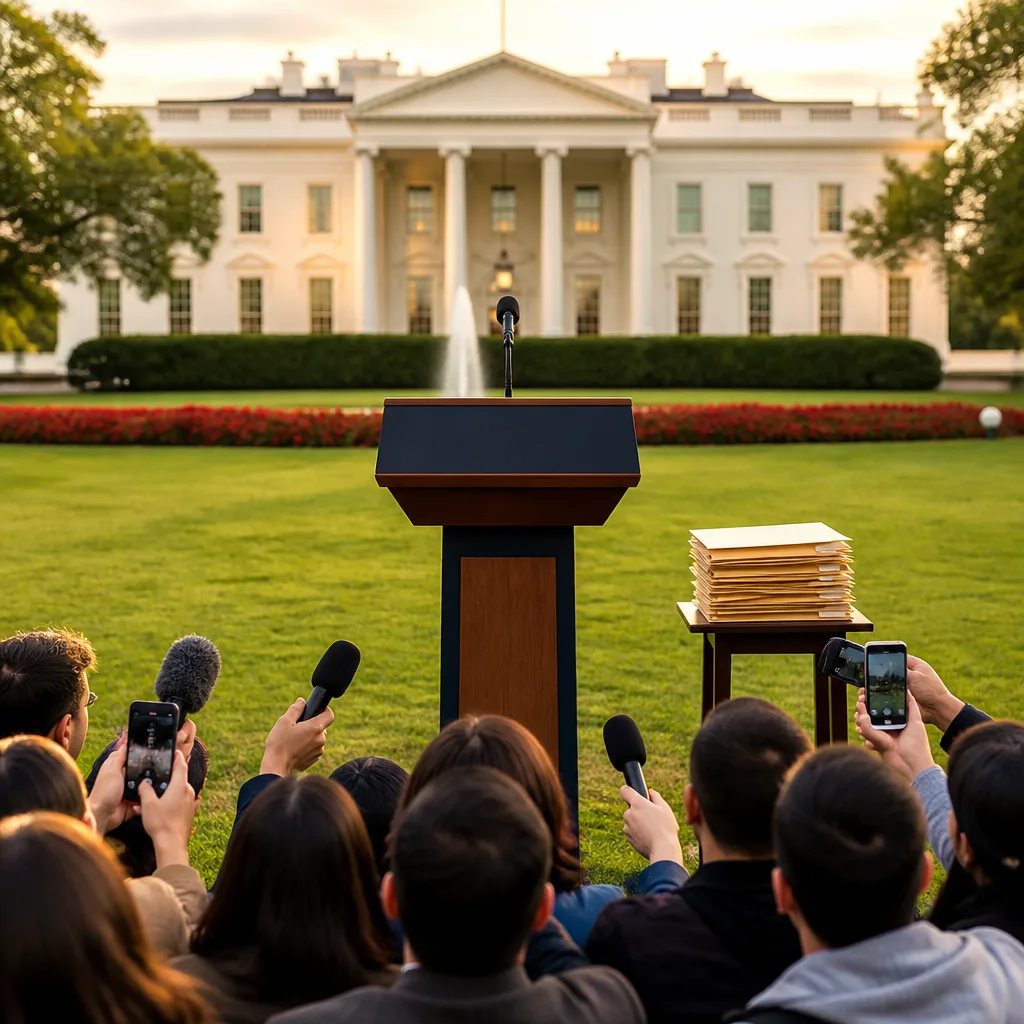
As President Donald Trump prepared to deliver a prime-time address on election security, a White House official sought to explain why the president remains preoccupied with the outcome of the 2020 contest.
Administration frames message as response to public concern
Kellyanne Leavitt, speaking to reporters, said the president’s focus stems from a belief that media organisations have not adequately recognised widespread voter anxiety about the integrity of elections. She urged the public to tune in, promising that the remarks would be supported by documentation presented during the broadcast.
“Everything he is saying will be backed by facts and by evidence that will be provided this evening,”
Leavitt also warned viewers that the president’s forthcoming "findings will shock you," framing the address as the release of new information rather than a reiteration of past claims. Her comments came amid press questions about reports that Mr. Trump intends to unveil fresh allegations of interference in the 2020 ballot count — assertions that, to date, have not been broadly substantiated by independent authorities.
Public approval and partisan divides
Polling published this week shows Mr. Trump’s national approval rating at 37 per cent. The result is nearly identical to his standing when he left office in 2021 and comparable to recent readings this spring. The same survey indicated strong support among Republican identifiers.
| Measure | Value |
|---|---|
| Overall approval | 37% |
| Republican approval | 81% |
Those numbers underline the entrenched partisan split over the president’s performance and the salience of election integrity as a mobilising issue for his base.
Context and consequences
Mr. Trump’s decision to devote a televised primetime slot to allegations tied to a prior election carries multiple political and institutional implications. Domestically, it may sharpen divisions ahead of forthcoming contests and further polarise public debate over electoral processes. For federal and state election officials, renewed public attention could intensify scrutiny of procedures, while legal and oversight institutions may face increased pressure to respond to any new assertions.
- Immediate impact: A likely surge in media coverage and political reaction following the address.
- Institutional test: Potential demands for documentation and verification from independent authorities.
- Electoral politics: Reinforcement of partisan mobilisation ahead of upcoming campaigns.
Government spokespeople framed the speech as part of an effort to answer voter concerns. Critics caution that repeating contested claims risks eroding confidence in democratic norms unless accompanied by transparent evidence and independent corroboration. The address, and the administration’s subsequent handling of any evidence presented, will be watched closely by policymakers and observers in the United States and abroad.
This report is based on press briefing remarks and recently released polling figures.