
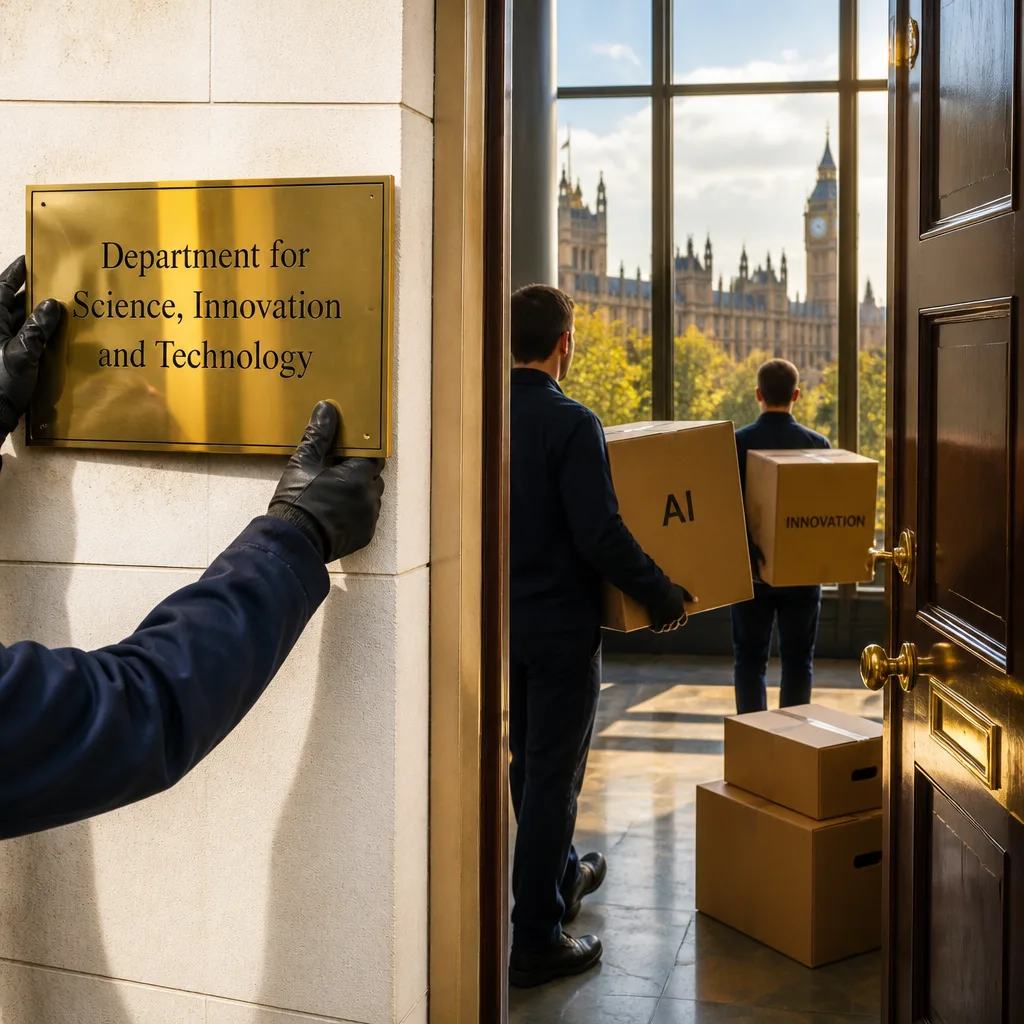
The incoming prime minister has asked officials to prepare plans to abolish the United Kingdom’s Department for Science, Innovation and Technology, prompting pushback from MPs, civil servants and technology experts who say the timing risks disrupting AI policy and industrial strategy.
What the proposal would change
According to people familiar with the plans, much of the department’s remit would be transferred into a beefed-up business ministry, reportedly to be overseen by the chief whip, Jonathan Reynolds. Oversight of how artificial intelligence is used across the public sector would, in the draft arrangements, move away from a ministerial lead to the cabinet secretary, Antonia Romeo.
Critics say that shifting responsibility for advanced technologies into a general business portfolio — and placing operational AI oversight with the cabinet secretary rather than an accountable minister — could dilute political accountability and slow decision-making during a period they describe as critical for technology and national security.
Why experts are concerned
Voices inside government and from the technology sector warn that reorganizing senior science and technology functions risks sidelining strategic focus just as AI and related technologies are becoming central to economic and security policy. One AI adviser who has served successive prime ministers warned the reorganisation would be “a big mistake.”
“This would be a big mistake. Right now is a critical moment for tech as an economic and national security issue,” wrote Matt Clifford, an adviser on AI to the outgoing prime minister, on X.
- Concentration of responsibility: Tasks for science and innovation could be absorbed into a broader business agenda.
- AI governance shift: Cabinet-level civil service control of public-sector AI use could reduce ministerial oversight.
- Sector unease: Industry figures fear loss of a dedicated voice for research and innovation at the top table of government.
Context and consequences
The Department for Science, Innovation and Technology was created to give research and advanced technology a distinct presence inside Whitehall. Supporters of keeping a dedicated department argue it helps coordinate long-term investments, set regulatory approaches for emerging technologies and protect national interests in strategic sectors.
Those warning against a merger point to the scale and speed of developments in AI and argue that reassigning senior officials to manage the transition would consume scarce time and attention. Observers also note that the U.K. has positioned itself in recent years as a competitive location for AI research and investment, citing the success of companies such as DeepMind and recent international tech partnerships.
| Current responsibility | Proposed destination |
|---|---|
| Science, innovation and tech policy | Stronger business department (led by chief whip) |
| Public-sector AI oversight | Cabinet secretary (civil service) |
Within Labour, the proposals have added to unease about early decisions made by the incoming administration. Critics inside the party have described the move as effectively eliminating a central, future-facing department at a time when governments globally are grappling with how to balance innovation, economic growth and security concerns tied to advanced technology.
How these plans proceed — whether they are formally approved, amended, or dropped — will be watched closely by companies, research institutions and international partners who have an interest in how the U.K. structures its technology governance. Any major reorganisation of senior roles and remits could take months to implement, during which momentum on policy initiatives might slow.
For now, the proposals remain in draft form and have not been signed off. But the debate they have provoked highlights a core question for technology policy: should high-stakes, fast-moving areas like AI remain under a dedicated ministerial spotlight, or is integration into broader economic management a better path for coordination and delivery?