Northwest Territories political and Indigenous leaders travelled to Ottawa this week to press the federal government for substantial investments in northern infrastructure, transport corridors and clean-energy projects as the territory faces an economic shift away from its long-standing diamond industry.
Leaders call for Indigenous-led projects, co-management
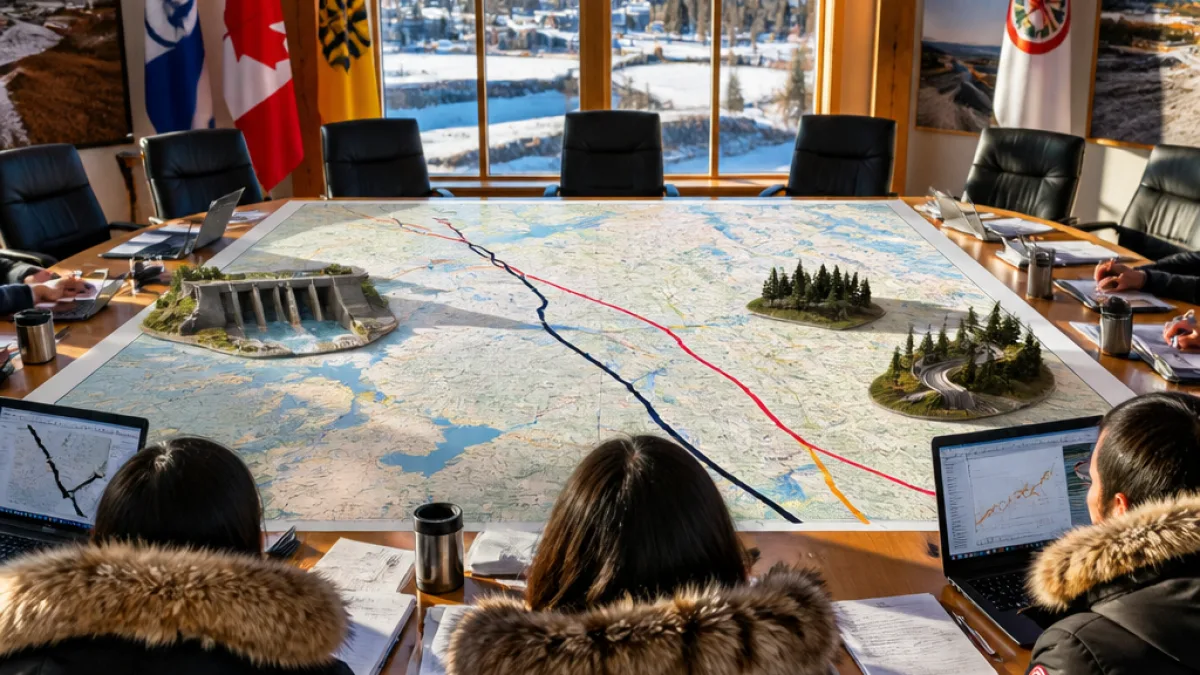
The N.W.T. Council of Leaders — a body that brings together territorial ministers and representatives from First Nations, Métis and Inuvialuit governments — presented a package of priorities to federal ministers that emphasised shared decision-making and Indigenous leadership in major projects.
Among the initiatives the council asked Ottawa to support were the Arctic Economic and Security Corridor led by the Tłı̨chǫ and Yellowknives Dene, a proposed 800-kilometre extension of the Mackenzie Valley Highway to Inuvik, the Taltson Hydro Expansion and an Inuvialuit Energy Security Program. Leaders said the investments are needed now to set the territory on a new economic footing.
Preparing for the end of an era
The urgency of the ask is framed by the prospect of major diamond mines winding down. The territory’s economy has for decades relied on mines such as Ekati, Diavik and Gahcho Kué, but officials say that source of revenue and jobs is diminishing.
"The mines are all dying out — the diamond industry," said N.W.T. Métis Nation President Garry Bailey.
Council members argued the federal government has historically underfunded northern infrastructure and that a coordinated federal response is required to support a managed economic transition that centres Indigenous partners.
- Arctic Economic and Security Corridor — Indigenous-led corridor to boost northern access and sovereignty.
- Mackenzie Valley Highway extension — 800 km proposed road connection to Inuvik aimed at improving year-round transport and supply chains.
- Taltson Hydro Expansion — increased hydro capacity to support communities and industry.
- Inuvialuit Energy Security Program — projects to improve local energy resilience.
Local impact and unanswered questions
For communities across the Northwest Territories, the projects represent potential new jobs, improved transportation and better energy security. But leaders acknowledged that success hinges on clear federal commitments, funding timelines and arrangements that enshrine Indigenous co-management.
Details on cost estimates, construction timelines and federal contributions were not released at the press event. The council’s approach stresses that any development must be negotiated and governed in partnership with Indigenous governments rather than imposed from outside.
| Project | Primary aim |
|---|---|
| Arctic Economic and Security Corridor | Strengthen access, economic activity and Indigenous-led management in the Arctic |
| Mackenzie Valley Highway extension (800 km) | Improve year-round road access to Inuvik and northern communities |
| Taltson Hydro Expansion | Increase generation capacity for communities and industry |
| Inuvialuit Energy Security Program | Support energy resilience and locally led energy projects |
The delegation's visit is likely to sharpen conversations in Ottawa about how to fund long-term economic change in Canada’s north. For residents of the N.W.T., the stakes include not only jobs and infrastructure but the authority to shape development in line with community priorities and environmental protections.
As the territory moves away from a mining-driven economy, leaders say Ottawa must step up with predictable funding and a willingness to back Indigenous-led, co-managed projects that could define the N.W.T.'s next chapter.