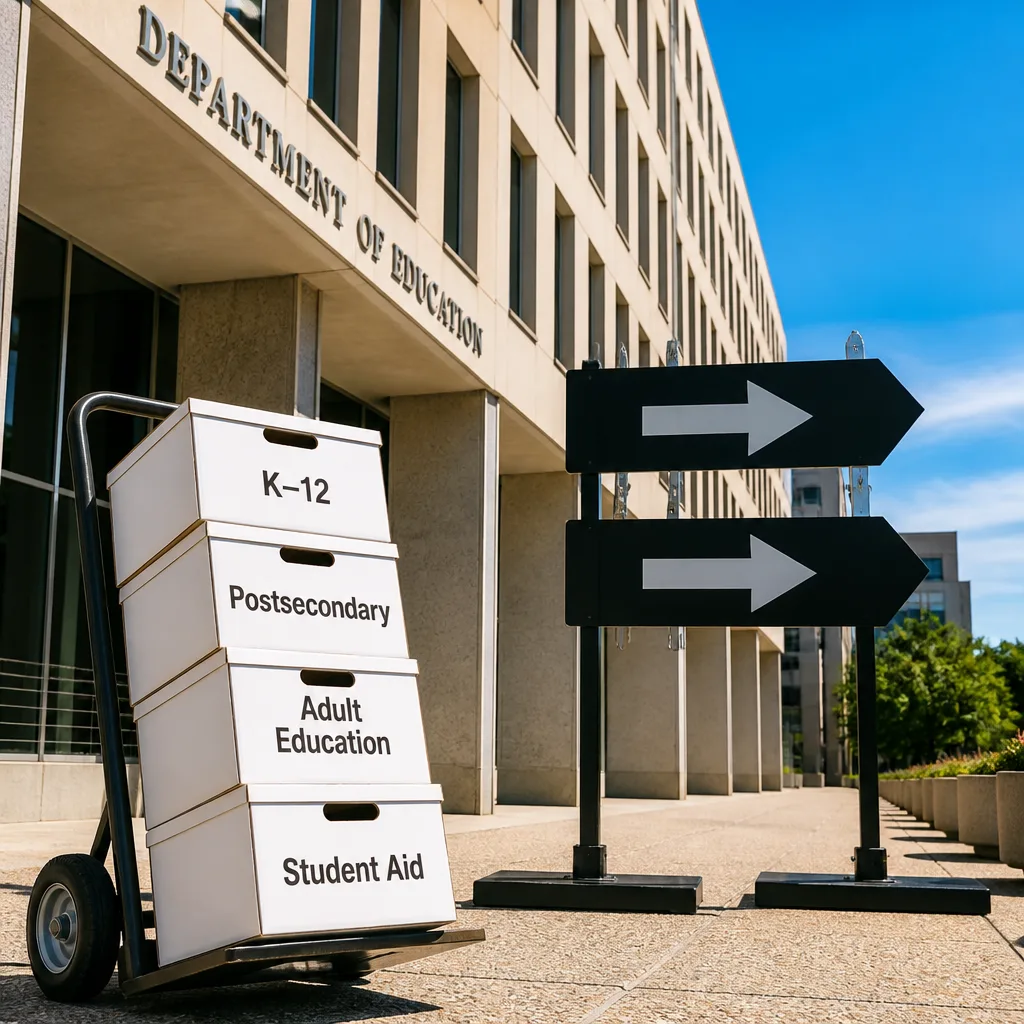
A U.S. House committee has advanced a package of 10 bills designed to reduce the federal Department of Education’s footprint and reassign key functions to other agencies, a move Republicans framed as returning more control to states and communities. The measures cleared the House Committee on Education and the Workforce largely along party lines, signalling momentum in the lower chamber but facing uncertain prospects in the Senate.
What the House package would do
The legislation would permanently codify a series of interagency transfers that the department has used in recent years. Under multiple bills, the Department of Labor would take charge of programs spanning elementary and secondary schooling, postsecondary policy, and career, technical and adult education. In a separate bill, the Treasury Department would assume oversight of federal student aid.
| Function | Proposed agency |
|---|---|
| Elementary & secondary education programs | Department of Labor |
| Postsecondary education programs | Department of Labor |
| Career, technical & adult education | Department of Labor |
| Federal student aid | Department of the Treasury |
Supporters say the package formalizes existing interagency arrangements and marks a decisive move toward the administration’s stated goal of reducing the federal role in education. Much oversight in U.S. schooling already rests with states and local districts, but the proposals would restructure how Washington’s remaining responsibilities are managed.
Republican leaders call it a first step
Committee chair Tim Walberg, a Michigan Republican, welcomed the outcome during the panel’s markup session, characterizing the suite of bills as an opening move in a broader effort to curtail the department’s authority.
Representative Tim Walberg lauded the package as the “first step toward ending the Department of Education’s reign over our nation’s education system.”
Education Secretary Linda McMahon also praised the committee’s action, describing it as part of a plan to right-size federal involvement.
McMahon said “today marks a major step by Congressional leaders to cement the Trump Administration’s historic reforms to right-size the federal role in education.”
What happens next in Congress
Even with House approval down the road, the package faces a steep climb in the Senate. The chamber’s rules require 60 votes to overcome a filibuster, and Republicans hold 53 seats, leaving the outcome uncertain. The Senate’s balance means any final deal would likely require bipartisan buy-in or significant revisions.
Why this matters for students and institutions
For families, students and educators who navigate federal programs, the proposed reshuffle could change which department sets rules and provides services — particularly around student aid and workforce-linked education programs. While the legislative path remains unclear, schools and postsecondary institutions that rely on federal guidance or funding streams would need to track which agency becomes their primary counterpart if the bills become law.
- Student aid administration: Moving to Treasury could alter processes, timelines or technology systems used for aid delivery and oversight.
- Workforce alignment: Shifting K–12, postsecondary, and adult education programs to Labour suggests a stronger tie between schooling and employment policy.
- State roles: Proponents argue the approach returns discretion to states; opponents warn of fragmentation if responsibilities are split among multiple federal departments.
For now, the Education Department continues its work as the bills await consideration by the full House and, if approved, the Senate. Institutions with cross-border students and partnerships may want to monitor the debate, especially around financial aid and program compliance, as changes in U.S. federal oversight can influence timelines, reporting expectations and recognition of credentials.