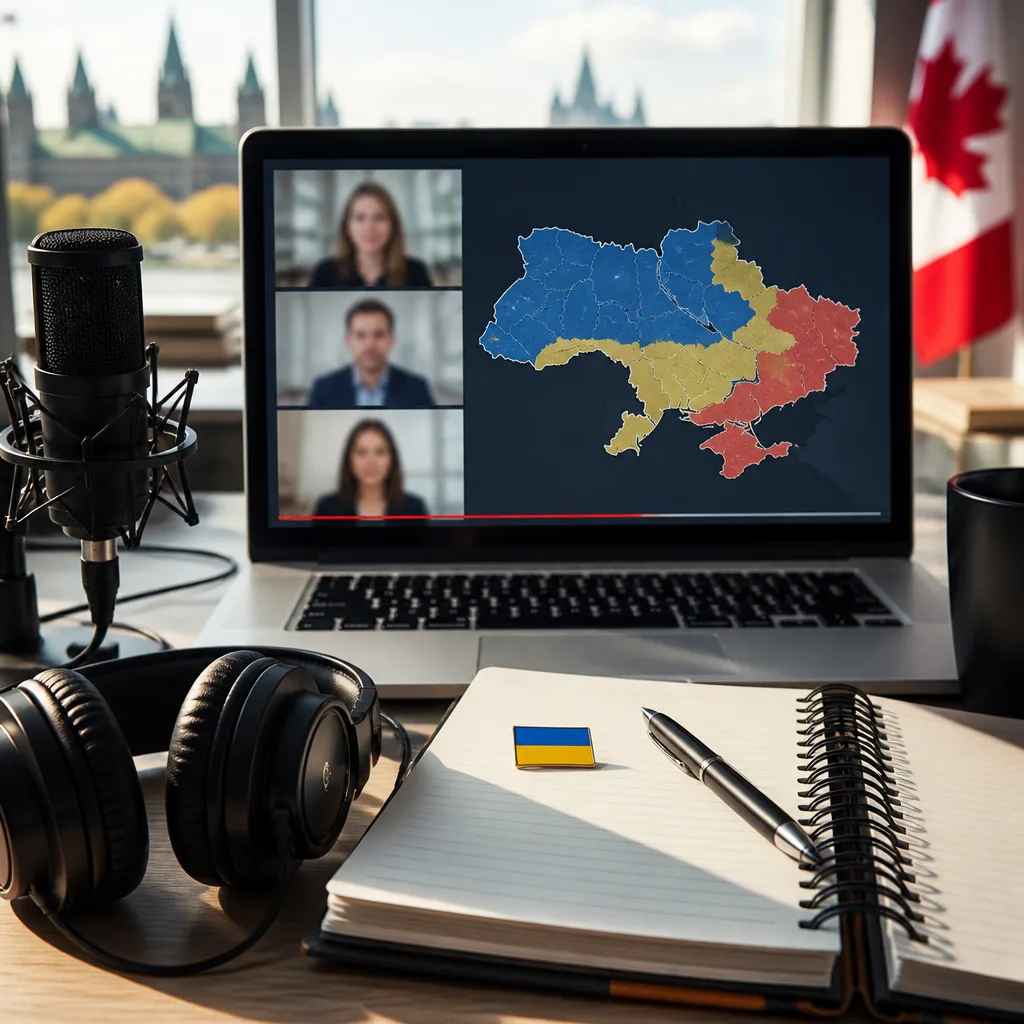
Ukraine’s wartime leadership underwent a jolt with President Volodymyr Zelensky’s decision to remove Defence Minister Mykhailo Fedorov, a move dissected in a new EA WorldView videocast that probes whether the change could blunt Kyiv’s shift from survival to counter-attack in its war with Russia.
The 25-minute discussion brings together the host with Ukrainian journalists Daniel Tkiie and Sofia Nazarenko to evaluate the timing and rationale behind the dismissal, Fedorov’s role in recent operational adaptations since January, and the risks if the presidency misjudges the political and military trade-offs of a personnel shake-up during an intensifying campaign.
Leadership change tested against battlefield priorities
The conversation opens by mapping potential explanations for Zelensky’s move and asking whether a reversal is conceivable to avoid any loss of momentum. The panel highlights that Fedorov had been widely credited for innovations introduced earlier this year that, according to the discussion, supported Ukraine’s ability to take the fight closer to Russia’s frontiers. The central question is whether institutional continuity can be preserved amid a reshuffle that touches the defence portfolio at a critical juncture.
Participants frame the decision within the practicalities of sustaining an expanded operational tempo: logistics, coordination with allied support, and maintaining public confidence. The videocast does not present an inside account of presidential deliberations; rather, it weighs the strategic risks of changing senior leadership while Kyiv pursues offensives and asymmetric strikes intended to offset Moscow’s advantages in manpower and materiel.
Kremlin under pressure: counter-attacks and stalled advances
Turning to Russia’s position, the panel surveys multiple stress points: sustained counter-attacks by Ukrainian forces, persistent economic pressure, and what the hosts characterise as a lack of advance on front lines. These strands are presented as interlocking factors shaping the Kremlin’s near-term choices. The discussion underscores that the longer Russia faces constrained gains, the more its leadership must weigh the domestic and logistical costs of protracted fighting against incremental territorial results.
- Ukraine’s shift from resistance to counter-attack magnifies the stakes of defence leadership stability.
- Russia confronts battlefield stagnation and economic strain, complicating its strategic calculus.
- External policy levers, including possible new U.S. sanctions, remain uncertain.
Sanctions horizon: prospects and caveats
The videocast considers the potential for new U.S. sanctions on Russia. The host advises caution in assessing the likelihood and scope of additional measures, signalling that while further economic tools are conceivable, firm predictions about timing or breadth would be premature. This measured view reflects the complexity of sanctions policy, which must balance coercive impact with enforcement capacity and coordination among partners.
| Topic | Key questions raised |
|---|---|
| Defence leadership change | Why now, and can continuity in operations be maintained? |
| Battlefield dynamics | Will Ukraine’s counter-attacks sustain pressure on Russia? |
| Economic pressure | How do sanctions and costs influence Moscow’s options? |
| U.S. sanctions outlook | Are additional measures imminent or still under review? |
| U.S.–Ukraine posture | How do parallel priorities shape Washington’s stance? |
U.S. posture and ripple effects from Iran policy
The conversation closes by linking Ukraine policy to debates in Washington, including what the host describes as the Trump camp’s failing war on Iran and its implications for U.S. attention and resources. The suggestion is that simultaneous foreign-policy confrontations can dilute focus and complicate decision-making on aid, sanctions design, and diplomatic bandwidth regarding the Ukraine–Russia war.
In this framing, the political risk for Kyiv is not solely domestic. External uncertainty—over sanctions trajectories and competing priorities in U.S. policy—intersects with internal change to create a narrower margin for error. Against this backdrop, the panel argues that the efficacy of Ukraine’s military adaptations since January should be preserved regardless of personnel shifts, lest operational learning be interrupted at a sensitive moment.
While the videocast refrains from definitive predictions, it sets out the stakes with clarity: how a single senior appointment decision can reverberate through command cohesion, allied confidence, and Russia’s calculations on a battlefield where gains are hard-won. The coming weeks, the participants imply, will test whether Kyiv can keep its counter-attack posture intact as politics and war collide.