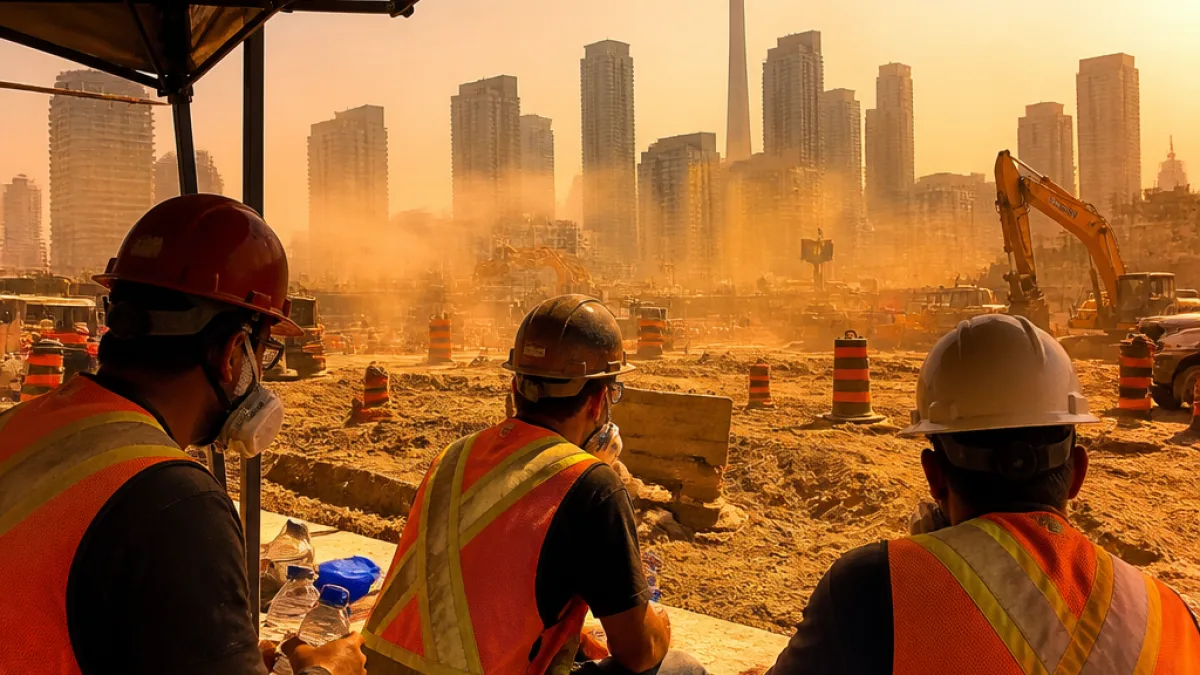
Wildfire smoke blanketing much of southern Ontario has altered work plans, forced cancellations and prompted health warnings as air-quality officials urge caution.
Work halted, modified or continued with precautions
Employers of outdoor labourers are responding in different ways as hazy, smoky skies persist. Some contractors have called off jobs for the day; others are reducing crews, increasing rest breaks and requiring protective masks.
"Environment Canada says the air quality in Toronto continues to be ‘very high risk,'"
One home-building contractor reported cancelling work on half of his active projects after staff experienced symptoms. He described finishing his shift with burning eyes and a severe headache. In contrast, a landscaping crew member said his team continued planting while using respirator masks and staying in shaded areas.
Health guidance and local impacts
Public-health officials across the region have warned that prolonged exposure to wildfire smoke can worsen respiratory and cardiovascular conditions and cause irritation even in healthy people. The smoky conditions have also led to event cancellations and disruptions in daily routines.
- Workers: Some stayed home, others reduced hours or wore respirators.
- Employers: Paused projects or altered schedules to limit exposure.
- Public health: Issued air-quality warnings and advised limiting outdoor exertion.
Lakefront and downtown areas reported particularly poor visibility as the orange haze persisted. Officials advised people with heart or lung conditions, seniors and young children to avoid outdoor activity. Those who must work outside were urged to use properly fitted respirators when available, seek shade, and take frequent breaks.
| Area | Air-quality advisory |
|---|---|
| Windsor to Kingston | Very high risk |
| Toronto | Very high risk |
Employers and workers are advised to follow local public-health and occupational-safety guidance. Those noticing symptoms such as coughing, shortness of breath, chest pain, severe headaches or dizziness should seek medical advice.
As smoke drifts across provincial and international borders, officials continue to monitor wildfire activity and air-quality indices and will update guidance as conditions change.