Technocrat takes the helm as winter looms
Ukrainian President Volodymyr Zelenskyy has named Sergii Koretskyi as the country’s new prime minister, elevating a private‑sector energy executive with no prior Cabinet background to lead a wartime government focused on surviving the coming cold season. At 48, Koretskyi arrives from the energy industry with a mandate to bolster the country’s power and heating network in the face of continued Russian missile and drone attacks.
Koretskyi’s nearly three decades in business have centred on the energy sector. He moved into public service in 2022, the first year of Russia’s full‑scale invasion, when he was appointed chief executive of Ukrnafta, the state’s largest oil producer. His elevation signals a deliberate emphasis on technical competence and emergency management over conventional political experience.
Energy expertise at the core of wartime governance
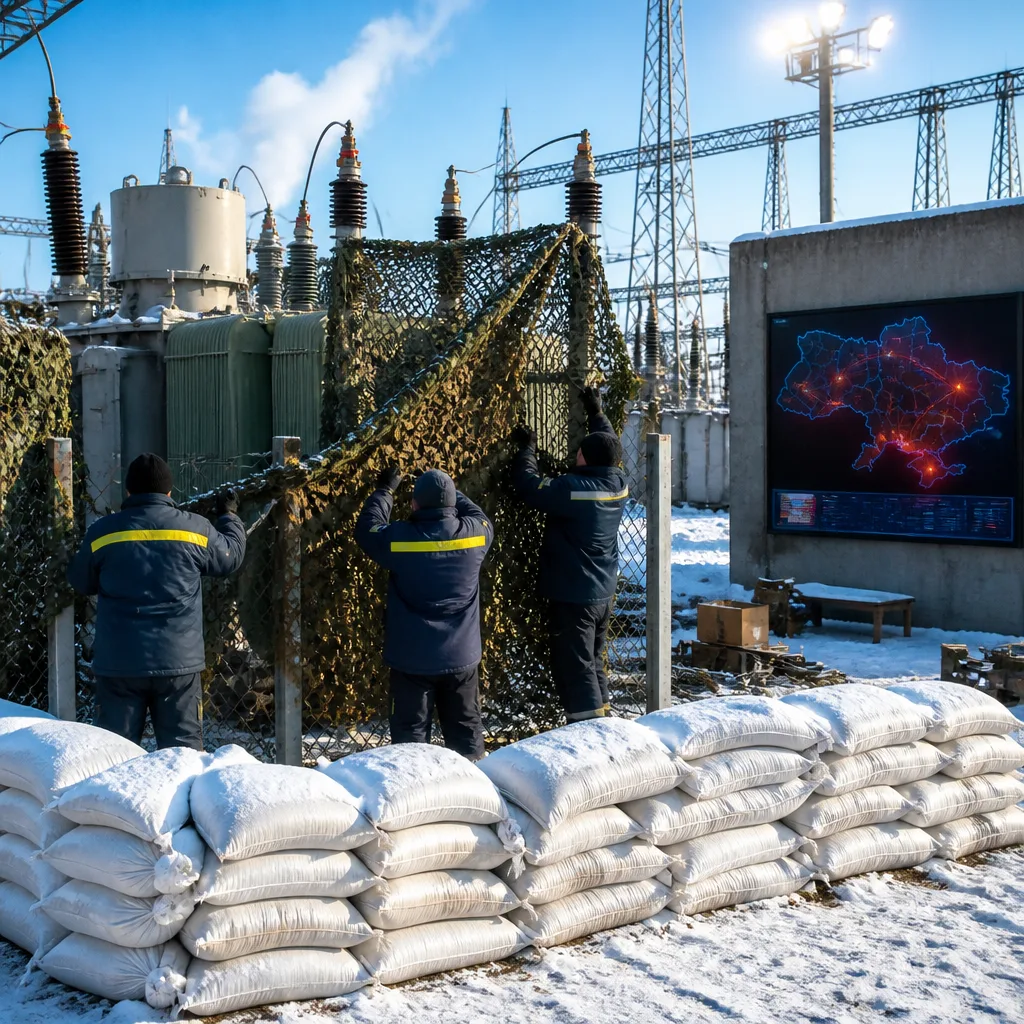
The government’s immediate objective is to harden the electricity and district‑heating systems that keep households and industry functioning through sub‑zero temperatures. Russia’s campaign against critical infrastructure has aimed to sap public morale and pressure Kyiv into territorial concessions. The new prime minister’s task is to organise a defence of the energy grid that can absorb and recover from repeated strikes.
In practical terms, that means planning for dispersed generation, rapid repair capacity and redundancies in transmission and heat supply. It also requires steady coordination with state‑owned enterprises, private utilities and local operators to ensure spare parts, crews and fuel are available when systems come under fire.
From boardroom to Cabinet room
Koretskyi’s profile—an industry executive without entrenched political ties—reflects a broader turn toward managerial leadership during wartime. As head of Ukrnafta, he led operations at a linchpin of the national energy economy. That experience now becomes a central asset as the government tries to keep homes warm, factories running and hospitals powered during peaks of demand and disruption.
The appointment suggests a governing strategy with a narrow but urgent focus: protect core services, stabilise the grid and maintain public confidence through the most vulnerable months. Ensuring transparency in emergency procurement and clear lines of command will be critical to sustaining that strategy in a high‑risk environment.
What the choice signals
- Operational focus: A leader with sectoral expertise is expected to prioritise grid resilience and heating reliability through winter.
- Continuity of essential services: Energy security is being framed as a pillar of national endurance under attack.
- Non‑partisan approach: Limited political baggage points to a technocratic Cabinet role centred on delivery rather than ideology.
Mandate defined by resilience
Koretskyi’s immediate challenge is not legislative grand design but tangible outcomes: fewer outages, faster repairs and reliable access to heat and electricity. The work will unfold under persistent aerial threats designed to overwhelm defences and repair crews alike. Success will be measured in the durability of substations and pipelines as much as in Cabinet decisions.
As Ukraine braces for winter, the appointment underscores the reality that energy infrastructure has become a primary theatre of the conflict. The new prime minister’s capacity to align state resources, mobilise operators and keep systems functioning will shape public morale and the country’s broader wartime posture in the months ahead.
Profile at a glance
| Role | Detail |
|---|---|
| Prime Minister | Sergii Koretskyi |
| Age | 48 |
| Career background | Nearly 30 years in the private sector, mainly in energy |
| Public sector entry | 2022 |
| Prior position | CEO of Ukrnafta, Ukraine’s largest oil producer |
| Core mandate | Strengthen power and heating systems against Russian attacks |
The decision to install a technocratic leader with deep industry experience reflects a wartime logic: in a struggle where infrastructure is a target, managing energy is governing. The coming winter will test how well that logic translates into resilience on the ground.