The rapid global build-out of large-scale data centres is creating concentrated financial and physical exposure that insurance markets and construction supply chains are struggling to absorb. An industry insurer projects roughly US$6.5 trillion of data-centre projects are still to be committed through 2030, a figure that underlines the scale of the coming construction surge.
Insurance capacity lagging behind record values at risk
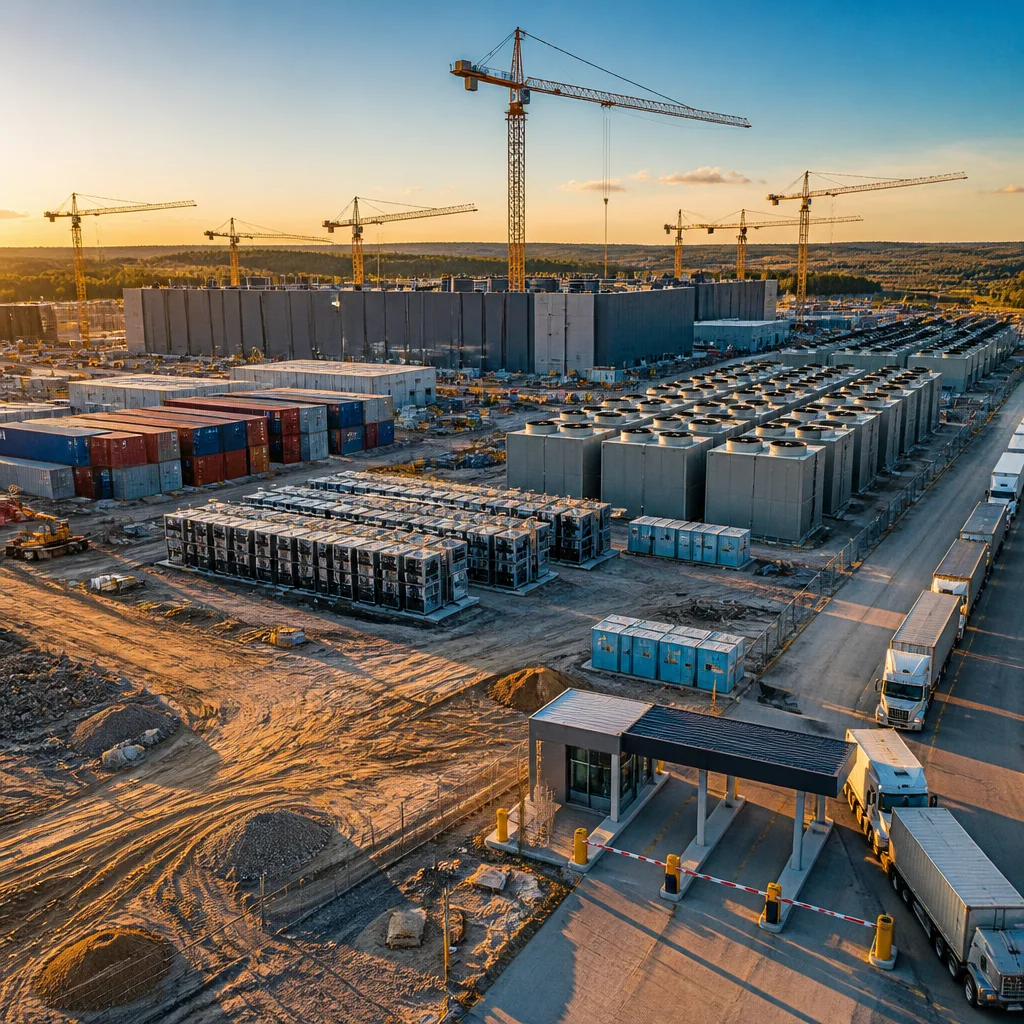
Underwriters and brokers say the rush to create hyperscale campuses is putting unprecedented sums of insurable value into single locations. Analysts estimate that the total insurable value for one hyperscale campus during construction can reach between US$20 billion and US$30 billion. By comparison, traditional large infrastructure projects commonly face limits in the US$5 billion to US$10 billion range.
Market participants have responded by expanding dedicated facility programmes, but available capacity remains well below the sums now entering the pipeline. Examples of expanded programmes include offerings at the low-single-digit billions of US dollars — increases that still fall short of the largest sites' needs.
Specialised construction timelines and long-lead parts
Developers face compressed schedules and reliance on highly specialised equipment with long procurement times. Those characteristics upend assumptions embedded in traditional builders’ risk and business-interruption covers and increase vulnerability to supply disruptions.
- Concentration risk: enormous values concentrated at few sites.
- Capacity gap: insurance programmes expanded but insufficient for maximum exposures.
- Operational fragility: reliance on long-lead parts and specialised cooling systems raises outage and replacement risks.
"There's going to be a huge boom, and there's going to be a lot of construction because those US$6.5 trillion worth of projects haven't broken ground yet," said Achim Hillgraf, operations senior vice-president of global growth strategies at FM.
Implications for lenders, developers and operators
As lenders increasingly demand full-value coverage, the mismatch between insured capacity and replacement cost can become a financing impediment. Developers may face higher premiums, restricted insurance terms, or the need to fund larger self-insured retentions. Operators may also confront elevated business-interruption exposure if cooling failures or other catastrophic events occur.
| Issue | Consequence |
|---|---|
| High single-site values | Insurance programmes strained; potential coverage shortfalls |
| Specialised equipment & long lead times | Longer recovery times; heightened business interruption losses |
| Secondary-peril locations | Increased catastrophe exposure |
The coming years will test how insurers, brokers and capital providers adapt product design, capacity pooling and risk mitigation strategies for an industry whose scale and speed of growth are unlike typical infrastructure programmes. For households and businesses, the outcome matters indirectly: failures in this sector could disrupt cloud services, enterprise operations and digital supply chains that underpin broad swathes of the economy.
Insurers and developers will need to reassess underwriting frameworks and contingency planning as the pipeline moves from planning into construction and operation.