
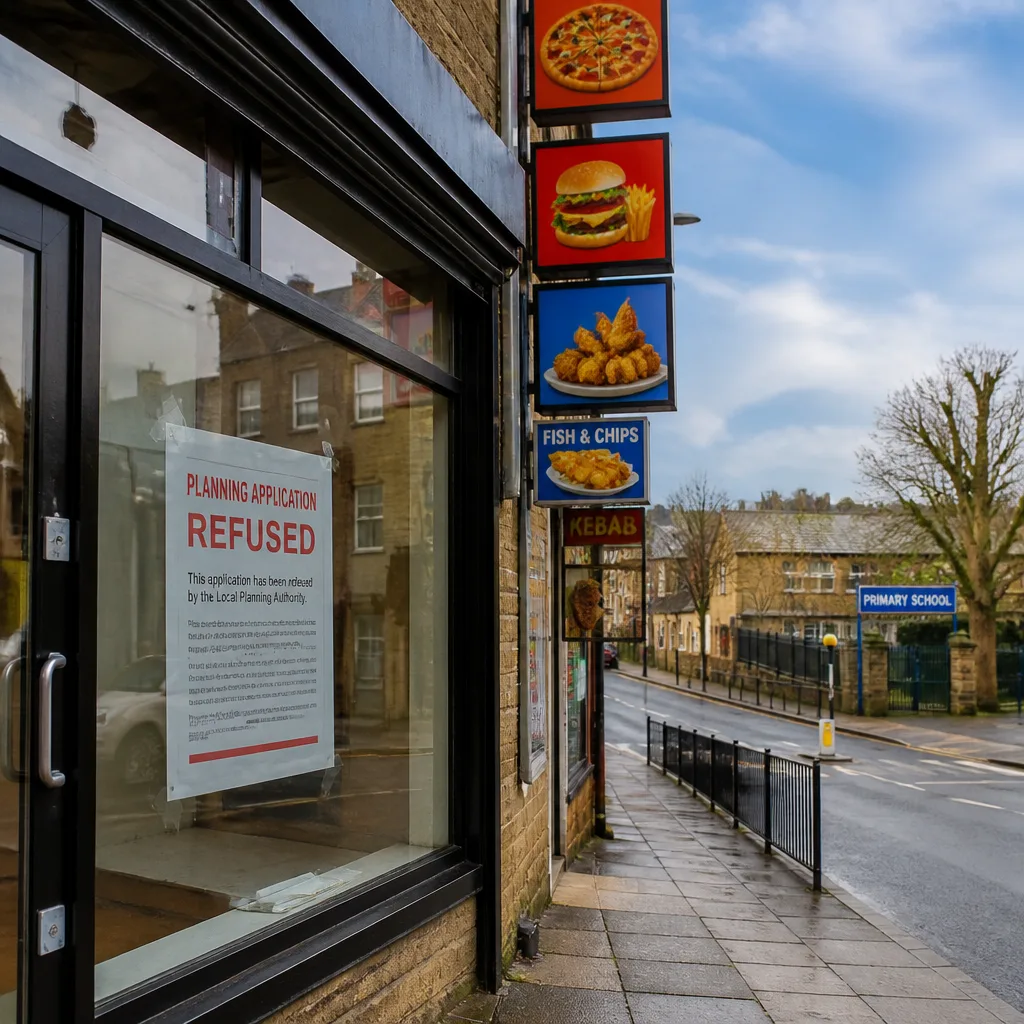
Public health officials in Bradford, United Kingdom, have warned local planners about an over‑concentration of fast‑food outlets in parts of the city, arguing that allowing new takeaways in already saturated and deprived neighbourhoods would undermine health outcomes. Their letter to Bradford Council preceded the refusal of an application for a new outlet on Whetley Hill, a site located just 40 metres from Atlas Primary School.
Health officers cite disease links and system pressures
The officers pointed to research associating frequent consumption of fast food with higher risks of obesity, diabetes, metabolic syndrome, cardiovascular disease and some cancers. They also raised concerns about added pressure on the NHS from preventable illnesses. Their submission emphasized that national planning rules in the U.K. call for decisions that promote good health and prevent ill‑health, including improving access to healthier food choices—particularly in communities already facing disadvantage.
“There is already an over‑concentration of fast food take aways within the Bradford District,” the public health letter stated, adding that planning policy should support healthy lives by enabling healthier food access, especially where need is greatest.
Bradford’s density exceeds the national rate
Latest 2024 figures cited by officials indicate 759 fast‑food outlets across the district—135.5 per 100,000 people—compared with a UK average of 115.92 per 100,000. They noted that if Bradford matched the England average, the district would have roughly 649 outlets, or about 110 fewer than currently reported.
| Area | Outlets (count) | Rate per 100,000 |
|---|---|---|
| Bradford District | 759 | 135.5 |
| UK average | — | 115.92 |
| England average (hypothetical for Bradford) | 649 | — |
The concentration is most pronounced in some of the district’s poorest areas, according to the letter. Officials linked that pattern to elevated rates of chronic disease and argued that continued approvals in these neighbourhoods would run counter to public health goals.
Proximity to schools remains a flashpoint
One factor in the Whetley Hill decision was the location’s closeness to Atlas Primary School. Since 2014, Bradford Council has barred new hot‑food takeaways from opening within 400 metres of schools, parks, leisure centres or other places regularly used by children. The rule, however, does not apply to designated local centres, a category that includes the city centre and other town and village cores.
Health researchers in the city have previously raised alarms about the local food environment. The organisation Born in Bradford has described the city as being “flooded” with businesses selling predominantly unhealthy options, contributing to children consuming too much sugar and fat and not enough fibre, vitamin D, fruits and vegetables.
Planning as a public health tool
The public health officers framed planning decisions as an opportunity to support healthier lives by shaping food access, especially in areas where residents already face socioeconomic barriers. Their position aligns with a growing international interest in how zoning and licensing can influence diet and chronic disease risk.
- Officials argue that high takeaway density correlates with worse health outcomes.
- They note the preventable nature of many diet‑related diseases and the burden on health services.
- Restricting outlets near schools and child‑centred facilities remains a key policy lever.
The council’s refusal of the Whetley Hill takeaway reflects those priorities. While the broader policy does not cover all commercial areas, the decision underscores the tension between economic activity and health protection in food retail. As the district exceeds the national average for fast‑food outlet density, further applications in saturated zones are likely to face heightened scrutiny.
For communities weighing similar measures, Bradford’s experience illustrates a cautious, evidence‑informed approach: use planning to moderate outlet density where health risks are concentrated, safeguard spaces around schools, and consider how cumulative approvals can shape the neighbourhood food environment over time.