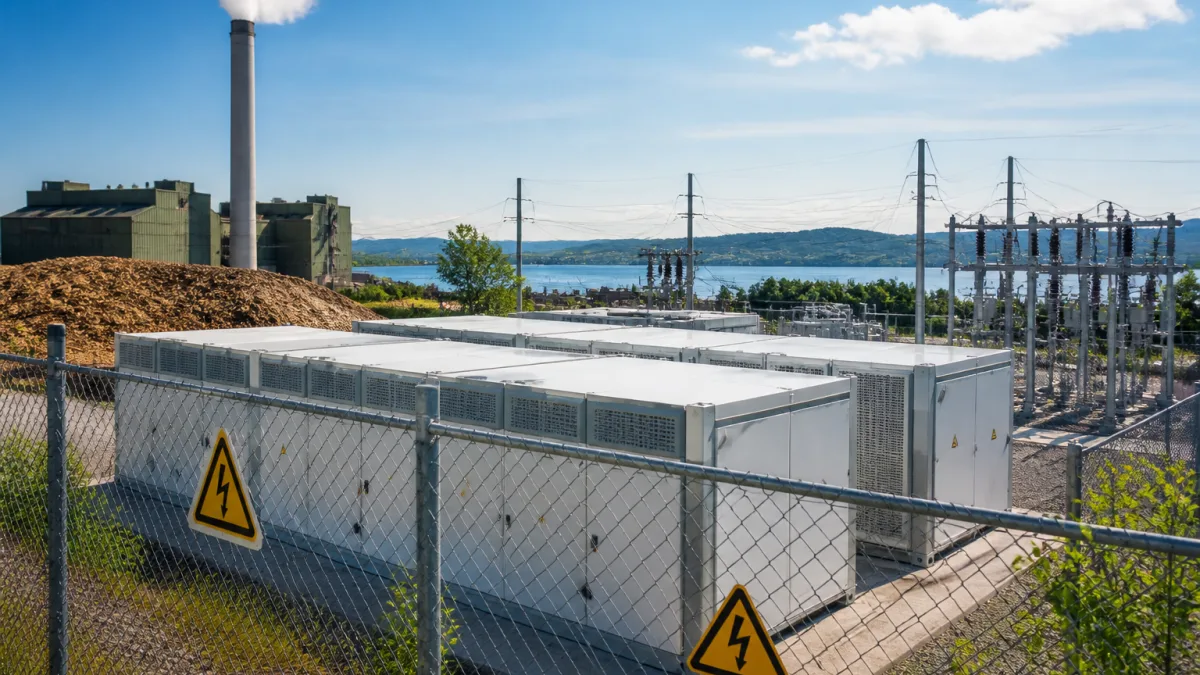
Vermont’s Burlington backs 5 MW battery to cut peaks and costs
The Burlington City Council in Vermont has unanimously approved a 5‑megawatt battery energy storage system tied to the city’s McNeil Generating Station, aiming to trim electricity costs and better manage demand spikes during heat waves. For readers in Burlington, Ontario, the decision in another city that shares our name offers a window into how mid‑sized municipalities are adopting grid storage to stabilize rates and improve reliability.
According to the city-owned utility, Burlington Electric Department (BED), the system will be sited at the McNeil plant on an area used for ash byproduct disposal. Darren Springer, the utility’s general manager, described the project as
“by far the most significant battery storage”the department has adopted to date. The battery will be leased from Massachusetts-based Kearsarge Energy, which will maintain the asset, while BED will control its operation. Springer said Kearsarge was the “lowest-price respondent.”
BED reports that its average hourly load is 37 megawatts, with demand rising to roughly 60 megawatts during peak conditions, such as summer heat events. The battery is designed to inject up to 20 megawatts over a four-hour window, effectively shaving the most expensive hours and reducing strain on the grid. Springer noted the utility delayed acting until battery economics improved and now expects the system’s use to outweigh its costs over the next five years.
While the Burlington, Vt., plan underscores the growing role of storage in utility operations, it also lands amid ongoing debate over lithium‑ion safety. Industry adoption has accelerated due to cost-saving potential, but rare malfunctions can cause fires or explosions, prompting scrutiny in some communities. A recent proposal for a similar installation in Vergennes, Vt., met strong resistance and was put on hold. In this case, councillors did not raise safety questions during approval, and BED reported no public inquiries to date, according to the discussion referenced in the meeting coverage.
For residents in Burlington, Ont., the Vermont vote illustrates a practical use case: pairing storage with local generation and using batteries like an energy reservoir—charging when supply is ample or prices are low, then discharging during the priciest peak hours. That approach can help blunt high wholesale costs, limit peak-related fees, and reduce the need to fire up additional peaking resources.
The operational concept is straightforward: store excess electricity when it’s cheaper or cleaner, and redeploy it when demand surges. Municipal utilities and local distributors increasingly look to such assets to manage heat‑driven peaks, integrate more renewables, and keep bills steadier.
Project snapshot
| Item | Detail |
|---|---|
| Battery capacity | 5 MW |
| Discharge contribution | 20 MW total over four hours |
| Utility average load | 37 MW |
| Peak demand (heat waves) | About 60 MW |
| Ownership/operation | Leased from Kearsarge Energy; operated by BED |
| Site | McNeil Generating Station ash-disposal area |
Why it matters for Burlington, Ont.
- Peak cost control: Batteries can cut exposure to the most expensive hours on the grid, helping contain rate volatility.
- Grid resilience: Dispatchable storage supports local reliability during extreme temperatures and demand spikes.
- Adoption trend: As costs fall, more municipalities are evaluating storage despite ongoing safety scrutiny for lithium‑ion systems.
The Vermont decision does not set policy north of the border, but it reflects a broader municipal focus on practical tools to manage peaks. As more cities weigh storage, public discussions are likely to focus on siting, lifecycle costs, vendor accountability through leasing, and emergency response planning for rare battery failures. Those are the same questions communities across Canada will confront when similar proposals surface.