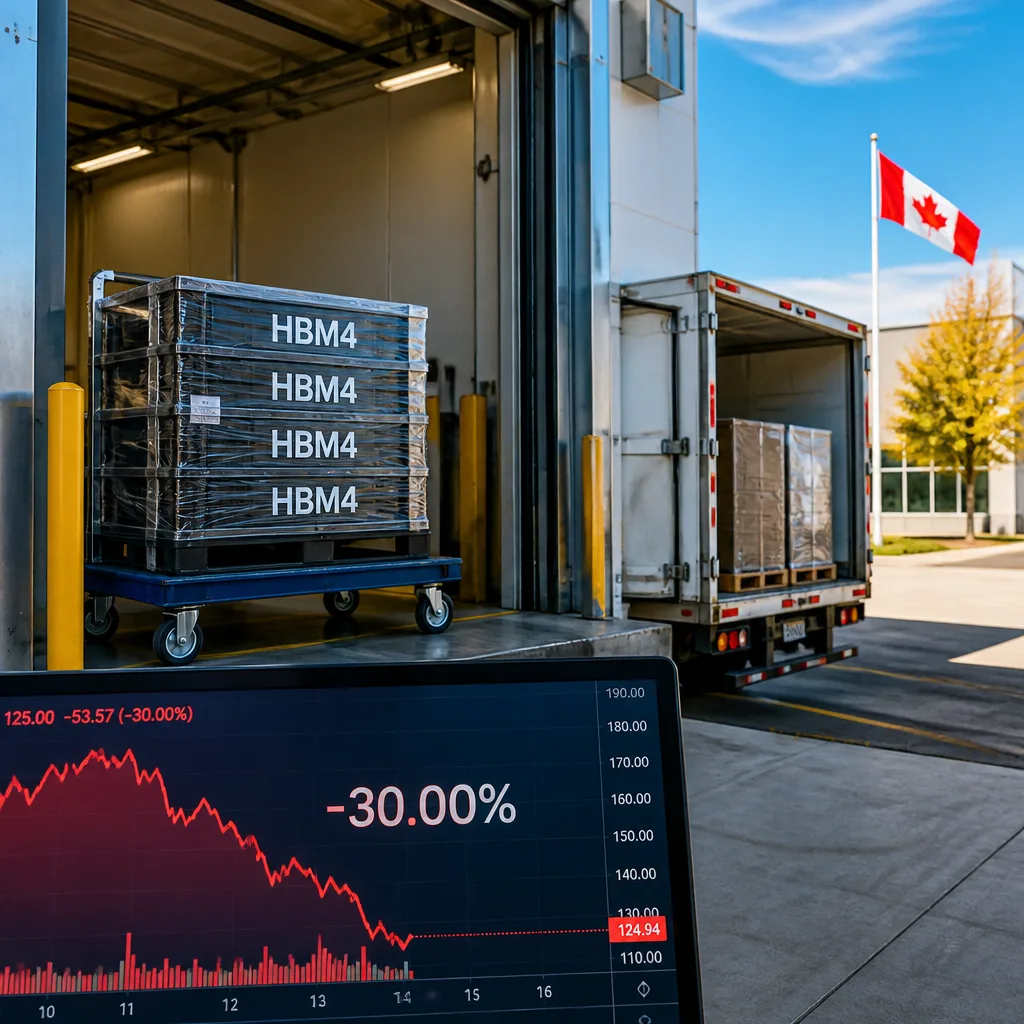
Micron Technology is confronting a sharp market reset just as it begins shipping its next generation of high-bandwidth memory, highlighting how the artificial intelligence buildout is being tested by shifting enterprise priorities.
The memory maker’s shares, which had soared alongside the AI hardware boom, have fallen 30% from their recent peak and closed at $848 on Friday, July 17. That retreat follows a run-up from roughly $50 in early 2023 to a high of $1,213, a staggering increase of about 2,070% over three and a half years.
AI demand meets supply constraints
Micron’s high-bandwidth memory (HBM) is a foundational piece of the AI hardware stack inside data centres. HBM keeps data close to graphics processing units (GPUs) so training and inference workloads don’t stall while waiting on information. In the current cycle, global memory shortages have allowed suppliers to set firmer pricing, lifting Micron’s revenue and earnings as demand outpaced available capacity.
That tailwind is now intersecting with a more cautious tone from parts of the enterprise market. According to recent reports referenced by the company’s watchers, some businesses are reining in AI software spending, a move that could ripple back through orders for data-centre chips and components. If software projects slow, memory buyers may recalibrate near-term procurement even if long-term AI road maps remain intact.
HBM4 arrives with bigger capacity, lower power
Micron says it has recently started shipping HBM4 for data centres. The new generation delivers a 60% increase in capacity and a 20% improvement in energy efficiency compared with the company’s previous HBM. Bigger stacks of faster memory reduce the odds that GPUs sit idle waiting for data, which directly affects the responsiveness of AI chatbots and agents.
| Metric | Figure |
|---|---|
| Share price peak | $1,213 |
| Latest close (Jul 17) | $848 |
| Change from peak | -30% |
| Gain since early 2023 | ~2,070% |
| HBM4 capacity vs. prior | +60% |
| HBM4 energy efficiency vs. prior | +20% |
Why memory is the choke point
AI models are voracious. GPUs perform the math, but they need rapid, sustained access to data. HBM acts as the staging area: it stores information in a ready state so compute units can pull it without pausing. When memory bandwidth or capacity falls short, even premium accelerators under-deliver. That is why every percentage point of efficiency and each jump in capacity matter — they translate into smoother throughput and, ultimately, better user experiences.
In the past year, that compute–memory balance has turned memory into a bottleneck. With HBM supply tight across the industry, pricing power shifted to suppliers like Micron. The company benefited as AI infrastructure buyers raced to secure modules, fuelling revenue and profit growth. The question now is whether that imbalance persists if software spending slows and data-centre operators pace rollouts more cautiously.
Valuation vs. volatility
Even after the pullback, some metrics make the stock screen as technically inexpensive compared with peers, but valuation on its own is not the full story. Memory remains a cyclical market: when shortages flip to surplus, pricing can retreat quickly. The latest drawdown suggests investors are re-pricing the near-term risk that AI demand proves more uneven quarter to quarter than the spectacular multi-year narrative implies.
- Demand visibility: Any sign that delayed software projects are converting into production workloads would support continued HBM orders.
- Supply discipline: How quickly Micron and rivals add capacity will influence pricing power as HBM4 ramps.
- Efficiency gains: If HBM4’s energy and capacity advantages translate into lower operating costs for customers, it could cushion orders against budget scrutiny.
For now, the company sits at the centre of AI’s most important plumbing: making sure accelerators don’t wait on data. The next phase will test whether HBM4’s technical gains, combined with a still-tight market, can offset a cooler spending climate on the software side. Investors appear to be bracing for a bumpier ride, even as the core technology story — more memory, closer to compute — remains intact.