Record tournament resets expectations — and tempers
The 2026 men's World Cup, staged across Canada, the United States and Mexico, closes with a final in New Jersey after a supersized, nearly six-week run that redefined the event’s scale and tempo. At the last whistle, a record 104 matches will have been completed — the most ever at a World Cup — capping a tournament that mixed on-field drama with debates over scheduling, recovery and new in-game protocols.
The expanded 48-team format was under scrutiny from the outset. Critics warned of lopsided scorelines and a dull group phase. Instead, several lower-ranked sides disrupted the script and pulled the competition into sharper focus, even as the traditional powers ultimately restored order by the semi-finals.
Hydration breaks and the science of tempo
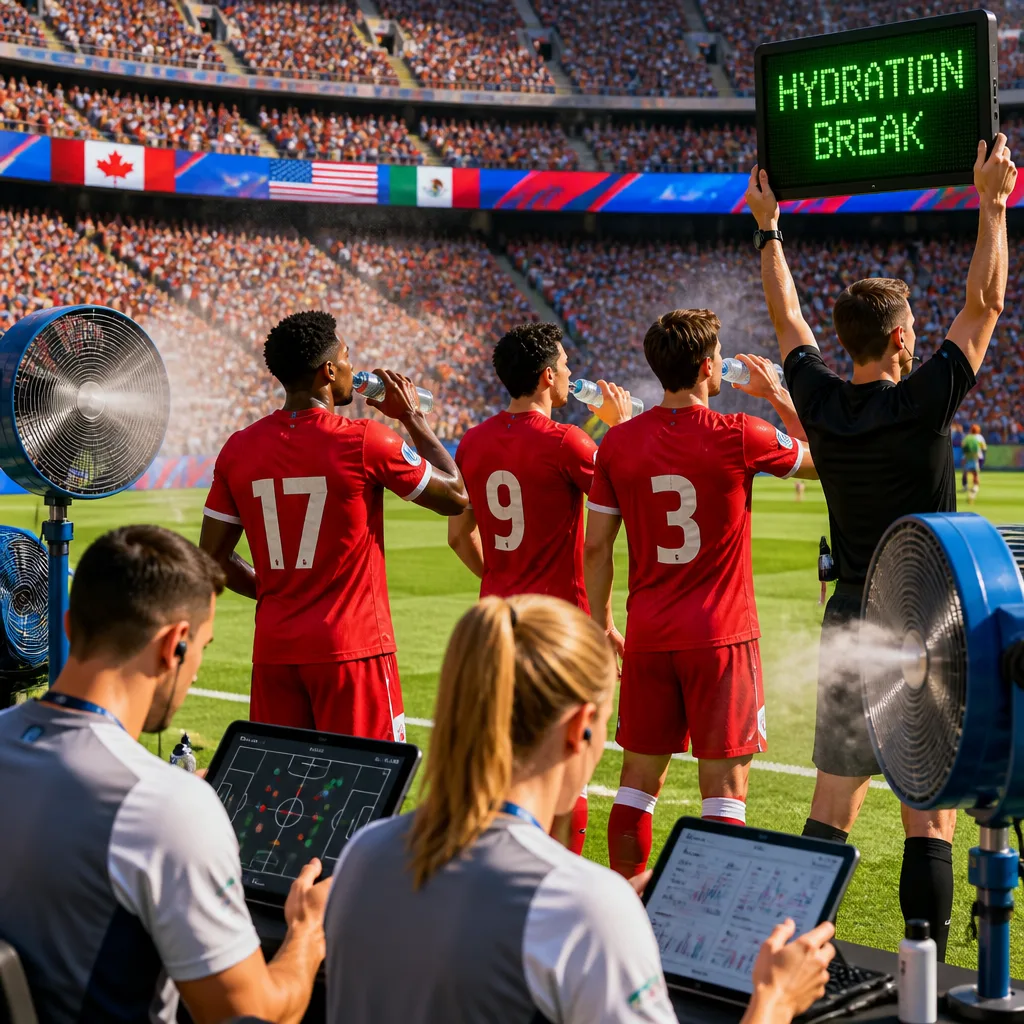
One flashpoint was the introduction of hydration breaks, an intervention aimed at maintaining player safety and performance during intense summer conditions across three countries. Intended to regulate physiological stress and lower heat-related risk, the pauses were blasted by many supporters who felt they fractured the spectacle’s momentum. The friction illustrates a widening fault line in elite sport: medically informed protocols and data-led officiating versus the uninterrupted flow fans prize.
Practically, these breaks function like micro timeouts. They compress coaching and analysis into brief windows, allow squads to reset pressing schemes and defensive shapes, and can subtly tilt match dynamics — especially in late stages when margins are thin. Whether they become a permanent part of top-flight international football will hinge on how governing bodies weigh safety evidence against the viewing experience.
Underdogs make the case for 48
The format’s detractors got an early rebuttal. Cape Verde opened by holding Spain and then reached the round of 32, pushing Argentina to extra time before losing 3–2 in what will be remembered as one of the tournament’s wildest nights. Goalkeeper Vozinha, 40, turned into a viral phenomenon, accumulating a massive following across social platforms through a string of reflex saves and charismatic post-match moments.
Congo advanced from its group and tested England before bowing out, while Curaçao entered its final group match still in contention for the knockouts. These runs broadened the competitive map, validating FIFA’s bet that more berths would surface quality from beyond the traditional power base — even if the closing rounds again featured the familiar giants.
Old guard at the sharp end
By the last four, the bracket belonged to proven heavyweights. Argentina, Spain, France and England — each a past champion — navigated the churn and landed in the semi-finals, underscoring how depth, tournament experience and bench rotation still separate elite programs when the schedule stretches across nearly a month and a half.
Goals race becomes a showcase
The chase for the scoring crown was a roll call of modern stars. Kylian Mbappé led before the final with 10 goals, extending his career World Cup tally to a record 22. Lionel Messi entered the decider on 8 goals for this edition and 21 overall. Elsewhere, Erling Haaland, Harry Kane and Jude Bellingham kept the highlight reels rolling, while Cristiano Ronaldo fell short of adding a last-chapter triumph with Portugal.
Why it matters for fans — and planners — in Canada
Co-hosting this World Cup locks Canada more firmly into the logistics of mega-events where calendar density, weather variability and cross-border travel shape the football as much as tactics do. Innovations like hydration breaks, which were unpopular among many fans, reveal how tournament design can ripple through gameplay and broadcast pacing. They also show how data-informed safety measures are likely to persist, particularly as organizers juggle climate realities and player welfare across vast geographies.
For supporters, the trade-offs are tangible: slightly longer stoppages and new rhythms against higher-intensity finishes and healthier athletes deep into knockout rounds. For teams, the lesson is strategic adaptation — preparing for forced pauses, leveraging them for tactical tweaks and building rotation plans that withstand a 104-match marathon schedule.
By the numbers
| Metric | Figure |
|---|---|
| Total matches | 104 |
| Tournament span | ~6 weeks |
| Host countries | 3 |
| Teams | 48 |
| Mbappé goals (2026) | 10 |
| Mbappé career World Cup goals | 22 |
| Messi goals (2026) | 8 |
| Messi career World Cup goals | 21 |
What to watch next
- Whether hydration breaks become a standard feature in top-tier international competitions.
- How FIFA refines the 48-team format to preserve jeopardy while managing match load.
- Which smaller federations build sustainable programs off breakthrough performances.
The 2026 edition showed that scaling up can widen opportunity without diluting drama. It also made clear that the modern World Cup is as much a contest of physiology, scheduling and micro-adjustments as it is a test of technique — a reality co-hosts, including Canada, will need to keep shaping with fans in mind.