3 E Network Technology Group Limited says it has developed a custom edge AI system-on-chip (SoC) for smart healthcare and eldercare robots, a move the company frames as a strategic step into purpose-built silicon for artificial intelligence. The announcement, posted July 20, 2026, follows a partnership with Aladdin Alaris AI Inc.
Built for the realities of caregiving
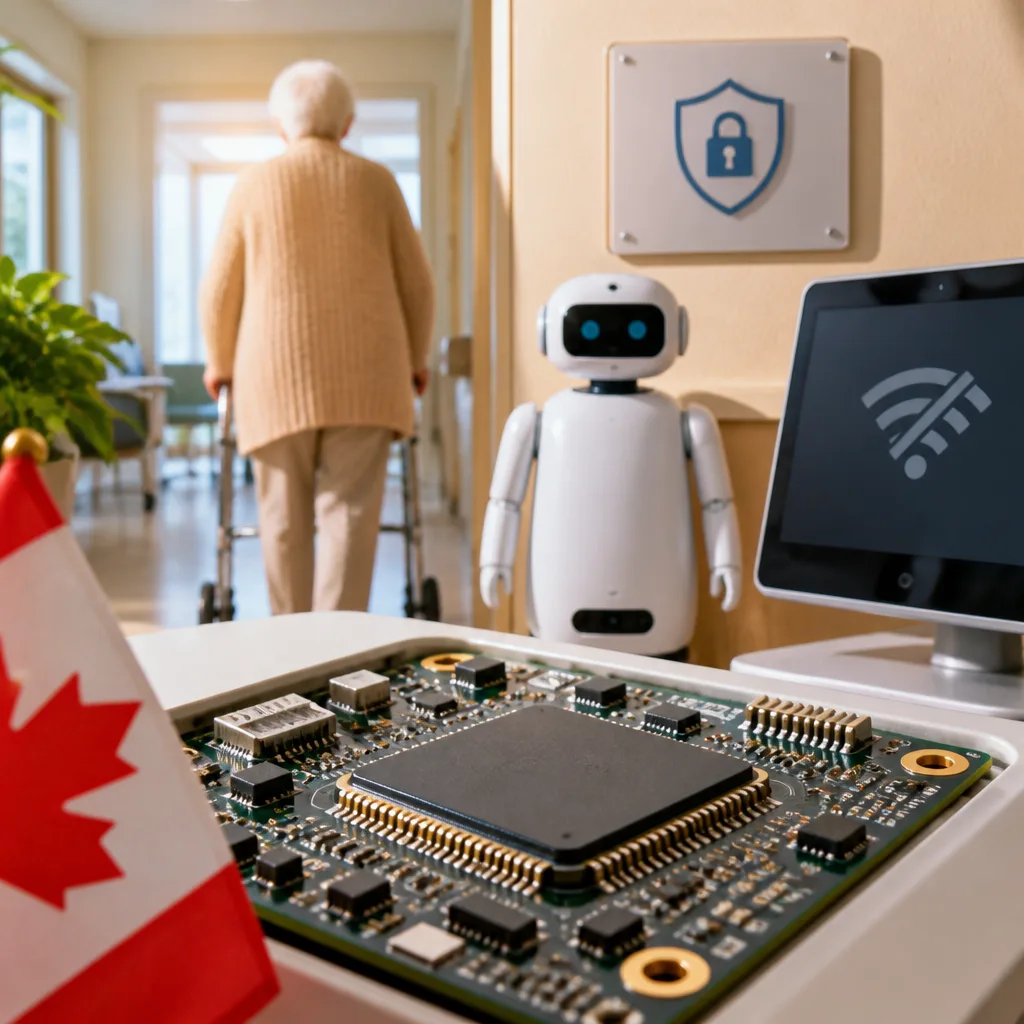
The company positions the chip as tailored to the constraints of eldercare environments: split-second decisions, strict privacy rules and the need to keep working even when the internet drops. According to the statement, the SoC focuses on low‑latency perception, secure data processing and efficient energy use to support safety and caregiving tasks in homes and care facilities.
Edge AI concentrates computation on the device itself rather than sending raw data to the cloud. In practice, that can shrink response times and reduce exposure of sensitive information, two persistent challenges for robots operating around patients and seniors. 3 E Network underscores those points, noting the chip’s design addresses rapid real-time responsiveness and compliance with stringent privacy requirements, while remaining reliable without constant connectivity.
Strategic pivot to custom silicon
The company describes the work as part of a broader shift toward custom silicon solutions for AI applications. It also highlights completion of key architectural design work on the SoC as a milestone in its semiconductor business. The partnership with Aladdin Alaris AI is presented as a way to accelerate progress in a specialized market segment.
3 E Network cites the global rise in aging populations as a driver of demand for smarter in-home and facility-based assistance. The company says the chip is intended to enhance both safety and caregiving capability, suggesting it could help service robots better interpret their surroundings and act more quickly to support caregivers and residents.
Why edge matters for eldercare
- Latency: On-device inference helps robots recognize situations and respond faster, which is critical when assisting people with mobility or medical needs.
- Privacy: Processing sensitive data locally can limit transmission and storage risks, aligning with strict medical privacy expectations.
- Resilience: Reliable operation without constant internet allows robots to function during outages or in settings with poor connectivity.
- Efficiency: Energy‑conscious design is essential for mobile platforms that must operate for long periods between charges.
| Design focus | Intended outcome |
|---|---|
| Low‑latency perception | Faster, more responsive robot behaviour in real-world care settings |
| Secure data processing | Enhanced protection for sensitive patient and household information |
| Efficient energy use | Longer run-times suitable for continuous, in-home assistance |
Market positioning and risks
3 E Network says the SoC is intended to strengthen its hand in the global service robots market. It characterizes the approach as “scenario‑defined silicon,” aiming to tailor chips closely to the demands of a specific domain—in this case, smart healthcare and eldercare robotics.
The company also flags hurdles. It notes the significant technical challenges in bringing eldercare robots to market and the complexity and risks those efforts entail, including potential delays or failures in product launches. Compliance with strict medical privacy requirements is highlighted as a central constraint that the chip’s security‑minded design seeks to address.
What’s next
As development continues, 3 E Network’s goal is to turn its architectural progress into market‑ready solutions. While the company frames the chip as a meaningful advance, it points to the realities of building reliable robotic systems for complex home environments, where safety, privacy and uptime are non‑negotiable.
The announcement does not provide timelines for commercialization or detailed technical specifications beyond the focus on responsiveness, secure processing and efficiency. The company says it aims to solidify competitive advantage as it advances through development with Aladdin Alaris AI.