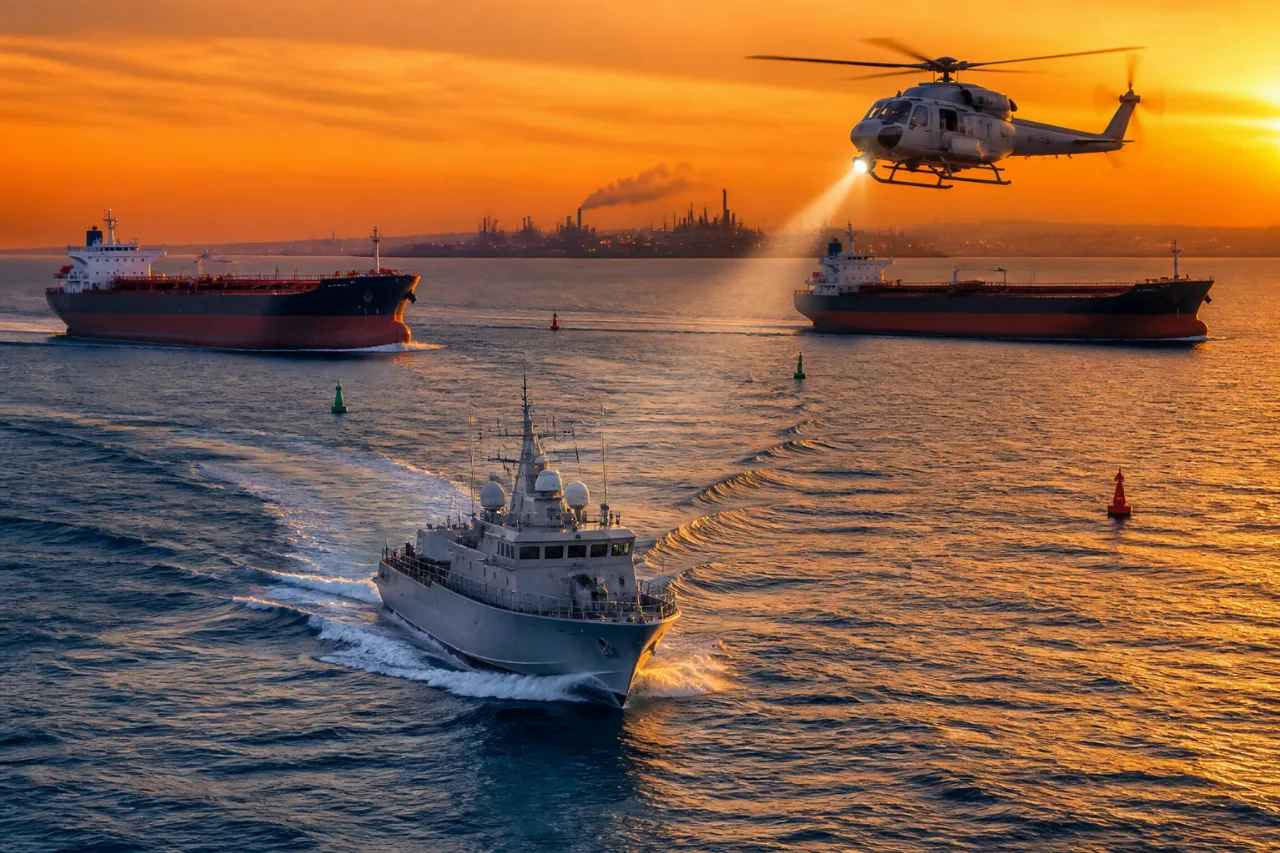
Crew aboard two Quebec-owned cargo ships have been living on standby for months, waiting for a safe moment to steer out of one of the world’s most volatile waterways. Their path home runs through a 12-hour corridor that company officials say remains fraught with mines and shifting front lines.
Desgagnés, a Canadian shipping firm based in Quebec, says two of its freighters are the only known Canadian commercial vessels that ended up stuck inside the Persian Gulf after fighting escalated in late February. That’s when the United States and Israel launched attacks on Iran, and the region’s security picture changed almost overnight. Since then, the company has repeatedly pushed back departure plans from the vicinity of the Strait of Hormuz, the narrow chokepoint that funnels a significant share of global energy supplies.
In recent days, the strategic stakes have sharpened again. The U.S. has launched additional strikes on Iran, and Tehran has answered with attacks that targeted Bahrain, Jordan and two tankers associated with the United Arab Emirates transiting the strait. Those incidents left one mariner dead and eight others wounded, and prompted the U.A.E. to threaten retaliation — a move that could draw the Gulf state back into fighting with Iran as both sides vie for control of the waterway.
Against that backdrop, Desgagnés says its plans remain a moving target. Company vice-president Pascal Larose says U.S. Navy officials in Bahrain have provided a recommended route designed to avoid mines and have pledged some protection when the ships finally make their run. Even with that support, the company is bracing for a tense push through what Larose calls a dangerous stretch.
“[The] danger zone will take 12 hours to sail through” and the ordeal has been “very costly” for the company.
The calculus is unforgiving. Any misstep or sudden shift in the conflict’s contours could strand crews longer or put them in harm’s way, while every day idle adds to operating costs. The firm has not disclosed the vessels’ locations or cargoes, but says it has been forced to revisit departure windows multiple times as the security picture changes.
Why the Strait matters
The Strait of Hormuz is a narrow maritime artery bordered by Iran and Oman. While the source material does not quantify the traffic, it is widely known as a critical route for energy shipments, making it a focal point when conflict escalates. The latest exchange of strikes and threats underscores how quickly risk can ripple across commercial shipping lanes, insurers and crews operating under heightened alert.
- Escalation: U.S. strikes on Iran and Iranian reprisals have widened to sites in Bahrain and Jordan, and to tankers with U.A.E. ties in the strait.
- Casualties: The recent attacks killed one mariner and injured eight others.
- Knock-on risks: The U.A.E. has threatened retaliation, raising the possibility of deeper regional involvement.
- Canadian exposure: Two Canadian-owned freighters remain inside the Gulf, awaiting a narrow window to depart under a U.S.-advised route.
Inside the Canadian scramble
Larose says U.S. naval officials have offered guidance to thread a route that steers clear of mines. While that support could help the freighters navigate the tightest pinch points, the company stresses the plan hinges on timing: the corridor must be clear, the ships must be ready to move at short notice, and the regional picture must hold steady for half a day as they pass through.
For crews, that means long days of preparation followed by waits that stretch as intelligence and security assessments are updated. For the company, it means absorbing costs while vessels sit unable to fulfill contracts, and facing the possibility that the exit window could shut again just as quickly as it opens.
Rising uncertainty on the water
Iran’s attacks outside its borders, and on tankers with ties to the U.A.E., have expanded the conflict’s footprint. The U.A.E.’s threat to retaliate suggests a broader constellation of actors could re-enter the fray — a scenario that would further complicate navigation through the strait. With both Washington and Tehran signalling resolve, the risks associated with transit are unlikely to dissipate in the short term.
Desgagnés has not put a timeline on the escape attempt. The company’s shifting plans reflect the fundamental problem of operating in a corridor where threat levels can change by the hour. For crews who have already sat tight for nearly five months, the most difficult part may be that the finish line is in sight — but only for those 12 precarious hours when conditions align.
| Detail | Figure |
|---|---|
| Canadian freighters stuck | 2 |
| Time trapped since escalation | ~5 months |
| High-risk transit window | 12 hours |
| Recent casualties in strait attacks | 1 dead, 8 wounded |
Until those hours arrive, the ships — and the Canadians aboard them — remain anchored to a conflict unfolding around them, waiting for the safest bad option to open a way out.