
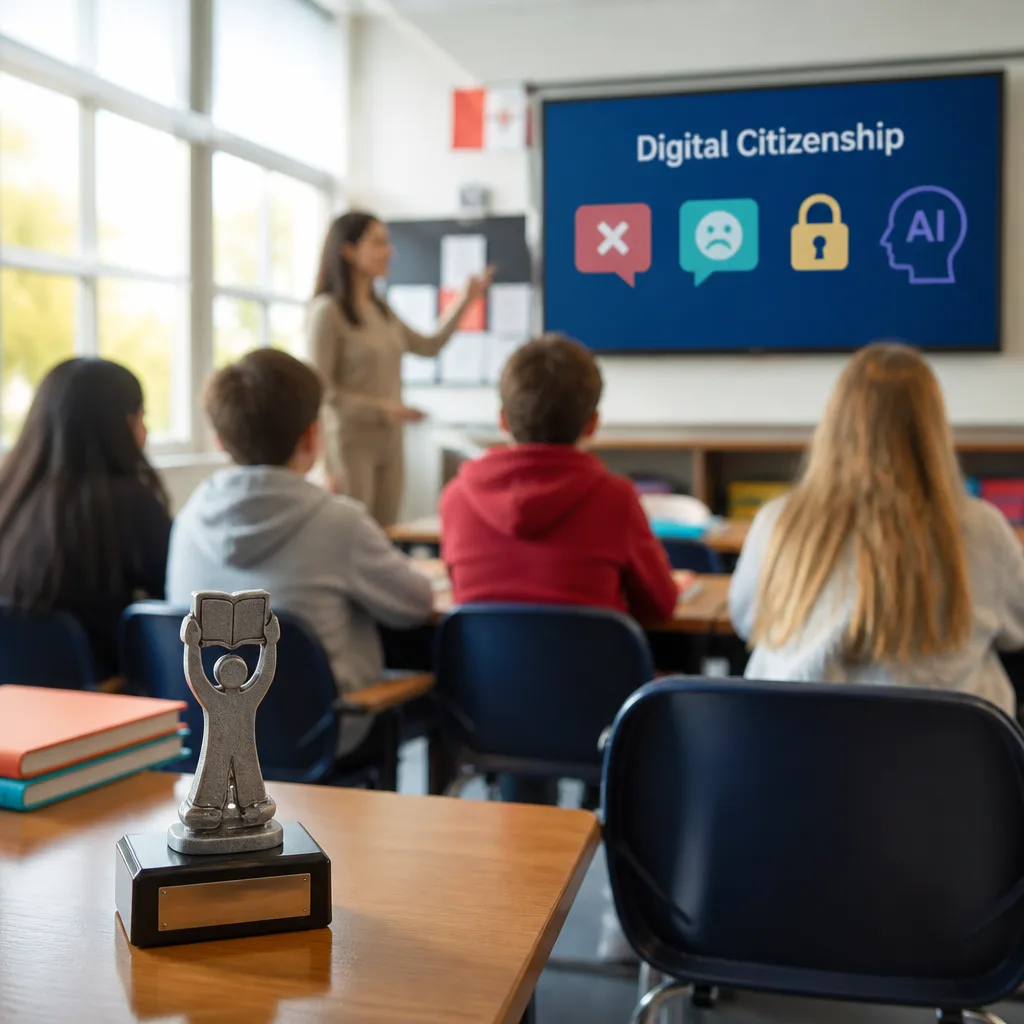
Discovery Education’s Digital Citizenship Initiative has been named a 2026 CODiE Award winner in the category Best Digital Citizenship Solution, the company announced Friday. The curriculum — provided at no cost to schools — has reached nearly 1,000,000 students since its launch.
What the award recognises
The CODiE Awards, now in their 40th year and administered by the Software & Information Industry Association, are judged by independent industry experts. Winners are selected from hundreds of finalists based on innovation, functionality, market impact and overall value. This year’s programme included 228 finalists across 75 categories.
| Metric | Value |
|---|---|
| Students reached | Nearly 1,000,000 |
| CODiE finalists | 228 |
| Categories | 75 |
What the initiative offers schools
Launched in February 2025, the Digital Citizenship Initiative translates research into classroom-ready learning experiences. It is grounded in Discovery Education’s report, From Risks to Resilience: Why Digital Citizenship Matters in K-12 Education, and addresses documented student vulnerabilities including:
- Misinformation
- Cyberbullying
- Privacy risks
- Emerging AI technologies
The materials are designed to be teacher-friendly and available at no cost, allowing schools to integrate lessons on digital fluency and critical thinking into existing timetables without added licensing fees.
“Students are growing up in a world shaped by rapid innovation, and they need the digital fluency and critical thinking to navigate it safely and confidently,”
said Catherine Dunlop, senior vice-president of corporate partnerships at Discovery Education, describing the programme as a partnership with industry experts to deliver practical classroom resources.
Implications for educators and families
For school administrators and teachers, the CODiE recognition signals third-party validation of the Initiative’s instructional design and potential classroom value. For parents and students, it underscores the growing emphasis on teaching not just technical skills but the judgement and habits needed to participate responsibly online. The free availability may ease budget pressures when schools prioritise digital literacy amid expanding concerns about misinformation and AI.
School systems considering adoption should consult the Initiative’s materials and align them with local curriculum outcomes and schedules. Because the resources are research-based and classroom-ready, they can be used for whole-class instruction, small-group work or targeted lessons on specific issues such as online privacy.
As digital environments and AI tools evolve, resources that offer structured, evidence-informed learning opportunities will remain a practical option for educators seeking to equip students with resilient, responsible online behaviours.