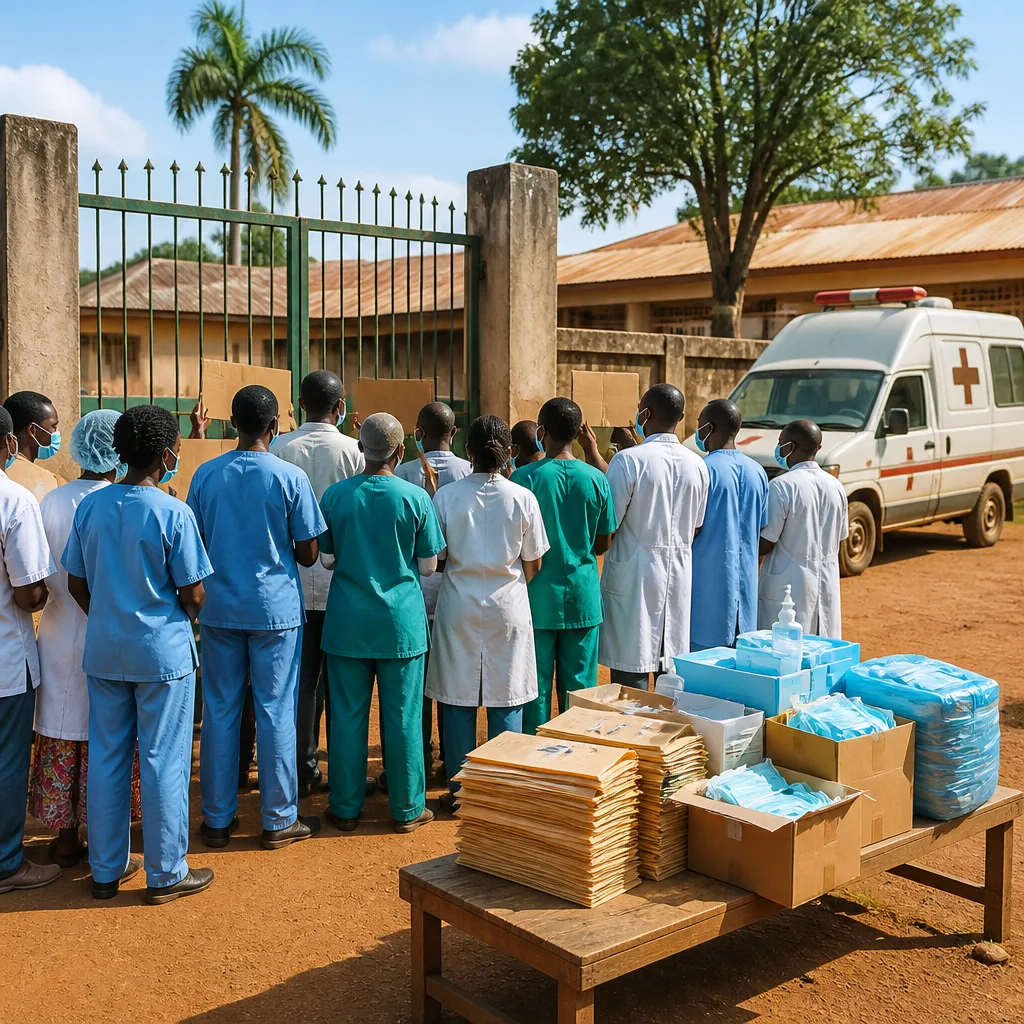
More than 2,000 confirmed Ebola cases have been reported in the Democratic Republic of the Congo (DRC) as health workers in the outbreak epicentre launched strikes over unpaid wages and difficult working conditions.
Strikes compound a fast-moving outbreak
Authorities reported 2,011 confirmed cases and 754 deaths in the current outbreak, which began on May 15. The protests began this week at Bunia General Hospital in northeastern Ituri province, where staff blocked the hospital entrance, saying they had not received compensation since the outbreak began. Similar walkouts have occurred in the region, including at Rwampara General Hospital, where epidemiologists, grave diggers and other personnel stopped work citing months of unpaid wages.
Response challenges and international concern
Non‑governmental and international agencies have warned that the outbreak is large and accelerating. Medical charity Médecins Sans Frontières (MSF) described it as the third largest and fastest growing Ebola event on record. The World Health Organization (WHO) has cautioned that the recorded death toll may be two to four times the official figure, suggesting substantial undercounting.
“If effective among high‑risk contacts after exposure, this could mark a major step forward in Ebola BVD prevention,” WHO Director‑General Tedros Adhanom Ghebreyesus wrote, after announcing the start of a clinical trial of an antiviral to prevent infection in exposed people.
The outbreak has been attributed to the Bundibugyo strain of the Ebola virus. According to reports from response partners, there is currently no licensed vaccine or established treatment for that strain, increasing the urgency of non‑pharmaceutical control measures and clinical research.
| Metric | Number / Status |
|---|---|
| Confirmed cases | 2,011 |
| Confirmed deaths | 754 |
| Outbreak start | May 15 |
| Virus strain | Bundibugyo (no vaccine/treatment available) |
Immediate and longer-term consequences
The combination of rapidly rising case counts and industrial action by health personnel risks undermining surveillance, patient care and safe burials — all pillars of Ebola control. Strikes by epidemiologists and burial teams can delay case detection, contact tracing and the safe management of deceased patients, which may accelerate transmission.
- Operational gaps: Walkouts at key hospitals limit triage, isolation and laboratory sampling capacity.
- Surveillance risk: Delays in contact tracing and diagnostics can leave chains of transmission undetected.
- Community trust: Unpaid field staff and disrupted services may erode public confidence in response efforts.
WHO has begun a clinical trial of an antiviral agent to evaluate whether it can prevent infection in people exposed to the Bundibugyo virus. Officials framed the trial as an important step, but it is an experimental intervention rather than an established preventive measure.
For now, response partners and local health workers continue efforts to identify and isolate cases, trace contacts and manage infections under difficult circumstances. The strikes underline the pressures facing front‑line staff and the potential for non‑clinical factors, such as pay and working conditions, to influence the trajectory of an outbreak.
InfoRadar will monitor developments as authorities and international agencies report new surveillance figures and outline measures to address health‑worker grievances while trying to contain the epidemic.