A Collingwood psychotherapist has created an in-person mental health support group specifically for fathers, highlighting the persistent need for dedicated spaces where men can speak openly about the pressures of parenting and seek peer connection without stigma.
A peer-led space for fathers
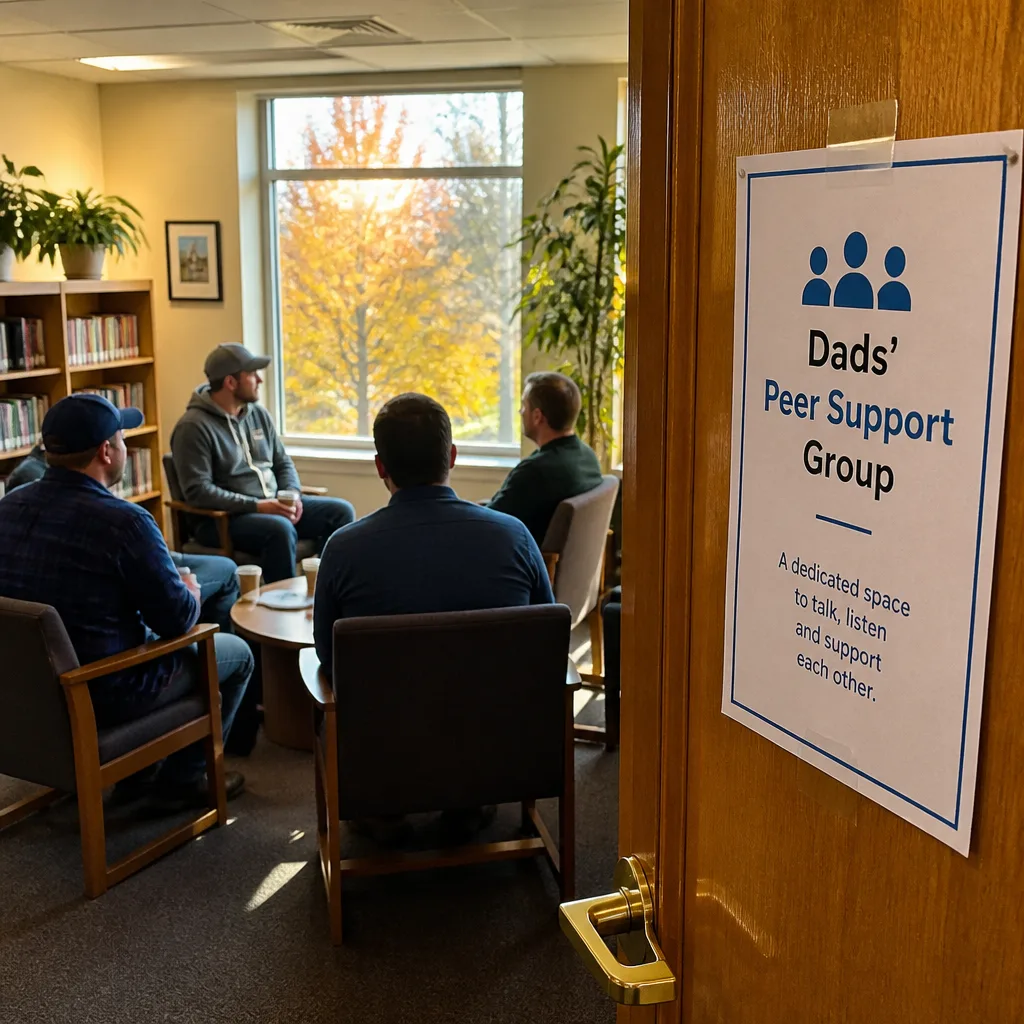
After running a virtual fathers’ group for four years, which drew participants from across Ontario, therapist Daniel Farb has moved to add an on-the-ground option in the community where he practises. The first local session took place at the Collingwood Library on July 9. Farb says the in-person format changes the dynamic in meaningful ways, creating a more immediate sense of connection and accountability compared with online meetings.
“I think fathers often feel kind of displaced,”
Farb describes his role in the group as intentionally different from his clinical work. Rather than conducting therapy, he facilitates as a fellow dad, aiming to build a setting where participants relate to one another’s everyday realities — from sleep disruption and work–family strain to identity shifts that can come with becoming a parent.
Why in-person matters
According to Farb, meeting face-to-face helps reduce the drop-in, drop-out feel common in virtual rooms and supports deeper engagement. He has observed that when men are in the same room, they are more likely to stay present with challenging topics and offer one another steady, respectful listening.
“Most people report that it has a benefit on their mood after, even if they’re more tired because it’s in the evening. You know, they feel a little lighter or a little bit relieved that they got to offload something,”
he says, noting that participants often leave with a sense of relief after sharing and being heard. That feedback mirrors what he saw in the online group: peer conversations can help ease immediate stress and open the door to longer-term coping strategies.
Addressing a familiar barrier for men
Farb points to a common obstacle: many men want to address their mental health challenges, yet lack consistent spaces where openness and vulnerability are expected and supported. He believes a peer format can help normalize talking about strain, especially for fathers who may not see themselves reflected in traditional parent groups.
- Format: peer support, facilitated by a therapist acting as a fellow dad
- Impact reported by participants: lighter mood, relief after sharing, stronger sense of connection
- Challenge: raising awareness so more fathers know the group exists
From online roots to a room of peers
Farb launched the virtual group early in his own fatherhood, when he noticed a mismatch between the supports available and the specific questions and pressures fathers were voicing. As word spread, men from different parts of the province joined. The in-person group is designed to complement, not replace, that online access, offering an additional pathway for connection that some may find more effective.
| Format | Details |
|---|---|
| Online group | Running for 4 years; drew participants from across Ontario |
| In-person group | Launched July 9 at Collingwood Library; peer-led with facilitator |
Raising awareness and lowering barriers
The newest hurdle is simply getting the word out. Farb says interest grows once men learn there is a room designed for them — a place where they can compare experiences and trade practical insights without judgment. He emphasizes that the group is not a substitute for therapy when specialized care is required, but a complementary resource where fathers can consistently find peers ready to listen.
As the in-person meetings continue, the focus remains steady: create a reliable, welcoming environment where fathers can speak honestly about the highs and lows of parenting, feel less isolated, and carry that sense of connection back into their homes and workplaces.