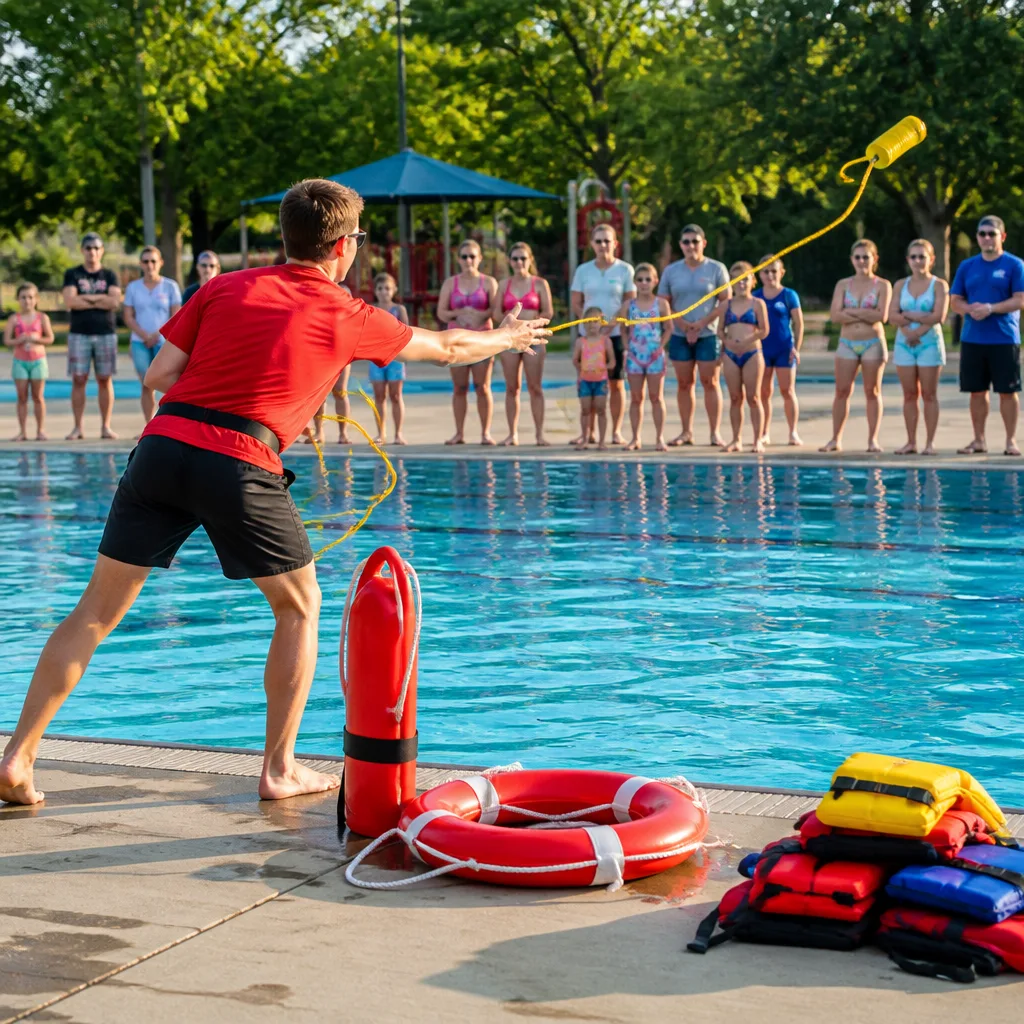
Families at a Winnipeg public pool received hands-on water-safety instruction on Sunday, with volunteers demonstrating basic rescue techniques and core survival skills as part of National Drowning Prevention Week.
The poolside session at Kildonan Park Pool was one of several seasonal events organized by the Manitoba Coalition for Water Safety. Volunteers from the Lifesaving Society showed participants how to throw a rescue line and walked them through the widely used “swim to survive” standard — a simple, three-part sequence meant to help someone unexpectedly in deep water.
Why these drills matter for families
Parents who turned out said the short, practical lessons offered confidence and clarity at a time of year when lakes, rivers and outdoor pools are busiest. One mother shared how a routine day at the beach nearly turned tragic in 2024 at Birds Hill Park, when her young son slipped off a float and was quickly carried away. She followed him into the water, became entangled in weeds, and needed help from nearby bystanders to get both of them back to shore.
“I kept my cool until I got back to the beach area and then I just bawled,” she said. “It just hit me what almost happened.”
Her six-year-old took part in Sunday’s activities, underscoring how early, age-appropriate training can build comfort around water. Organizers emphasized that learning simple responses — from reaching or throwing assistance to keeping one’s head up long enough to plan a route to safety — can make a critical difference in the first minutes after an unexpected entry.
The ‘swim to survive’ sequence
Volunteers taught a concise approach designed for unplanned immersion. Instructors guided participants through each stage, focusing on calm, efficient movements rather than speed.
| Step | What participants practised |
|---|---|
| Unexpected entry | Fall into the water to simulate a real-world slip or trip |
| Staying afloat | Tread water for one minute to orient and breathe |
| Reaching safety | Swim 50 metres to a safe exit point |
Instructors paired the sequence with demonstrations on how to throw a rescue line and coach a person in distress from the deck or shore, reinforcing that untrained bystanders should avoid in-water rescues when possible and use distance tools first.
What parents and students can do this summer
- Practise the three elements of “swim to survive” in a supervised setting to build automatic responses to an unexpected fall into water.
- Rehearse throwing a rescue aid from a safe stance and talking the swimmer through securing the line before pulling.
- Discuss safe play around inflatable toys and floatation devices, which can drift or flip quickly in open water.
The event’s format — brief, repeatable drills delivered right at the pool — aimed to lower barriers for families who may not enrol in formal lessons but still want practical tools. Volunteers said the focus is not on competitive technique, but on decision-making in the first critical moments of a water emergency.
National campaign, local delivery
Sunday’s outreach was presented as part of National Drowning Prevention Week, a campaign that brings together coalitions, community groups and lifesaving organizations to raise awareness each summer. In Winnipeg, the Manitoba Coalition for Water Safety scheduled multiple activities through the season, using public spaces like Kildonan Park Pool to reach swimmers where they are.
For families, the takeaway is straightforward: a few minutes spent learning how to keep calm, stay afloat and reach an exit — and how to safely help from shore — can add a critical layer of protection during the peak swimming months.