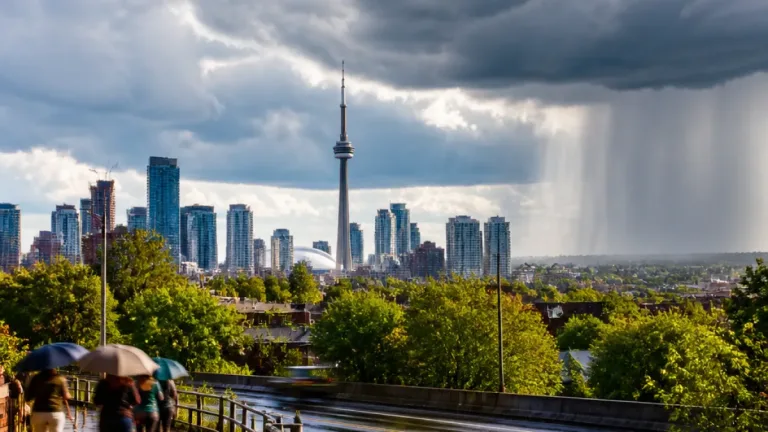
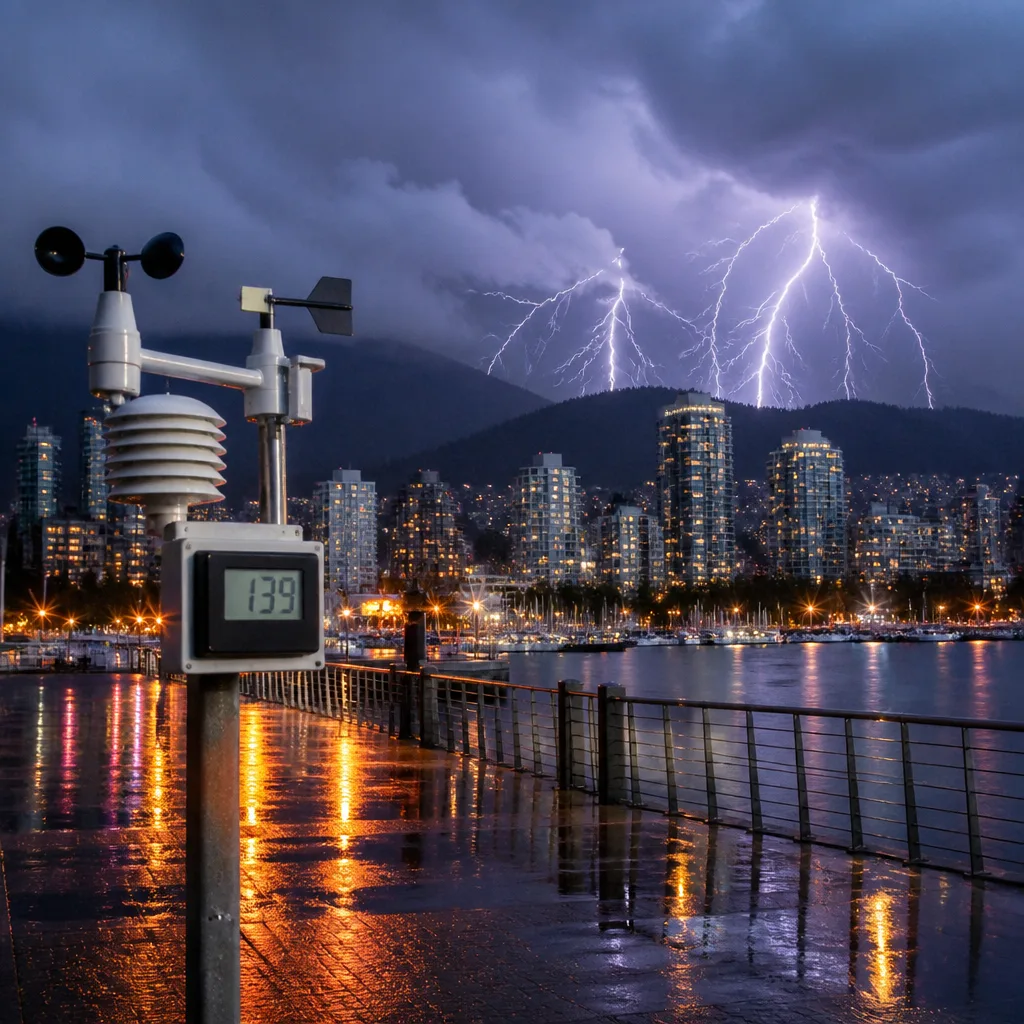
A thunderstorm that moved across Metro Vancouver late on July 16 produced an unusually high number of lightning strikes for the region, recording a total of 139 strikes within a roughly 2.5-hour period, Environment Canada said.
Timing and scope
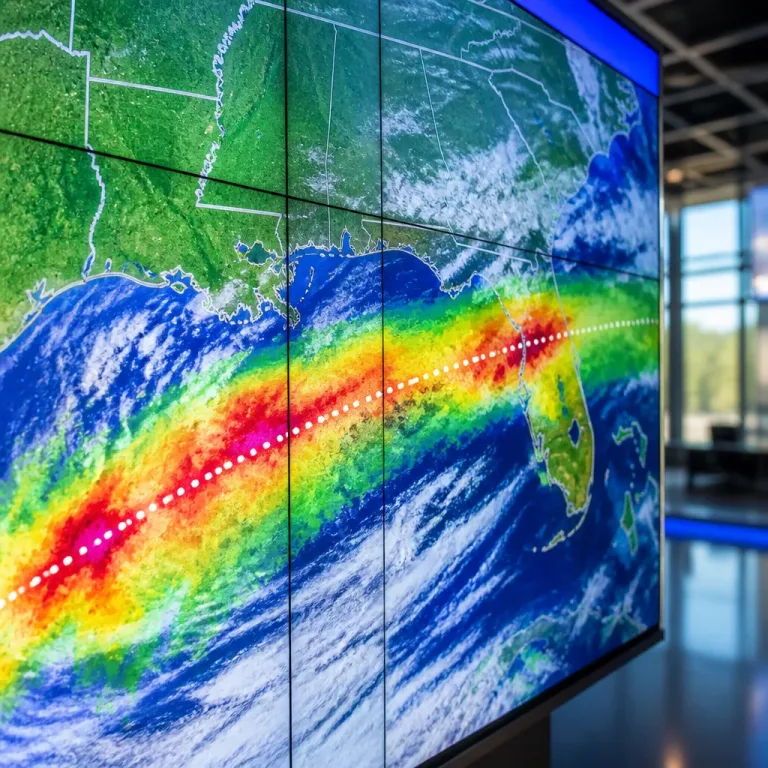
The department’s lightning detector for the City of Vancouver — which monitors strikes within a 50-kilometre radius — logged the event beginning in Delta at about 9 p.m.. The main cell tracked across the region until approximately 10:30 p.m., with additional strikes recorded near Squamish and across the Fraser Valley until about 11:30 p.m..
How this compares
While the 139 strikes were notable for Metro Vancouver this year, Environment Canada placed the event in broader provincial context: over a 24-hour span the province saw about 18,000 lightning strikes. That larger total reflects activity in other parts of B.C., particularly the Interior, where different storm dynamics can produce very high strike counts.
“Thunderstorms are rare in Metro Vancouver,” Environment Canada meteorologist Jenn Cowall said, adding the region hasn’t seen such a productive lightning event in a couple of years.
Cowall also noted prior single-night totals for the region: one night in August 2025 saw 128 strikes, while an evening in August 2024 produced a much larger local total of 333 strikes.
Why it happened
The thunderstorm’s intensity and persistence were driven by a low-pressure system moving onshore from the Pacific. That system supplied the necessary convective lift in a part of the province that typically lacks the surface heating to generate frequent thunderstorms. The storm developed after a run of dry days and produced several pockets of heavy downpour in addition to frequent lightning.
- Local strike count: 139 strikes in ~2.5 hours (City of Vancouver detector, 50 km radius)
- Provincial activity: ~18,000 strikes across B.C. over 24 hours
- Comparisons: 128 strikes on one night in Aug. 2025; 333 strikes during an Aug. 2024 evening
| Metric | Count | Period |
|---|---|---|
| Vancouver-area strikes | 139 | ~2.5 hours (July 16 evening) |
| B.C. total | 18,000 | 24 hours |
| Notable prior local nights | 128 and 333 | Aug. 2025 and Aug. 2024 (single evenings) |
Safety and context
Lightning in areas that rarely see storms increases the risk for people who may not expect severe electric activity. Basic precautions remain important during thunderstorms: seek substantial shelter, avoid open water and tall isolated objects, and stay indoors until at least 30 minutes after the last thunder is heard.
Environment Canada’s measurements underline that a high provincial strike total does not always equate to uniform local impact — some regions can see intense activity while others remain quiet. In Metro Vancouver’s case, this event stands out for both strike density and its late-evening duration.