When RCMP Deputy Commissioner Lisa Moreland told CBC's Power & Politics that there is "no evidence" linking Indian government officials to crimes examined in a recent international probe, it marked a notable shift in how senior Canadian officials are publicly describing the investigation.
Contradictions with past statements
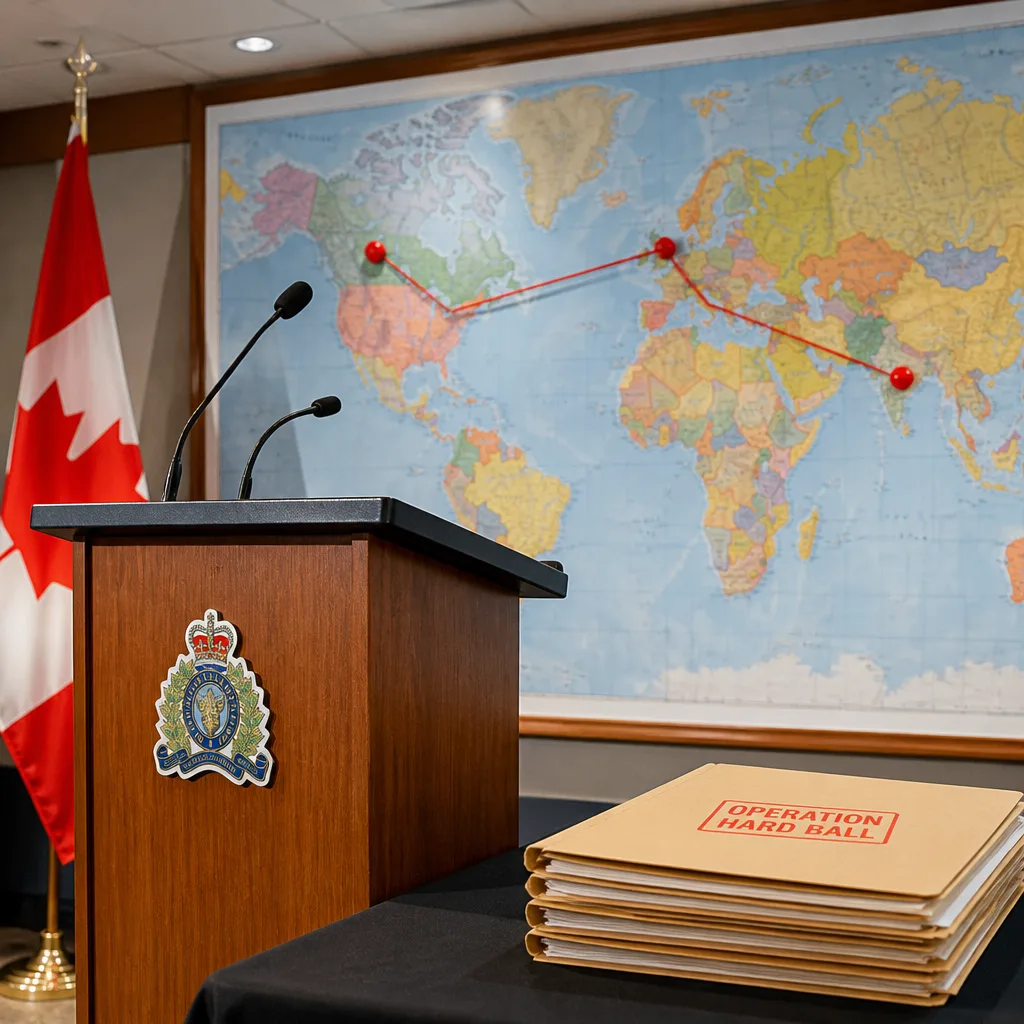
The comments came in the context of a coordinated law enforcement effort called Operation Hard Ball, which authorities say targeted organized criminal activity linked to groups based in India. The joint operation resulted in charges against people in multiple countries, and drew public attention because of its connection to the 2023 killing of Sikh activist Hardeep Singh Nijjar in British Columbia.
"I firmly state that nothing has come out today to link the Indian government" to the operation, RCMP Deputy Commissioner Lisa Moreland said on Power & Politics.
Her wording appears to clash with earlier public remarks by other Canadian officials, including former prime minister Justin Trudeau, and statements previously issued by the RCMP itself. Those earlier comments contributed to a public narrative that suggested possible state involvement in violent acts targeting diaspora communities in Canada.
What is Operation Hard Ball?
According to reporting around the announcement, the operation represented a coordinated crackdown on three organized groups linked to India. It produced a set of charges laid across several jurisdictions.
- 37 people were charged across the United States, Canada and Europe.
- U.S. and Canadian law enforcement officials participated in the announcement and investigation.
- Senior U.S. prosecutors, including a First Assistant U.S. Attorney, spoke publicly about the case at a Los Angeles news conference.
| Aspect | Reported detail |
|---|---|
| Operation | Operation Hard Ball |
| Number charged | 37 |
| Territories involved | U.S., Canada, Europe |
The RCMP's presence at related events was visible: media images show RCMP Commissioner Mike Duheme among officials at a U.S. news conference where charges were announced. The shifting public descriptions of what investigators have — and have not — confirmed about links to Indian government actors raise questions for Canadians about how intelligence and law enforcement findings are communicated.
Implications for public trust and diplomacy
For many Canadians, the matter is not only legal but political. Statements from elected officials and police leaders can shape perceptions of whether foreign state actors have operated on Canadian soil or targeted Canadian residents. Divergent accounts from senior officials complicate the public record and could affect diplomatic relations and community trust in institutions tasked with investigating transnational crime.
As the legal process proceeds, officials on all sides face pressure to reconcile differing descriptions of the evidence while protecting sensitive investigative material. The RCMP comment that "there's no evidence to suggest" involvement by Indian officials underscores the need for clarity on what has been established publicly and what remains the subject of ongoing work behind closed doors.
Moreland's on‑air comments will likely prompt further questions from lawmakers, victims' families and international partners about the scope of information shared, the standards used to assess state involvement and the next steps in cross‑border cooperation.