Labour demand outpaces supply amid sustained population losses
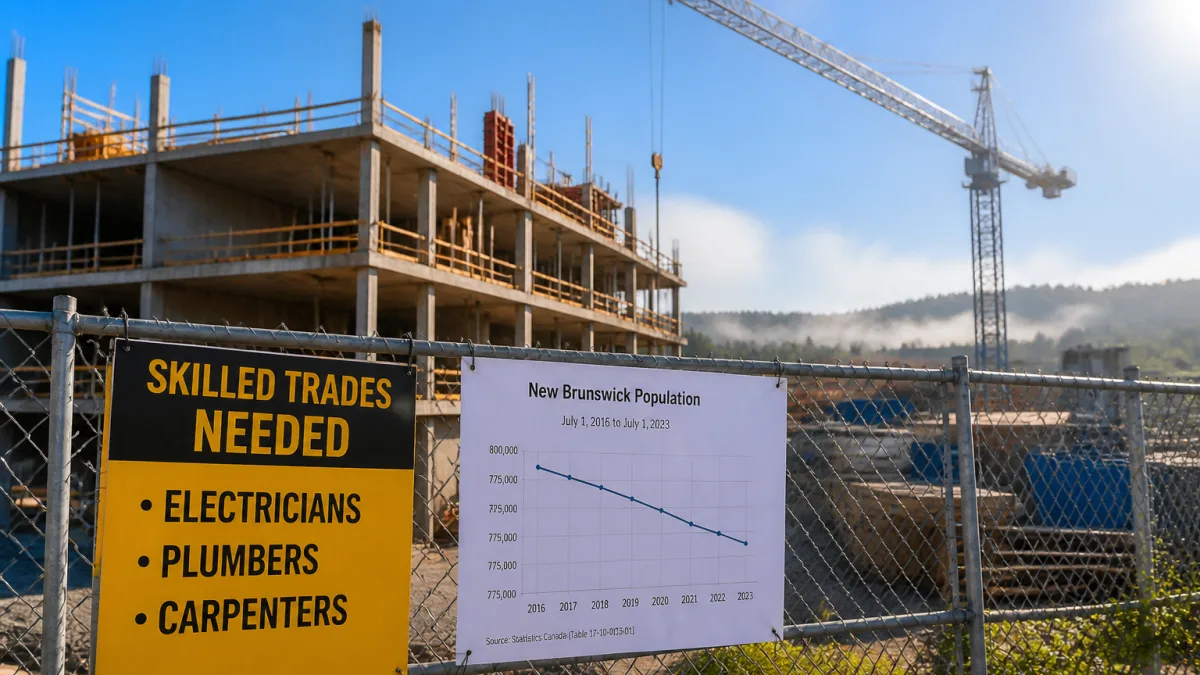
New Brunswick’s construction and skilled-trades sectors are warning of worsening labour pressures after the province recorded nine consecutive months of population decline, the first such run in 20 years. Statistics Canada data cited by industry sources show the province is down 886 people since the start of the calendar year, with 517 fewer residents in April 2026 compared to the same month a year earlier.
Economic development consultant David Campbell, based in Moncton, said he has raised alarms about demographic trends for more than a decade. He called the latest figures a stark reminder that workforce shortages will weigh on growth if not addressed.
“Population decline is the biggest risk for this province — for the prosperity of its people, for the strength of its economy, for the future of our province,”
Campbell released a report in March examining labour-force needs across Atlantic Canada from 2025 to 2035, underscoring that demographic change will shape the region’s ability to staff critical sectors over the next decade.
Construction leaders say demand is at an all-time high
Contractors say the shortage is most acute in the skilled trades, where the pipeline of qualified workers has not kept up with rising project volumes. John‑Ryan Morrison, executive director of the Construction Association New Brunswick, said companies are taking on unprecedented amounts of work even as they struggle to hire.
“The demand for the skilled trades especially, is at an all-time high.”
Morrison said the crunch is contributing to higher labour costs and compounding other price pressures, including tariffs that are pushing up material costs. He added that prolonged staffing gaps could lengthen timelines for major projects already underway or in the queue.
Major projects face risk of delays and rising costs
Morrison pointed to a slate of large builds as examples of where shortages could deepen schedule and budget challenges. Those include:
- N.B. Power’s 15‑year life‑extension at the Mactaquac Dam, with a potential price tag of up to $9 billion.
- Irving’s $1.5‑billion Project NextGen in Saint John.
- A planned new hospital in Dorchester for federal prison inmates, which has not yet broken ground.
He said the service backlog is not limited to marquee projects. Builders delivering homes and public infrastructure also report difficulty finding enough certified tradespeople, a constraint that feeds directly into project timelines.
Converging crises: housing, infrastructure and labour
Industry representatives say the capacity crunch is colliding with broader needs. Morrison described the province as simultaneously facing housing and infrastructure pressures while grappling with a shrinking labour pool.
“It’s all culminating. We’re in a housing crisis, we’re in an infrastructure crisis, and we’re in a labour crisis all at the same time.”
Contractors warn that prolonged labour shortfalls can slow the construction of homes and public assets, potentially worsening affordability and service gaps. Employers also say higher input costs ultimately show up in tender prices and project budgets.
Immigration and youth pathways flagged as priorities
Sector leaders say the province will need to sustain recruitment on two fronts: attracting newcomers with in‑demand credentials and expanding training routes for local youth. They argue that faster recognition of credentials, targeted apprenticeships and clearer job pathways can help build a more stable pipeline of electricians, carpenters, welders, heavy‑equipment operators and other vital trades.
Campbell’s analysis underlines that demographic headwinds will not be solved by any single measure. Business groups say a combination of immigration, retention, and home‑grown skills development will be required to keep pace with current and planned construction activity.
By the numbers: signs of a tightening labour market
| Indicator | Latest detail |
|---|---|
| Months of population decline | 9 straight months |
| Year-to-date population change | -886 residents |
| April year-over-year change | -517 residents (Apr. 2026 vs. Apr. 2025) |
Construction firms say these figures track with what they are seeing in job postings and on sites provincewide: more projects competing for fewer qualified workers.
What employers say they need now
Industry members are urging coordinated action to stabilize the workforce and control costs. Priorities frequently raised include:
- Streamlined entry and settlement for newcomers with trades credentials.
- Expanded apprenticeship seats and on‑the‑job training for local youth.
- Measures to reduce project bottlenecks linked to staffing shortages.
With multiple large projects on the horizon and communities seeking faster delivery of housing and infrastructure, construction groups warn that without a deeper bench of tradespeople, New Brunswick could face longer build times and higher price tags.